


FLASH NEWS
Lavrov: Russia is ready to communicate with the US on the Balkans

2026-01-20 15:25:57 / POLITIKË
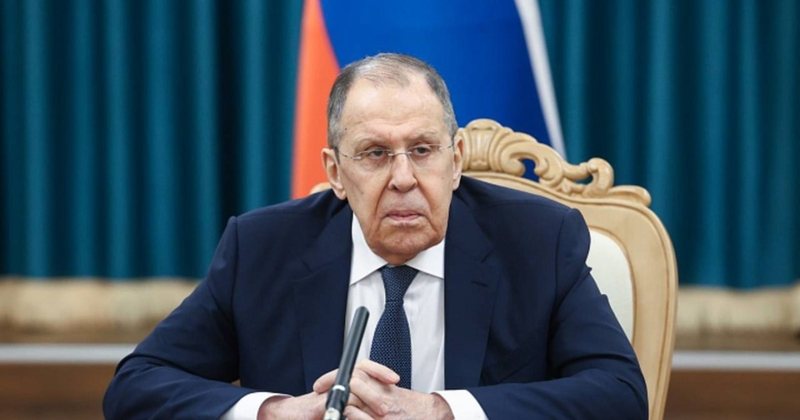
Russian Foreign Minister Sergei Lavrov said on Tuesday that Moscow is communicating with the United States regarding the Balkans and is ready to develop those contacts.
"We have more opportunities to communicate with the United States [than with the European Union] regarding the Balkans, when it comes to Bosnia and Herzegovina and other countries in the region. These contacts are continuing. They have not yet resulted in any positive results or anything else. But we are open to such contacts, and as far as I can judge, our American colleagues are also willing to develop them," Lavrov was quoted as saying at a press conference, according to the Reuters news agency.
Radio Free Europe has contacted the US State Department and the European Union for comment and is awaiting responses.
The Russian chief diplomat's statements come at a time when important figures in Kosovo, starting with President Vjosa Osmani, are warning about the danger of Russian influence in the Balkan region, while portraying Serbia as "Russia's extended hand" in the region.
Serbia maintains warm relations with Russia and is the only country that has not imposed sanctions on Moscow for the war it launched in Ukraine.
Political analysts have repeatedly told Radio Free Europe that economic influence, disinformation, and the ability to benefit from corrupt schemes are the three key elements through which Russia extends its influence in the Balkans, and that Serbia and Republika Srpska – the Serbian entity in Bosnia and Herzegovina – are the most vulnerable in the region to Russian influence, as they could fuel a growing sentiment of extreme nationalism.
On December 18 of last year, US President Donald Trump signed the so-called National Defense Authorization Act, which, among other things, stipulates that the US does not support any policy that aims to change borders in the Balkans along ethnic lines.
For Kosovo, the US is its most important partner and its support is vital.
Since 1998, Washington has allocated over $2 billion to Kosovo.
This country has also invested considerable amounts in other Balkan countries.
The US is present in six Western Balkan countries with its embassies, unlike Moscow, which does not recognize the state of Kosovo - like Serbia - and has only a liaison office in Pristina.
The European Union also enjoys relations with countries in the region, of which all six Balkan countries aim to become part: Kosovo, Albania, North Macedonia, Montenegro, Serbia, and Bosnia and Herzegovina.
Kosovo is the only one that does not enjoy the status of a candidate country for EU membership, although it applied at the end of 2022.
Brussels is also engaged in the region as a mediator in the dialogue between Kosovo and Serbia, with the aim of normalizing relations between them.
During the press conference, Russian Minister Lavrov was also asked whether Moscow would benefit from a deal by Hungary's MOL to buy shares in the Serbian Oil Industry (NIS).
Serbian Energy Minister Dubravka Gjedovic Handanovic announced on Monday that Russian giant Gazprom Neft has reached a provisional agreement to sell its shares in Serbian NIS to the Hungarian company.
Russia's Gazprom owns about 11.3 percent of NIS's shares, while its sanctioned oil unit, Gazprom Neft, owns 44.9 percent.
The remaining shares are owned by the Serbian Government and other shareholders.
Washington has sanctioned Gazprom Neft to prevent Moscow from using oil revenues to finance the war in Ukraine./ REL
Happening now...






ideas



top


Alfa recipes




TRENDING 




services
- POLICE129
- STREET POLICE126
- AMBULANCE112
- FIREFIGHTER128