


FLASH NEWS
Scientists warn: 2026 could break global warming records

2026-01-02 21:20:41 / TRENDING
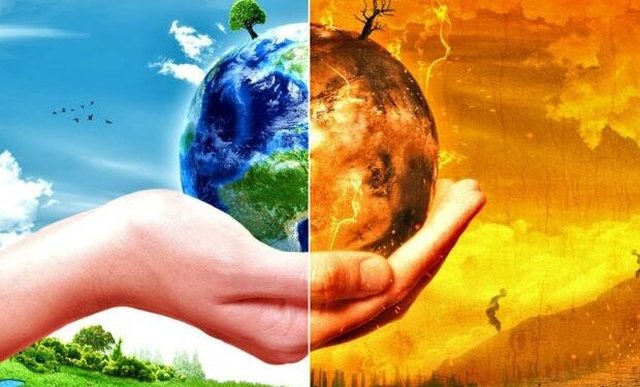
Forecasts from international organizations indicate that 2026 is expected to be among the warmest years ever recorded on Earth.
This assessment, published by the United Kingdom's Met Office, is based on recent studies that reveal a continued increase in average global temperatures, with values exceeding previous records, reinforcing the urgent need to limit global warming and the serious impacts of climate change.
The rise in temperature is directly linked to human activities and greenhouse gas emissions, according to the United Nations (UN):
“The main greenhouse gases that cause climate change are carbon dioxide and methane. They come, for example, from the use of gasoline for cars or the burning of coal to heat buildings.”
The projections for 2026 set new standards in the efforts of states to fulfill their commitments to international agreements, such as the Paris Agreement, which has as its main objective the prevention of temperature increases above critical limits.
Forecast for 2026: New temperature record
The report estimates that the average global temperature in 2026 will reach 1.46°C above pre-industrial levels (1850-1900), with a possible range of 1.34°C to 1.58°C. This is slightly below the record of 1.55°C recorded in 2024, the highest to date.
The Met Office says the forecast "suggests that 2026 is likely to be one of the four warmest years ever recorded in terms of global average temperature".
Global temperature records go back to 1850 and show a strong upward trend in recent decades. Adam Scaife, head of the Met Office's global forecasting team, explained:
"The last three years have probably exceeded 1.4°C and we expect 2026 to be the fourth year in a row that this has happened. Before this sudden increase, global temperatures had not exceeded 1.3°C."
Chief meteorologist Nick Dunstone said:
“2024 saw the first temporary breach of 1.5°C and the forecast for 2026 shows it is likely to happen again. This highlights how quickly we are approaching the 1.5°C target of the Paris Agreement.”
The Paris Agreement and the challenges of global warming
The Paris Agreement, adopted in 2015 during COP21, aims to limit the increase in the global average temperature to 2°C, with efforts to further limit it to 1.5°C. The agreement has 194 participants, including countries and the European Union, and requires countries to review their national plans every five years to reduce greenhouse gas emissions and strengthen adaptation to climate impacts.
These national plans, known as Nationally Determined Contributions (NDCs), include emission reduction policies and strategies for resilience to extreme events. The agreement also provides financing for developing countries and transparent mechanisms for monitoring and evaluation.
The UN emphasizes that "the agreement provides a sustainable framework to guide global efforts for decades" and marks the beginning of the transition to a net-emissions world.
The risks of exceeding 1.5°C
The scientific community warns that exceeding the 1.5°C limit increases the risk of severe impacts and limits adaptation options. The Met Office stresses that even temporary overshooting worsens the situation and makes it more difficult to limit the damage.
The World Meteorological Organization (WMO) reports that the current level of warming is 1.37°C above the 1850-1900 average. According to the Meteorological Office, “science has consistently warned that exceeding 1.5°C leads to an increase in extreme events and limits the potential for adaptation.”
The Paris Agreement review process aims to encourage more ambitious measures to keep warming below agreed limits. In 2023, the “first global inventory” assessed progress and urged countries to accelerate action to avoid exceeding critical temperatures.
The implementation of the Paris Agreement is essential not only for climate objectives, but also for the Sustainable Development Goals, which include reducing emissions and increasing resilience to environmental challenges.
Happening now...












Germany, the "curse" of Rama and Berisha
Nga Bato Kosova
ideas

The opposition must and will be bigger than an individual.
Nga Taulanda Jupi

Violent protests as group therapy
Nga Roland Lami

Those who mocked and attacked Basha
Nga Ermal Peçi
top



Alfa recipes



TRENDING 




services
- POLICE129
- STREET POLICE126
- AMBULANCE112
- FIREFIGHTER128