


FLASH NEWS
What happened between the US and Berisha? American diplomat speaks in Opinion

2026-02-24 22:53:54 / POLITIKË
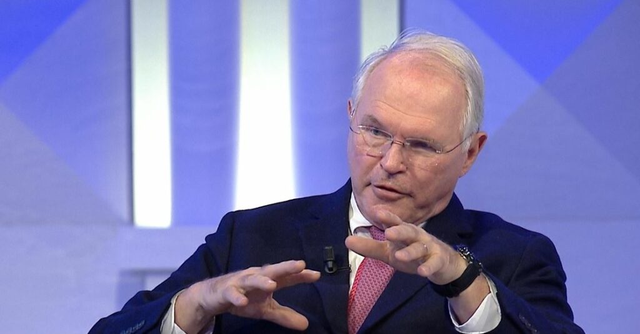
American diplomat Christopher Hill spoke on the Opinion show about former Prime Minister Sali Berisha's relationship with the United States. He also shared a conversation with former US Secretary of State James Baker during his visit to Tirana.
Blendi Fevziu : Mr. Hill, what happened between the United States and Sali Berisha? Sali Berisha was the new star of the opposition, he received support, he made two visits to the Oval Office, one in June 1992 and one in September 1995, if I remember correctly.
Blendi Fevziu : He met with President Bush, the father, he had a meeting with President Clinton. Then, in 1996, early 1997, the relationship between the United States and Albania was very bad. I remember Timothy Wirth, who was one of the secretaries of state. He wanted to visit Albania and he was not allowed to visit Albania. What happened? If you know anything
Christopher Hill : I can speak more from a historical point of view than from a political point of view, because I really don't want to talk about politics...
Blendi Fevziu : For current politics. Yes.
Christopher Hill : That's not my job, that's your job. I think it had to do with very high expectations. Berisha had performed very well before Baker. Baker asked: Is communism dead in Albania? He asked such a question.
Blendi Fevziu: “Freedom works.” It was the magic word.
Christopher Hill: At that meeting with the opposition, he asked the audience: Is communism dead? Mr. Berisha gave that very beautiful answer that Baker could not forget. He said that communism is dead, but its toxicity, to use a medical metaphor, is alive, implying that there is still a lot of work to be done. I think when Berisha made that statement, it convinced Baker that these people know that they are going to go through a difficult transition. He felt reassured by that kind of intelligence expressed in that statement. I think the problem was that, over the years, there was a feeling that Berisha was not a very positive figure when it came to Kosovo…
Blendi Fevziu: Why in Kosovo?
Christopher Hill: The feeling was that he was approaching issues from a very, very nationalistic perspective.
Blendi Fevziu : Are we talking about 1993–1994, when he supported Rugova, or 1996, when he started supporting Adem Demaçi, who had a much more dramatic approach regarding the Kosovo issue?
Christopher Hill: That issue of Albania's concern about Kosovo worried people because they saw the opportunity, the seeds of a potential greater Albania. So here we had all the problems of Greater Serbia and then people felt like Berisha was promoting the idea of Greater Albania.
Blendi Fevziu: Albania was very weak. Serbia was a big state even after the breakup of Yugoslavia. I remember and it was very interesting, the statement made by Holbrooke, which I found in Bill Clinton's memoirs, but which was Holbrooke's expression: The breakup of Yugoslavia was not the breakup of Yugoslavia, it was the last part of the breakup of the Ottoman Empire. That is true. In that way, Albania was very weak. Yugoslavia was a big state, six states emerged from that state. Albania was so modest...
Christopher Hill: Yes. To answer your question, Berisha began to be seen as part of the problem of ethnic issues in the Balkans, rather than part of the solution. I think there were a large number of people in Albania who opposed him. So he became a controversial figure. However, I must point out that I have been abroad since 1993, so I was not following the development of the situation closely.

Happening now...




ideas



top


Alfa recipes


TRENDING 




services
- POLICE129
- STREET POLICE126
- AMBULANCE112
- FIREFIGHTER128