


FLASH NEWS
Alibeaj: I read Berisha's inner joy when Rama did not hand over Balluk

2026-03-14 10:59:13 / POLITIKË
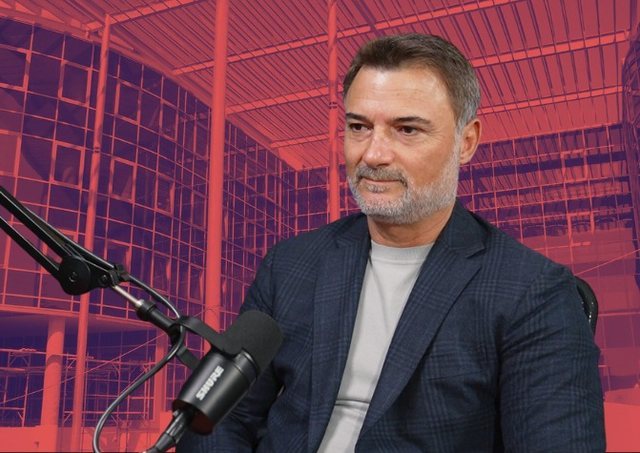
The majority's decision not to allow the lifting of Minister Belinda Balluku's immunity in the parliamentary session of March 12 has opened a strong political and institutional debate on the relationship between power and justice and the consequences this may have on Albania's European integration process.
In an interview for Tema, former Democratic MP Enkelejd Alibeaj considers this a difficult moment for the relationship between politics and justice and an alarm signal for European partners.
Alibeaj said, among other things, that the March 12 session served as a clear test to understand the real relationship between the prime minister and the majority and justice, where, according to him, it was clearly seen for the first time how far the majority is from the principle of cooperation with justice, putting at risk even a strategic process for the country, such as EU integration.
According to him, the clash taking place today in Albania is a frontal clash between justice and politics, a process that he believes will ultimately be won by the justice institutions.
"There is a head-on clash between justice and politics, and justice will undoubtedly win," Alibeaj says. In this context, he warns that the Special Prosecution's investigations will not stop at the middle levels of administration or politics, but will go all the way to the top of the Albanian political elite.
"SPAK will go to the political elite at its peak. We will probably soon see the two great allies in the same dock," says Alibeaj, referring to Rama and Berisha.
According to him, recent developments show that the battle for justice in Albania is no longer a theoretical debate, but a real process that is directly clashing with the interests of the political elite.
In his analysis, the decision not to hand Balluk over to justice is not only a political act to protect an important government official, but also a message to justice and to international partners.
Alibeaj estimates that this action could produce reactions from the European Union, which has established the fight against corruption and the independence of justice as fundamental conditions for advancing the integration process.
According to him, the European Union's instruments to condition Albanian politics are numerous, ranging from diplomatic pressure to stronger political measures, such as the suspension of the free movement of Albanian citizens in EU countries.
In this context, he also mentions the possibility that the integration process could be slowed down or temporarily blocked if Albania gives clear signals of obstruction of justice.
In his political analysis, Alibeaj sees another dimension of this situation: the relationship between Edi Rama and Sali Berisha on the Albanian political scene.
According to him, Berisha's existence at the head of the opposition is one of the guarantees that gives the prime minister political space and a kind of comfort in the face of criticism.
He emphasizes that in this sense, the majority's act of not allowing the lifting of Balluk's immunity may have also produced a silent positive reaction within the Berisha-led opposition.
Alibeaj believes that despite political clashes and tensions, the justice process will continue and will have a profound impact on the transformation of Albanian politics.
According to him, only justice can free politics from the grip of elites that have dominated the political scene for decades.
Happening now...








ideas



top




TRENDING 




services
- POLICE129
- STREET POLICE126
- AMBULANCE112
- FIREFIGHTER128