


FLASH NEWS
"How Gramoz Pashko invited me to his house in '91", Ambassador Hill's story: Who did the Americans prefer between him, Berisha and Selami?

2025-12-07 22:51:03 / POLITIKË
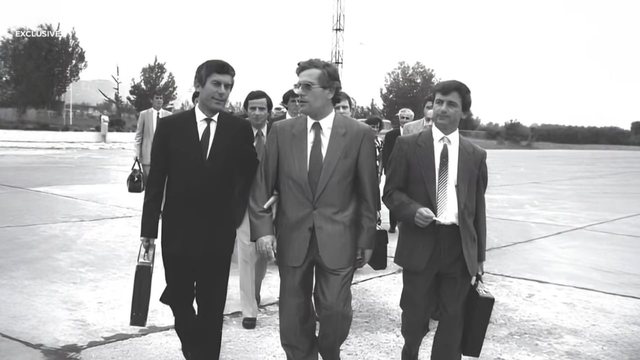
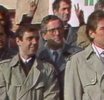
The first US Ambassador to Albania, Christopher Hill, in a story for "Exclusive", tells the time when he first arrived in our country, after the fall of the communist dictatorship in '91 and the opening of the first American Embassy in Tirana.
During the interview with Top Channel journalist Kristi Gongo, Hill focuses on the leaders of the Democratic Party in the early years of transition, where he highlights his friendship with Gramoz Pashko in the role of Deputy Prime Minister for Stability.
Who were your first contacts in Albania?
Hill: Well, of course, we were dealing with the government and the government-makers, so one of the first was a gentleman who died many years ago, Gramoz Pashko. He invited me to his house, he liked Western rock music, I remember asking me, ‘Do you like Dire Straits?’ And I said, ‘My favorites,’ so I started to get to know him, and I was further introduced to other personalities who were helping to run the government. Genc Ruli was one of them as the Minister of Finance. Then, because of the wonderful reception that Secretary of State, James Baker, received in Skanderbeg Square, which was an extraordinary day, I think the Americans got fully involved in the task of building the relationship.
What impression did you make of Ramiz Alina, Sali Berisha and Fatos Nano?
Hill: Everyone was there and they were people I dealt with. Of course, people were all nice to me, including Ramiz Ali. He was very nice. Mr. Bufi, who was in charge of this transitional government. Berisha was very positive towards the Americans. Obviously, he was going to play a big role; I had no idea what his position was going to be, but he was going to be a major factor. And Fatos Nano was interesting because he came from the old system, from the Labor Party, but then he was trying to be in the new system as well, so he had a foot in both systems. I remember there was a little bit of skepticism about that, but I have to tell you, when you're an American diplomat, you're just trying to make things happen and you're not ready to say, he's good, he's bad. You're just trying to get to know people.
Did you have a preference among the DP leaders of that time, Berisha, Pashko or Selami?
Hill: For me it's important to say that it's very difficult to elect your own government. It's impossible to elect someone else's government. And I've stayed away from that process my whole career. We wanted to stay away from preferences because it was a phase that we knew was coming very quickly, that there was a lot of criticism within the country, and we tried to stay away from that. I would say, as a general concept, we supported the DP winning the elections in '92. The Socialists hadn't yet had their real divorce from the Labor Party. The structure was still overlapping. People in the Socialist Party had usually been part of the Labor Party. So I would say that most of our efforts were focused on the new parties, including the Democratic Party. But in terms of how they operated, I tried to avoid appearing at a public gathering because I thought that was some kind of interference in internal affairs, and that was something that the Socialists were constantly accusing us of. But we tried to be careful not to project this image. We wanted to see Albania join the democratic countries, to see democracy prevail. Of course, that was very important to us. But as far as getting involved in the selection, saying, he's better than that one, let's do that... That was not my job. And when they asked me about that, I had no problem giving my opinion, but I wouldn't say, choose this and don't choose that one. That's very dangerous, because, you know, you always make mistakes when you do things like that.
Happening now...







Karmën nuk e ndalon dot Sali Berisha!
Nga Bato Kosova
ideas
Will Berisha take stock of the first in his second speech?
Nga Preç Zogaj
First Secretary of the Democratic Party
Nga Indrit Vokshi

"Topple" Edi Rama by lying to yourself...
Nga Patrik Sadikaj
top


Alfa recipes

TRENDING 




services
- POLICE129
- STREET POLICE126
- AMBULANCE112
- FIREFIGHTER128