


FLASH NEWS
"Why did we openly support the DP's victory in the March '92 elections", former US ambassador: The Socialists accused us of being against them

2025-12-07 23:38:14 / POLITIKË
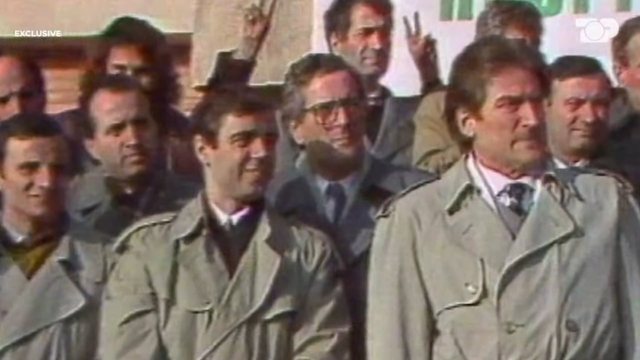
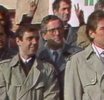
Former US ambassador to Albania, Christopher Hill, spoke in "Exclusive" about the post-communist period in Albania and the influence of the US at that time.
In the interview with Top Channel journalist Kristi Gongo, Hill focused on the March 1992 elections, where he stated that the American Embassy openly supported the Democratic Party in winning the elections.
-What impression did you make of Ramiz Alina, Sali Berisha and Fatos Nano?
Hill: Everyone was there and they were people I dealt with. Of course, people were all nice to me, including Ramiz Ali. He was very nice. Mr. Bufi, who was in charge of this transitional government. Berisha was very positive towards the Americans. Obviously, he was going to play a big role; I had no idea what his position was going to be, but he was going to be a major factor. And Fatos Nano was interesting because he came from the old system, from the Labor Party, but then he was trying to be in the new system as well, so he had a foot in both systems. I remember there was a little bit of skepticism about that, but I have to tell you, when you're an American diplomat, you're just trying to make things happen and you're not ready to say, he's good, he's bad. You're just trying to get to know people.
-To your knowledge, what role did America play in the overthrow of the communist regime in Albania?
Hill: Well, I think the Albanian people played a role in the fall of the communists, but it's a lot easier when you're in transition to know where you're going. And I think having an American embassy opening, seeing the American flag up, seeing American diplomats active… people understood better that they were breaking away from one system to enter another. So I think it was a successful process. If they had only seen the end of one system and not known what the new system would be, it would have been a much more difficult process. So I think there was value in understanding that not only did the Albanian people love Americans, but more importantly, what the Americans saw from the Albanian people, we love them too.
-So you don't believe that the student movement of December '90 was instigated by the West?
Hill: No, I think it was authentic. I think it was driven largely by students who wanted to have a better life. You know, these kinds of revolutions, if you try to drive them from the outside, they don't work. But if they're self-generated, and this is certainly true, for Azem Hajdari and all those people in the student movement, it was something that Albanians did themselves. And, you know, you have to be careful with the idea that the American Embassy can come and then destabilize the situation. It just doesn't work that way. It doesn't work that way.
-How much did Americans influence the Democratic Party's victory in the March 1992 elections?
Hill: You know, there were two election processes. One was in March '91 and then another one in '92, March '92, and that was crucial. And how much of a role did the American Embassy play in that? I don't think we played much of a role. There were some American NGOs, including the National Democratic Institute and the Republican Institute, and they were providing assistance. The Republican International Institute was providing some vehicles for the political parties, and these vehicles seemed to go mainly to the Democratic Party, not the Socialist Party. And so, it was probably helpful to have some vehicles, so that politicians like Eduard Selami, who was very active at the time, a good friend at the time, I think it was Selami who suggested that we have this big reception for Secretary Baker in Skanderbeg Square. So we did things together, but you know, this was all for the Albanian people. We were trying to reassure the Albanians that we were going to be here for sustainability, not just to set up a temporary embassy. We started providing assistance to people who, for example, had been expelled from their homes by the communist system, and we helped with education and training. We provided assistance through our Agency for International Development (USAID), and also, I think very importantly, we had some kind of contact with the government. I remember talking to Ylli Bufi and explaining to him that as an American in Albania, the most valuable thing I could do for him was to explain to him how people in Washington were seeing things, what was important to them and what wasn't, things like that. I think we gave some good advice to people. I like to think we did.
Happening now...






Karmën nuk e ndalon dot Sali Berisha!
Nga Bato Kosova
ideas

Will Berisha take stock of the first in his second speech?
Nga Preç Zogaj
First Secretary of the Democratic Party
Nga Indrit Vokshi

"Topple" Edi Rama by lying to yourself...
Nga Patrik Sadikaj
top


Alfa recipes


TRENDING 




services
- POLICE129
- STREET POLICE126
- AMBULANCE112
- FIREFIGHTER128