


FLASH NEWS
The Prado's Mona Lisa, another Mona Lisa born from the same creative conception of Leonardo's magic

2025-11-30 12:16:53 / MISTERE&KURIOZITETE
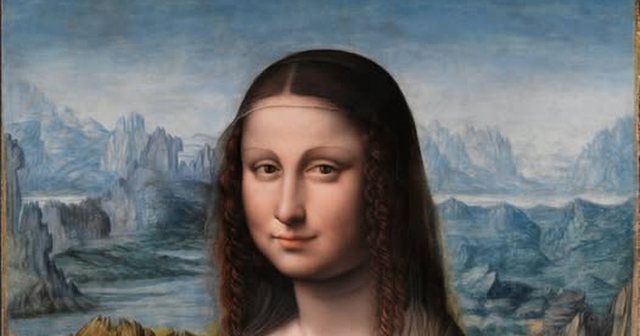
She is not the legendary Mona Lisa, but was born from the same conception.
She is not the Mona Lisa we know and adore, but her value is the same - the magic of the mystery of creation.
There are paintings that speak loudly and there are others that are silent, but their silence is filled with enigma and mystery. In the halls of the Prado Museum, for more than four centuries, one such painting stood, peaceful, undervalued, invisible in the glory of other paintings. It was kept as an ordinary copy of the Mona Lisa, a worthless reproduction of Leonardo's most famous work. And yet, on its calm surface, a truth hid itself waiting to be discovered.
In 2012, this silence was broken, a whisper began to be heard, the wake-up call was bringing back to life, a life killed with disdain.
The restorers, guided not only by professional intuition but also by a sense of unexplained mystery, used infrared technology to see deeper than the human gaze. In that light that strips the painting of its layers of oblivion, a new reality began to emerge, what was believed to be a mechanical copy turned out to be a masterpiece born within Leonardo da Vinci's own workshop.
Francesco Melzi or Salaì, two names who were always close to the master, could have been the author of this painting. Both were not just students, but inseparable companions, observers of the creative process, followers of every finger, arc, light and sketch of Leonardo. In his workshop, art was not taught through explanations; it was learned by watching, following, imitating and then overcoming oneself.
This is likely how the Prado Mona Lisa was born, a work that developed in parallel with the original, reflecting the master's process almost in real time. A Mona Lisa that, ironically, did not have the fortune to be exhibited and adored like the one in the Louvre, remained more protected. Its colors were not burned by the light of the centuries, the landscape was not darkened, the face was not covered by the cracks of time.
It remained preserved, almost as a pure testament to the world that Leonardo saw and painted.
The most dramatic revelation was not only the authorship of the painting, but its landscape. Under a black repaint, an intervention of past centuries that aimed to standardize, flatten, and eliminate the individuality of the work, lay a world, gentle hills, winding roads, rivers flowing towards the horizon.
This landscape, which in the Louvre has been darkened and blurred by time, appears in the Prada with a clarity that amazes. As if someone had opened a window to the past, to the moment when Leonardo and his students looked at the same model, the same light, the same mystery of the smile that still amazes the world today.
The Prado's Gioconda is not an imitation, it is a historical parallel. A possible view of the Mona Lisa as she appeared in her early days, before the centuries stripped her of her initial vitality.
The 2012 discovery is one of those rare moments when art history is rewritten. Until then, the painting had been ignored, overlooked, left in the shadow of the Louvre's Mona Lisa's triple fame: icon, enigma, object of myth. But in its long silence, the Prado work had preserved something that the original had lost: an incomparable freshness, a pure light, a vivid contour.
It does not serve only as a copy of a large painting, it is a document, a precious fragment of the inner history of Leonardo's workshop. A testament to the process, the method, the life of art beyond myth.
In this work, we see not only the rhythm of the student's hand, but also the breathing of the master.
The Mona Lisa of the Prado speaks to us of a universal truth, that often, in what we dismiss as imitation, there may be hidden originality that we have not been able to see. In the shadow of great works, live copies that are not copies, they are traces, evidence, signs of a history broader than the work itself.
It reminds us that truth does not always lie in the spotlight. That the light of the past can survive on the outskirts. That the truth of art often lies precisely where it is least expected, in silence, in the shadows, in understatement.
In the end, the Prado's Mona Lisa is a testament to memory.
A memory he didn't forget, even when everyone else neglected him.
Happening now...














The revolution is over, Edi Rama continues calmly
Nga Bato Kosova
ideas



top






TRENDING 




services
- POLICE129
- STREET POLICE126
- AMBULANCE112
- FIREFIGHTER128