


FLASH NEWS
Osmani on the draft law on the Presevo Valley: Systematic discrimination against Albanians is no longer invisible

2026-01-26 20:35:40 / KOSOVA
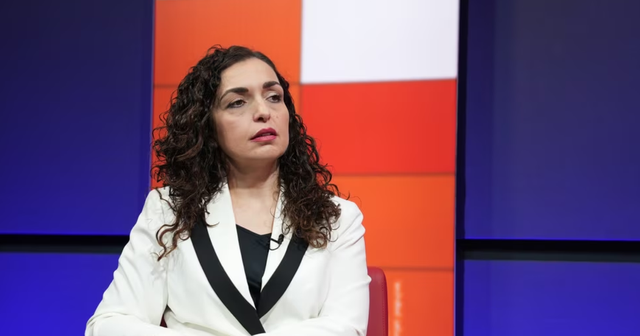
The President of Kosovo, Vhosa Osmani, said that the advancement of the Draft Law on the Assessment of Discrimination in the Presevo Valley sends the message that, according to her, "discrimination against the Albanian community in Serbia is no longer invisible or tolerated."
"Serbia has consistently committed authoritarian violations of minority rights, including a campaign of deliberate passivation for ethnic cleansing through administrative means, suppression of the Albanian language, exclusion from public institutions, discrimination in education, economic marginalization, and intimidation by central authorities," Osmani said in a post on X.
Members of the US Congress's Foreign Affairs Committee voted on January 21 to forward this bill, which requires US Secretary of State Marco Rubio to prepare a comprehensive report on the treatment of ethnic minorities in Serbia, particularly Albanians living in Presevo, Medvedja and Bujanovac, also known as the Presevo Valley.
Osmani thanked Representative Keith Self, who sponsored the bill, the Chairman of the House Foreign Affairs Committee, Brian Mast, and the other members of this body who voted to "advance the bill with bipartisan support."
After passing full consideration, the bill will be reported by the House Foreign Affairs Committee and sent to the full House for a vote. It must then be approved by the Senate and signed into law by US President Donald Trump.
This draft law seeks to assess important issues, including the passivization of Albanian addresses, restrictions on the use of the Albanian language in public institutions, discrimination in education, including the non-recognition of Kosovo diplomas and the lack of textbooks in the Albanian language.
The issue of diplomas has been regulated by several agreements reached within the framework of the dialogue between Kosovo and Serbia in Brussels and by an agreement between the Western Balkan countries at the summit within the framework of the Berlin Process. Kosovo has respected these agreements.
Meanwhile, regarding passivization, Albanians in the Valley have often complained and protested.
Deregistration means erasing citizens from their registered addresses. This step results in the loss of Serbian citizenship, and consequently all civil rights – including the right to vote, own property, have health insurance and a pension, and be employed.
This issue was also mentioned in the US State Department's report on human rights in Serbia for 2023.
Albanians living in southern Serbia also complain about a lack of Albanian-language textbooks, for which the Kosovo government has allocated funds. Kosovo has also helped them in other sectors, such as agriculture, but has complained that Serbia is blocking payments.
The advancement of the draft law has been welcomed by Albanian politicians and the Albanian National Council in Serbia.
According to the latest population census in 2022, more than 60,000 Albanians live in Serbia and are the fourth largest minority in this country.
In international reports, the Presheva Valley is considered completely isolated and is said to receive attention only during election times./REL
Happening now...








The revolution is over, Edi Rama continues calmly
Nga Bato Kosova
ideas



top





TRENDING 




services
- POLICE129
- STREET POLICE126
- AMBULANCE112
- FIREFIGHTER128