


FLASH NEWS
Venezuelan oil and American companies/ The aftermath of Nicolas Maduro's arrest

2026-01-05 17:21:50 / BOTA
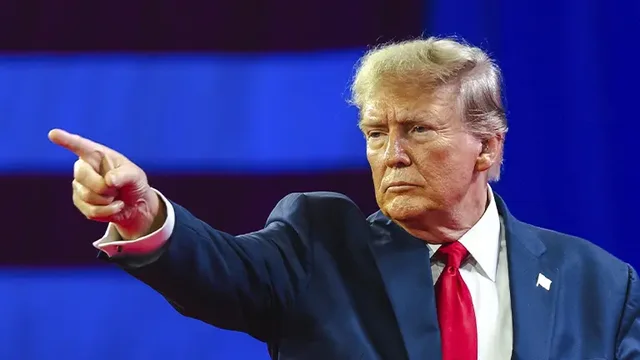
US President Donald Trump's vision for American oil companies to rebuild Venezuela's devastated oil sector represents the biggest test yet of the US industry's resilience to risk, Axios reports.
It's a big deal, as Trump and other administration officials have made no secret of the fact that Venezuela's vast oil reserves are a major reason for the overthrow of Nicolas Maduro.
"You can't have the world's largest oil reserves under the control of adversaries of the United States ... without benefiting the people of this country ," Secretary of State Marco Rubio said on NBC's "Voice of America" on Sunday.
“We want countries around us that are stable and successful, where oil can flow freely… That brings down prices. It’s good for our country.”
However, the overall picture is that the willingness of American companies to invest in Venezuela's abandoned infrastructure is not a given, many analysts warn, despite the confidence expressed by American officials.
“Venezuela’s ability to increase production depends on capital, which in turn requires political stability and perhaps guarantees from the U.S. government,” analysts at Jefferies Global Research & Strategy wrote in a note on Sunday.
US companies “will be wary of getting involved without a stable security environment and very favorable conditions that reduce risk – especially with oversupplied markets and low prices in the short term,” says Eurasia Group analyst Gregory Brew.
Interestingly, many questions remain about how the U.S. can create favorable conditions for billions of dollars of investment, although Rubio said generally on CBS Sunday that companies would need “guarantees and specific conditions.” He also said that the “quarantine” of tankers under sanctions creates leverage for change in this area.
As Axios notes, this isn’t the first time Trump has asked oil companies to step out of their comfort zones in pursuit of big profits — and big risks. The Interior Department is considering granting drilling rights in Arctic waters off Alaska, as well as in the Pacific. Companies seem eager to ramp up leases in the “Gulf of America” (renamed from the Gulf of Mexico).
But interest in other offshore areas – and the costs, legal battles and communication headaches that come with them – remains tepid.
Chevron remains the only major American company still operating in Venezuela. Other companies – notably Exxon and ConocoPhillips – left the nationalized sector about two decades ago after falling out with Hugo Chavez's regime. They are owed billions of dollars in arbitration awards for expropriated assets.
Luisa Palacios, a researcher at Columbia University's Energy Institute, wrote on Sunday that an optimistic but realistic scenario could see production increase by 500,000 to 1 million barrels per day within two years. That would come from a combination of better governance and the lifting of remaining U.S. sanctions.
She sees potential for international companies already operating there – such as Chevron, Repsol and ENI – to increase production based on existing licenses. And, with many reservations, she sees a possibility of a return to historically high production levels of 3.5 million barrels per day within seven to 10 years.
What are we seeing, according to Axios?: The first, still limited, signs of interest from industry. So far, major US companies have been silent. Rubio said there would be “tremendous interest if things were done the right way.”
Energy Secretary Chris Wright and Interior Secretary Doug Bergham will soon “be in the process of evaluating and discussing with some of these companies,” he added.
Happening now...







The end of the commercial leader, Rama!
Nga Irena Beqiraj
ideas



top


Alfa recipes




TRENDING 




services
- POLICE129
- STREET POLICE126
- AMBULANCE112
- FIREFIGHTER128