


FLASH NEWS
Sharks may not be what we think: New study questions their origins

2026-03-27 09:44:31 / MISTERE&KURIOZITETE
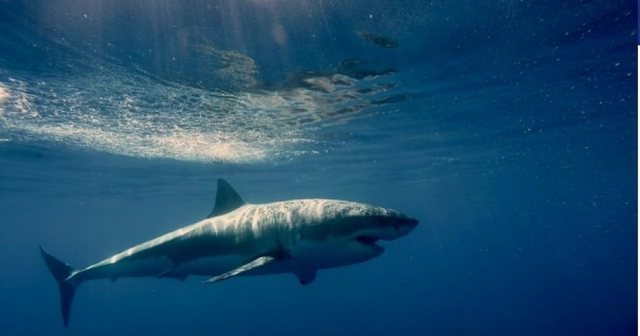
Shark DNA analysis has challenged our understanding of these fierce predators.
We may need to rethink what sharks really are, thanks to a new study from Yale University.
Evolutionary biologists have compared the DNA of different sharks with each other, but also with related species that are not sharks, such as various species of rays and chimaeras.
They found that sharks are not necessarily each other's closest relatives, which calls into question the very concept of sharks as a biological category.
"Our research questions the idea that all sharks share a common ancestor, excluding different types of rays," the study's first author, Chase Brownstein, a doctoral student at Yale, told BBC Science Focus. "This can be interpreted in two ways: either sharks are not a natural group, because they do not share a common ancestry, or rays are actually just another species of shark."
In total, the scientists analyzed the genetic data of 48 different species, looking at their complete genomes.
"Genomes represent the total amount of genetic information stored in our cells," said Thomas Nier, professor of ecology and evolutionary biology at Yale.
"By comparing entire genomes, not just a few genes, we can better understand how organisms are related to each other."
Brownstein explained that they were investigating "how different ways of sampling DNA sequences from the entire genome might affect our understanding of the relationships between sharks, rays, and other cartilaginous fish."
The evidence they found was contradictory. When they examined specific sections of DNA, called exons, Brownstein and Nir found evidence that all sharks could belong to the same family.
However, other pieces of DNA suggested the opposite - that some shark species (such as bull sharks and cow sharks) may be more closely related to rays than to other sharks.
Therefore, these unusual sharks can only be distant relatives of the rest of the shark world, having diverged much earlier in the evolutionary tree.
If sharks are truly a distinct group, biologists can use genetic data to estimate when they first appeared.
"We estimate that this group emerged about 300 million years ago," Brownstein said. "That's consistent with — or even slightly later than — the time when we last shared a common ancestor with today's amphibians."
Scientists explain that sharks and rays make up one of the oldest branches of vertebrates - animals that have a strong, segmented spine.
"They are the first jawed vertebrate species to diverge in the evolutionary tree, which means they provide key information about the first animals with jaws and a bony skeleton," Braunstein added.
"We hope this research will draw attention to this understudied part of the vertebrate tree."
Happening now...
















ideas


Saliu's horse, Ed's taggia
Nga Adrian Thano

Italy/ Investigations, laws and poisons, the eternal clash between politics and justice
Nga Giovanni Bianconi
top



Alfa recipes



TRENDING 




services
- POLICE129
- STREET POLICE126
- AMBULANCE112
- FIREFIGHTER128