


FLASH NEWS
Italy/ Investigations, laws and poisons, the eternal clash between politics and justice
Nga Giovanni Bianconi
Italy/ Investigations, laws and poisons, the eternal clash between politics and justice

2026-03-24 23:27:28 / IDE
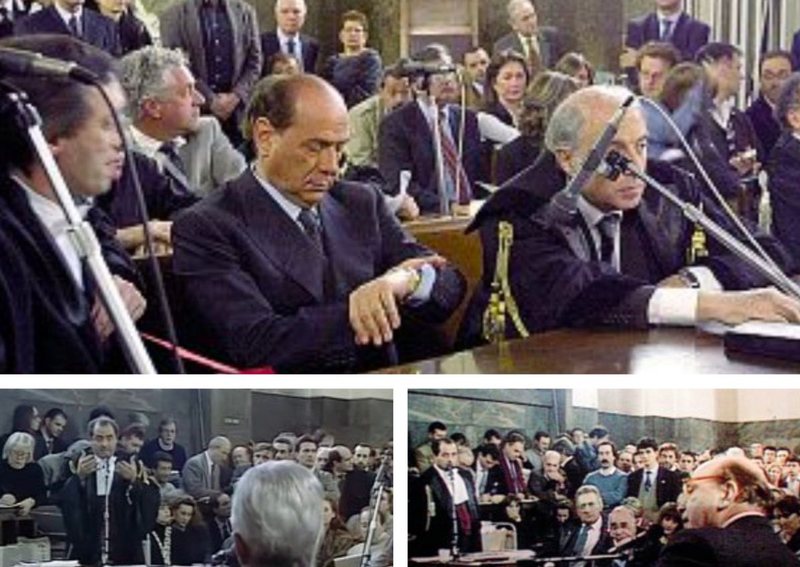
The justice reform has been defeated, the structure of the judicial order does not change, but it is very likely that the conflict between politics and the administration of justice will not change either.
A conflict that has been going on for more than thirty years, which has intensified in recent months precisely because of the "epochal" changes that the country's government has attempted to bring to the self-government of judges, and which seems destined to continue in the future.
Logic would require that, after a referendum confrontation that reached such heated tones that it forced the President of the Republic to recall the obligation for mutual respect between institutions, the situation would return to normality. But normality, now, is precisely the clash between the two powers of the state: the executive and the judiciary, the government and justice.
Starting tomorrow, the controversy over the future requests of prosecutors and the relevant decisions of judges will return, especially on cases with a high "political" content.
Such as those that have recently emerged from the Rome Prosecutor's Office: the announcement of the conclusion of the investigation against the Chief of Staff of the Ministry of Justice, Giusi Bartolozzi, which will have other developments; or the possible developments of the investigation involving the Undersecretary of the same department, Andrea Delmastro, for whom the appeal process is approaching after the first instance conviction for revealing official secrets. Without mentioning the proceedings against other government representatives, such as those related to the Minister of Tourism Daniela Santanchè; the decisions on immigrants or the judicial initiatives regarding the bridge project over the Strait of Messina, and any investigation or decision that has a political dimension.
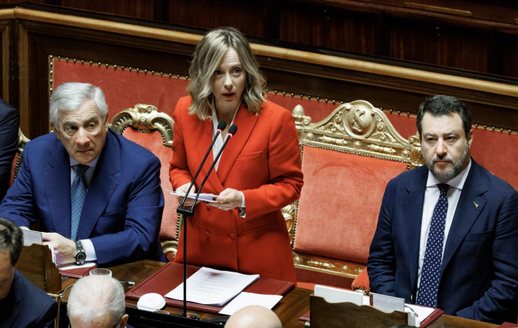
This story has been going on since the beginning of the “Mani Pulite” operation in 1992, but even ten years earlier, the then PSI secretary and future prime minister Bettino Craxi (a harsh critic of the Tangentopoli investigations) attributed the stock market crisis to “some judicial actions with reckless elements”. Then came the cyclone of governments hit by notices of investigations, which marked the end of the so-called parties of the First Republic, and at that time the right was on the side of the prosecutors. It was April 1993, when the young people of the Youth Front, where Giorgia Meloni also fought, symbolically surrounded the parliament shouting: “Surrender, you are surrounded”, causing strong reactions to what was described as a “fascist mess”.
The following year, after winning the elections, Silvio Berlusconi tried to include two magistrates from the “Mani Pulite”, Antonio Di Pietro and Piercamillo Davigo, in his first government, but without success. Everything changed in a few months: first with the televised statement of the same prosecutors against the decree called “salvation for thieves”, which was approved and immediately withdrawn by the government; then with the announcement of an investigation against the prime minister himself, which led to accusations of a “coup” against the platoons, signed by Di Pietro among others. The latter then agreed to become a minister in the Prodi government in 1996, with the center-left, before entering parliament and founding his own party.
The former prosecutor himself, who after leaving the platoon and entering politics passed without consequences dozens of investigations carried out by his former colleagues, can be considered one of the symbols of this permanent clash, where the same protagonists have lined up sometimes on one side and sometimes on the other, according to time and circumstances, for the different roles they have played, going from allies to opponents and vice versa. If until the early 2000s Di Pietro was a determined opponent of the separation of careers between judges and prosecutors, during the referendum campaign he became one of the strongest supporters of the reform that aimed to separate them, always in the name of the "sacred independence of justice". An independence that, on the other hand, is considered endangered by the magistrates themselves, who expressed the same concern in the late '90s, at the time of the bipartisan Commission for institutional reforms led by Massimo D'Alema. It envisaged a reform of the judicial order different from the one overthrown yesterday (but with some very similar slogans), strongly opposed by their association.
The same resistance was shown towards Matteo Renzi, who shortly after entering Palazzo Chigi in 2014 approved new norms (among them the reduction of the retirement age from 75 to 70, which paved the way for hundreds of new appointments to the heads of judicial offices, established by the Superior Council of Magistracy with the so-called “system of currents”); faced with the threat of a strike by the ANM, the then prime minister reacted with a “Brrr… how scary!”, somewhat ironic and contemptuous, before declaring himself the victim of numerous investigations that subsequently affected him and his family. Other episodes of the clash between politics and justice, regardless of who governs and who is in opposition. A clash that is unlikely to stop with the blocking of the latest reform. / Corriere della Sera
Happening now...












ideas

Italy/ Investigations, laws and poisons, the eternal clash between politics and justice
Nga Giovanni Bianconi

This PD doesn't know how to value life or death anymore!
Nga Fitim Zekthi

top



Alfa recipes



TRENDING 




services
- POLICE129
- STREET POLICE126
- AMBULANCE112
- FIREFIGHTER128