


FLASH NEWS
REL: The case for the deactivation of Albanian addresses in Serbia is sent to the Strasbourg Court!

2026-03-02 23:50:14 / KOSOVA
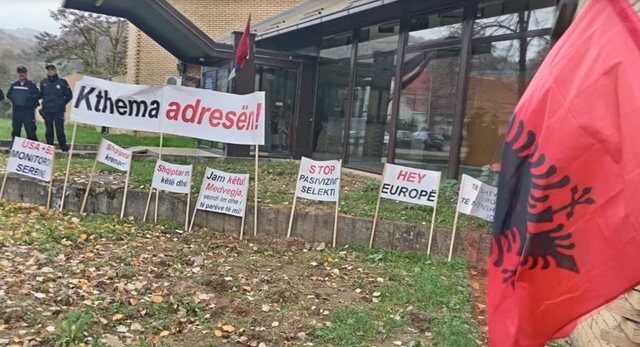
A lawsuit regarding the deactivation of addresses of Albanians in southern Serbia has been sent to the European Court of Human Rights, lawyer Drini Grazhdani announced in a Facebook post.
According to him, the lawsuit against Serbia is the result of "joint legal and human work" and is related to an issue that, as he said, has broad public importance.
He thanked his collaborators for preparing the case, while also singling out Teuta Fazliu, who, according to him, has agreed to represent the case in question.
"This case is not just about an individual, but about standards of human rights protection and the prohibition of systematic discriminatory practices," he wrote.
The deregistration of addresses means the deletion of citizens from the addresses where they were registered. This action results in the loss of Serbian citizenship and, consequently, civil rights, including the right to vote, to own property, to benefit from health insurance and pension, as well as to be employed, informs REL.
The issue has been raised repeatedly by Albanians in Presevo, Medveđa and Bujanovac, as well as by the Kosovo Government, which has described the practice as discriminatory. Protests have been organized over the years on this topic.
In the Progress Report for Serbia published on November 4 by the European Commission, in the section on the protection of minorities it is stated that "members of the Albanian national minority continue to raise concerns regarding the way the police check their residence status in southern Serbia, resulting in the 'passivation' of certain addresses."
The report emphasizes that authorities should better explain to the public how these checks are conducted and address concerns about the lack of effective means of appeal.
The issue of passivation is also mentioned in the US State Department's 2023 report on human rights in Serbia, which states that this practice appears to have been disproportionately applied to Albanians, especially in Medvedja.
The European Commission report also states that the action plan to improve the representation of Albanians in institutions "has not yet produced the necessary results" and that national minorities continue to be underrepresented in public administration and the police.
According to the latest population census in 2022, more than 60,000 Albanians live in Serbia, making up the fourth largest minority in the country.
The Presevo Valley – a term used for Presevo, Medvedja and Bujanovac – is considered an isolated area in international reports, receiving attention mainly during election periods.
In July of this year, the only Albanian MP in the Serbian Parliament, Shaip Kamberi, submitted a draft resolution on the situation of Albanians in the Valley, demanding that this issue be included in the Kosovo-Serbia dialogue mediated by the European Union and that administrative measures for de-identification of addresses be suspended.
Happening now...











Germany, the "curse" of Rama and Berisha
Nga Bato Kosova
ideas

The opposition must and will be bigger than an individual.
Nga Taulanda Jupi

Violent protests as group therapy
Nga Roland Lami

Those who mocked and attacked Basha
Nga Ermal Peçi
top



Alfa recipes



TRENDING 




services
- POLICE129
- STREET POLICE126
- AMBULANCE112
- FIREFIGHTER128