


FLASH NEWS
If only Berisha had listened to Basha about the non-grata!

2025-10-29 17:45:06 / IDE
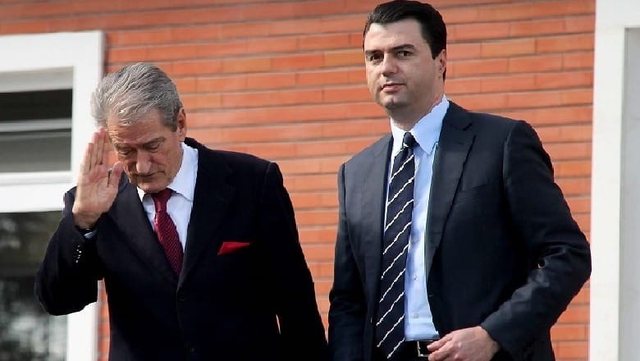
In the Balkans, politics is like a never-ending play: the actors change, but the stage remains the same. One only has to look at the case of Milorad Dodik and Sali Berisha to understand how two similar stories are separated by a fundamental detail, the refusal to leave with dignity.
Recently, the State Department announced that Dodik has been removed from the US blacklist, after he retired from active politics. A decision that is neither a gift nor a oblivion, but a political message: “when you relinquish power, you pave the way for reflection and normalization.”
In essence, the US gave a clear signal to all leaders in the region, even those who behave as if they are eternal: humility in the face of the rule of law and democracy is rewarded; defiance of them is punished.
On the other side of the border, Sali Berisha remains on the American and British “blacklist,” isolated, locked in a political bunker that has already turned the DP into an army of survivors fighting not for power, but for the protection of a single man.
This is the difference between Dodik and Berisha: the former realized that the wind has changed; the latter is waiting for the wind to turn in his direction.
Dodik, a well-known nationalist, became a symbol of resistance to the West, but in the end, he chose to leave the stage with a political compromise. He admitted that without the US and the European Union, any attempt at “Bosnian anarchy” is a dream that ends badly.
Berisha, in contrast, has built a martyr narrative, where he sees himself as the victim of an “international conspiracy”. He does not accept any kind of responsibility, neither for corruption, nor for the division of the opposition, nor for the breakdown of relations with Albania’s historical allies.
Perhaps more significant is the word of Lulzim Basha, who once publicly asked Berisha to take a step back in order to “negotiate a softening of international attitudes towards him.”
It was a call that today sounds prophetic for democrats: if Berisha had chosen a soft exit, the DP could be in power today and not in a struggle for existence.
If he had agreed to take a step back, perhaps he too would have been, like Dodik, on a “white list” of political memory, not of punishment.
Berisha chose another path. The path of confrontation, of victimization, of a war that he knows has no victory. For this reason, with each passing day, he is deepening the gap between himself and those who once saw him as a symbol of Albanian democracy.
In the end, the question is no longer whether the US will remove Berisha from the blacklist.
The question is whether Berisha will remove himself from the blacklist of history.
Time forgives mistakes, but it does not forgive those who do not know how to stop. History, in the Balkans or elsewhere, never rewards persistence in error; it only honors those who know how to exit the scene in time. Dodik did it. Berisha did not.
So, today we have a “white list” that erases the sins of withdrawal, and a “black list” that seals the stubbornness of remaining.
Between these two names, more than a political boundary, lies a lesson that every Balkan leader should hear:
When America closes the door, it is not an infinity but it never opens by force, only with humility and by taking a step back.
Happening now...






ideas

The Statute Review and Berisha's Sinking Boat
Nga Alesia Balliu

Will the new justice system unite the SP and the DP?
Nga Arbër Hitaj

Sovereignty as a fig leaf
Nga Namir Lapardhaja
top






TRENDING 




services
- POLICE129
- STREET POLICE126
- AMBULANCE112
- FIREFIGHTER128