


FLASH NEWS
Severe labor shortage/ DW: What's happening in Europe and the US

2025-12-28 13:52:47 / BOTA
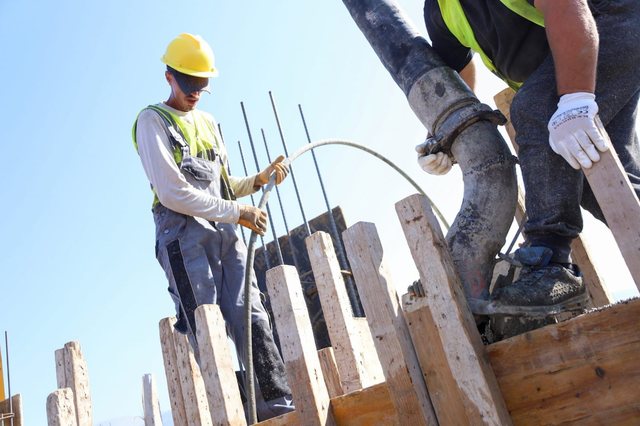
In Europe, and especially in the United States, hostility towards immigrants is growing.
At the same time, the world's richest economies are keen on foreign workers. But labour migration is falling globally, even as ageing societies face growing labour shortages, according to a report by the Organisation for Economic Co-operation and Development (OECD) released last month.
The trend began long before the re-election of Donald Trump, who during his successful campaign attacked immigrants. According to the OECD, an organization that monitors global economic and social policies, labor migration in 38 member countries fell by more than a fifth in 2024.
The decline is attributed less to demand than to growing political opposition to immigration and stricter visa regulations in some industrialized countries. At the same time, temporary labor migration to these countries has continued to grow.
The decline caused by some countries
"Most of the decline in permanent labor migration can be attributed to policy changes in the United Kingdom and New Zealand," Ana Damas de Matos, a senior analyst at the OECD, told DW.
In New Zealand, the decline is linked to the end of a post-pandemic residency scheme that allowed more than 200,000 temporary migrants and their family members to settle permanently in the country. The country’s largest residency program expires in July 2022. After Brexit, the UK reformed visa regulations for healthcare workers, tightening eligibility criteria and excluding the possibility of family members coming, which led to a significant drop in visa applications.
According to the OECD, the healthcare sector is particularly vulnerable to workforce shortages due to such restrictions. Seeta Sharma, a migration expert who has worked as an advisor to the United Nations and the Indian government, believes that stricter regulations on foreign students in the UK are counterproductive.
"The path from university to work is now limited," she tells DW. "This will lead to a decline in enrollment. Indian citizens, for example, will no longer spend large sums on education abroad if they don't have a clear career path afterward."
The OECD report shows that India, with 600,000 migrants last year, was by far the leading country in terms of migrant workers in OECD countries. It is followed by China and Romania.
The technology sector suffers from US restrictions
In the US, under the Biden administration, stricter restrictions were imposed on so-called H-1B visas. This is the main program that allows foreign experts to work in this country in fields such as technology, engineering and medicine. Meanwhile, Trump has increased the cost of visas for employers from $2,000-5,000 to up to $100,000. He wants to limit opportunities for permanent residence across sectors.
In Australia, the salary thresholds that skilled workers must meet to get a visa have been raised. In Canada, entry routes for temporary foreign workers have also been changed. Work-related migration has also fallen sharply in the Nordic countries – Finland alone, for example, has seen a 36 percent drop compared to last year.
In Germany, permanent immigration fell by 12 percent last year, due to stricter immigration rules introduced by former Chancellor Olaf Scholz. Under these rules, 586,000 foreign workers entered the country, but the number of people entering on work visas was 32 percent lower than the previous year. These reforms by Scholz's government have been further expanded by the current cabinet of Chancellor Friedrich Merz.
Herbert Briker, professor of economics at Humboldt University in Berlin, says this is causing problems for the German economy. "For many years, Germany has benefited from an average annual migration of 550,000 people," Briker told DW. "We need migration to replace workers who are retiring. Without it, a stable supply of labor cannot be maintained."
High demand for migrant workers in Europe
Across the European Union, according to the International Monetary Fund, citizens from outside the EU filled about two-thirds of the jobs created between 2019 and 2023. This shows how dependent the Union and Europe as a whole has become on migrant workers.
Globally, the International Labour Organization (ILO) estimated that there were 167.7 million migrant workers in 2022, which is 4.7 percent of the total global workforce. More than two-thirds of them (114.7 million) lived and worked in high-income countries. Despite a decline in 2024, global labour migration remains above pre-pandemic levels.
However, the OECD report shows how this migration can suddenly stop. The reason lies in political resistance, driven more by fears of illegal migration than by still-record-high economic demand. Trump's current agenda has further intensified this dynamic. Since taking office in January, he has issued a series of executive orders aimed at cracking down on both legal and illegal immigration. His administration argues that the measures are necessary to protect American workers and ensure a system based solely on job qualifications./ DW
Happening now...
















ideas



top



Alfa recipes




TRENDING 




services
- POLICE129
- STREET POLICE126
- AMBULANCE112
- FIREFIGHTER128