


FLASH NEWS
Italians celebrate birth of village's first baby in 30 years

2025-12-28 18:23:26 / BOTA
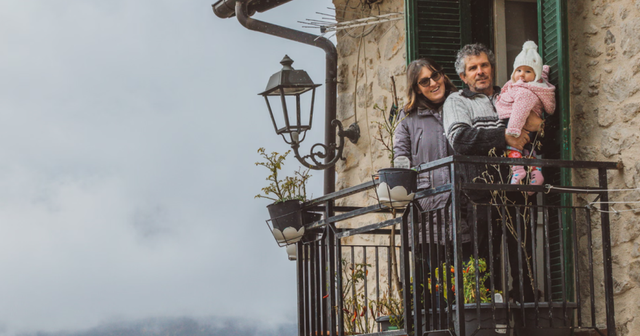
In Pagliara dei Marsi, an ancient rural village on the slopes of Mount Girifalco in Italy's Abruzzo region, cats far outnumber humans. They wander the narrow alleys, creep in and out of houses and lie on the walls overlooking the mountains. Their meows are a constant sound in the quiet that has come after decades of population decline.
But since March, this calm has been broken by huge celebrations for a rare event: the birth of a child.
As The Guardian writes , Lara Bussi Trabucco is the first baby born in Pagliara dei Marsi in almost 30 years, bringing the village's population to around 20 residents.
Her baptism in the church opposite the house was attended by the entire community, including the cats, and the unusual fact of the birth of a child has turned Lara into a major tourist attraction.
“People who didn’t know Pagliara dei Marsi existed came just because they heard about Lara,” said her mother, Cinzia Trabucco. “In just nine months, she’s become famous.”
Lara's arrival is a symbol of hope, but also a painful reminder of Italy's worsening demographic crisis.
In 2024, births in the country reached a historic low of 369,944, continuing a 16-year negative trend, according to data from Istat (the National Statistics Agency). The fertility rate also fell to a new record, with an average of 1.18 children per woman of reproductive age, one of the lowest in the EU.
The reasons for the decline are many: job insecurity, mass emigration of young people, lack of support for working mothers and, as in other countries, rising male infertility. Also, a growing number of people are simply choosing not to have children.
Preliminary Istat data for the first seven months of 2025 show a further decline, and of Italy's 20 administrative regions, nowhere is it more pronounced than in Abruzzo, where between January and July there was a 10.2% drop in births compared to the same period in 2024.
Pagliara dei Marsi is small, but it represents a national panorama dominated by an aging population and empty schools, putting pressure on public finances and presenting major economic and social challenges for local, regional and national leaders.
"We have suffered from a drastic depopulation, exacerbated by the loss of many elderly people, without any generational replacement," said the mayor, Giuseppina Perozzi.
Perozzi, who lives a few doors down from baby Lara, said she was grateful to Trabucco, 42, and her partner, Paolo Bussi, 56, for starting a family and hopes it will inspire others.
Situata e tyre është e pazakontë. Trabucco, një mësuese muzike, ka lindur në Frascati pranë Romës dhe ka punuar për vite në kryeqytet, përpara se të vendoste të zhvendosej në fshatin ku kishte lindur gjyshi i saj, sepse gjithmonë kishte dashur të rrisë një familje larg kaosit të qytetit. Ajo u njoh me Bussi-n, një punëtor ndërtimi nga zona, disa vite më parë.
Çifti përfitoi një “bonus bebeje” prej 1 mijë eurosh pas lindjes së Larës, një pagesë e vetme për çdo fëmijë të lindur ose adoptuar që nga janari 2025, e prezantuar nga qeveria e Giorgia Melonit si pjesë e premtimit për të luftuar atë që kryeministrja e ka quajtur “dimri demografik” i Italisë. Ata marrin gjithashtu një pagesë mujore prej rreth 370 eurosh për fëmijën.
Por sfida kryesore e tyre është balancimi i kujdesit për fëmijën me punën. Sistemi italian i mbështetjes për kujdesin ndaj fëmijëve është kronikisht i pamjaftueshëm dhe administrata e Melonit, pavarësisht se e ka paraqitur krizën e lindshmërisë si një betejë për mbijetesën kombëtare, deri tani ka dështuar në premtimin për të rritur numrin e çerdheve. Shumë gra që mbeten shtatzënë detyrohen të lënë punën dhe më pas e kanë të vështirë të rikthehen.
Çifti shqetësohet edhe për shkollimin e ardhshëm të Larës. Herën e fundit që Pagliara dei Marsi kishte një mësues, shtëpia e të cilit shërbente edhe si shkollë, ka qenë dekada më parë. Ka një shkollë fillore në Castellafiume aty pranë, por duke pasur parasysh mbylljet e shkollave në Itali për shkak të rënies së lindjeve, mbetet për t’u parë nëse do të ketë mjaftueshëm fëmijë për ta mbajtur hapur.
Trabucco tha se stimujt financiarë nuk mjaftojnë për të ndalur trendin. “I gjithë sistemi duhet revolucionarizuar,” shtoi ajo. “Jemi një vend me taksa të larta, por kjo nuk përkthehet në cilësi të mirë jete apo shërbime sociale të mira.”
Rreth një orë larg Pagliara dei Marsi ndodhet Sulmona, një qytet dikur i gjallë, ku ritmi i shpejtë i shpopullimit gjatë dekadës së fundit ka sjellë një betejë për të shpëtuar repartin e maternitetit në spitalin Annunziata nga mbyllja.
Reparti, që i shërben qytetit dhe fshatrave përreth, solli në jetë 120 foshnja në vitin 2024, shumë më pak se 500 të nevojshme për të ruajtur financimin. Nëse mbyllet, gratë shtatzëna do të duhet të udhëtojnë deri në L’Aquila, kryeqyteti rajonal, rreth një orë larg, duke rrezikuar në raste emergjente.
“Rajoni është i madh dhe sidomos në dimër, kushtet e udhëtimit mund të jenë të rrezikshme,” tha gjinekologu Gianluca Di Luigi, i cili kujtoi lindjen e një gruaje që kishte mbetur e bllokuar në një stuhi dëbore për tetë orë. “Kur arritëm ta sillnim në spital, duhej të bënim një prerje cezariane urgjente. Ishte fëmija i saj i parë dhe ajo u traumatizua nga e gjithë përvoja.”
Those fighting to keep the ward open argue that the target of 500 births a year, set in 2010, is no longer realistic. “We’ve never reached the magic number of 500 here,” said Berta Gambina, a midwife who has worked at the ward for 39 years. “Even in the best of times, the average was about 380 births a year. But we will do everything to keep it open, my biggest fear is abandoning pregnant women.”
Ornella La Civita, a municipal councilor with the center-left Democratic Party, said financial incentives to encourage births are welcome. “But how can you give women money to have children without guaranteeing them a safe and protected place to give birth?”
An often-overlooked topic in the debate over fertility in Italy is fertility preservation, Di Luigi said, through methods such as egg freezing. “Ideological thinking in Italy has always been an obstacle,” he added. “But if we want to have newborns, then we also need education, yes, to provide decent jobs for young people, but let’s also start teaching them about fertility preservation.”
Happening now...















ideas



top



Alfa recipes




TRENDING 




services
- POLICE129
- STREET POLICE126
- AMBULANCE112
- FIREFIGHTER128