


FLASH NEWS
Savonoski Crater: The Mysterious, Perfectly Circular Hole in Alaska That Scientists Can't Explain

2025-06-26 17:13:24 / MISTERE&KURIOZITETE
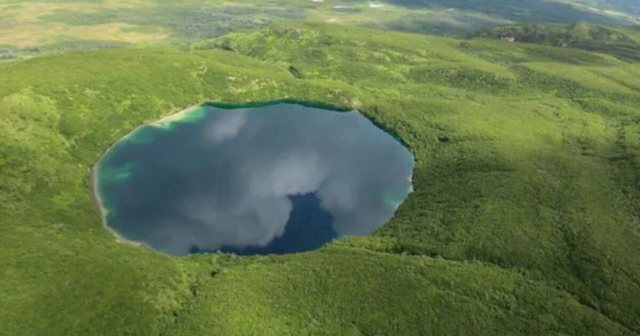
Savonoski Crater is a round crater in southwest Alaska that scientists have long struggled to explain due to a lack of geological evidence.
However, there is a scientific explanation for this lack of evidence, so we can safely say that this hole is neither a supernatural phenomenon nor an alien creation.
The crater is about 500 meters in diameter and 110 meters deep, according to a 1978 article published on the University of Alaska Fairbanks website. It is half-filled with water from rainfall and melting snow.
From the air, Savonoski Crater looks like it was created by a meteor impact. Meteor impact craters are usually circular and deep, so Savonoski fits that description, but geologists have yet to find evidence that a space rock hit Earth at this location.
Extensive studies conducted in the 1960s and 1970s failed to find evidence of meteoritic material or any extraterrestrial rocks within the crater that would have confirmed an origin linked to a fall from space. Researchers also found no rock fragments around the crater that would indicate that a meteor had dispersed material from the impact point.
Another alternative is that the crater could be a volcanic maar, a sinkhole formed when magma rises from deep within the Earth's crust and reaches groundwater. The intruded magma causes the water to boil, creating steam that builds up with enough pressure to cause a powerful explosion.
Volcanic maars often leave behind large craters that fill with groundwater. For example, the 100-meter-deep Ukinrek maar in eastern Alaska was formed during a 10-day eruption in 1977 and has since been partially filled with water, according to the U.S. Geological Survey.
However, there are no known volcanic formations in the vicinity of Savonoski Crater and no sign of any magmatic source beneath it, according to studies from the 1960s and 1970s. Thus, the volcanic origin of the crater remains a mystery.
Scientists agree that the Savonoski Crater is either a crater created by the fall of a meteorite or a volcanic maar, but a definitive answer will require much more in-depth research, according to studies.
The crater has been through at least one glacial period since it formed, meaning it was covered by a layer of ice when glaciers invaded southwestern Alaska between 23,000 and 14,700 years ago.
This glaciation has erased any visible evidence of the crater's origins, according to the University of Alaska Fairbanks, but there may still be traces hidden within the crater if scientists decide to drill a hole into its center, as researchers have observed in these studies. /Daily Galaxy



Happening now...










Denouncing Berishism is a prerequisite for denouncing the government
Nga Blendi Kajsiu
ideas

The Hungarian lecture and 4 messages for the political establishment in Albania
Nga Kreshnik Spahiu

Viktor Orban dictator?
Nga Indrit Vokshi

top


Alfa recipes






services
- POLICE129
- STREET POLICE126
- AMBULANCE112
- FIREFIGHTER128