


FLASH NEWS
Albanians are being replaced by foreigners in the fashion sector! The wave of workers from Myanmar "floods" the market, here's why they are preferred by owners

2025-12-07 12:13:22 / EKONOMI&SOCIALE
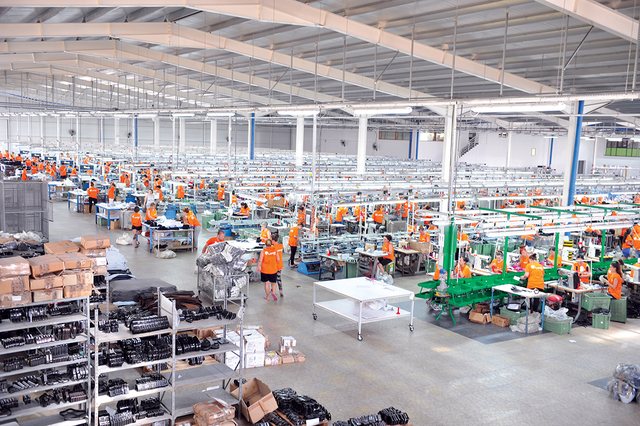
The garment industry's workers are largely female, uneducated, and have poor knowledge of technology and innovation. In the last decade, the sector has become less attractive to young people, due to low wages and long working hours in difficult conditions.
Companies claim that labor is no longer a problem, as a wave of workers from Miami, with salaries of no more than 500 euros per month, are doing very well.
For years, factories have been supplying foreign workers, selecting among those with the most skills. Although they cost 100–150 euros more than Albanian workers per month, they are still more profitable, as they work long hours and do not require daily leave for family problems.
On the one hand, technological advances have changed the way production is done, creating a need for continuous training and adaptation to new methods. Digitalization is transforming jobs, eliminating some and creating others.
Part of this process is the Digi4Wearables project, coordinated by the Portuguese Technological Footwear Center (CTCP), which aims to improve digital skills and knowledge about green and digital production in Albanian footwear companies.
The shift towards higher-value products requires a more skilled workforce and greater operational efficiency. Experts emphasize that targeted investment in vocational education and training, as well as closer cooperation between technical institutes, is essential.
In 2023, the textile and footwear industry counted 48.4 thousand employees, or 7% less than in 2019, but in 2024 and 2025 there is a stronger reduction, data from employment indices show.
Only 5% of production, closed cycle
The clothing and footwear manufacturing sector in our country estimates that only 5% of production is currently closed-cycle.
One of the most significant examples is “DBS Group” in Tirana, a company with Italian capital, which since 2014 has set up two production units and is involved in all stages of the process – from material preparation, cutting, sewing, quality control, packaging and to the final product.
DBS is considered a fully integrated factory, employing over 600 people and has benefited from collaboration with the French giant "Decathlon Group", for which it produces sportswear and accessories.
The company has invested in environmentally friendly technologies, using solar panels for energy production, carbon fiber heating and cooling systems, and natural air recycling. These elements make it a model of sustainable development in the Albanian tailoring industry.
Another example is the “Denim Factory Group”, which has implemented sustainable practices such as reducing water consumption in the jeans washing processes and using life cycle analysis methods to reduce environmental impact. The factory has invested in advanced technology and is aiming to strengthen its profile as a “Made in Albania” manufacturer, moving from the classic “cut-make-trim” model (only sewing for foreign brands) towards independent production under Albanian brands.
Similarly, Samwear Sh.pk, one of the most modern companies in the fashion sector, uses sublimation digital printing technology, which allows for the creation of high-precision designs with less waste, ranking among the first domestic manufacturers to invest in the closed production cycle.
According to a study by the Department of Textile and Fashion at the Polytechnic University of Tirana, around 56% of the companies surveyed declare that they have the objective of moving to a full production cycle, while another 35% have it in their short-term plans, but are hindered by a lack of investment and domestic raw materials.
However, the transition to such a model is a slow process that requires capital, technology, and skilled labor, as many companies still depend on importing materials from Italy or Turkey.
Essentially, the factories that have managed to create the closed cycle represent a new direction for the Albanian tailoring industry, which is trying to move away from the role of subcontractor for foreign brands and develop products with added value and local identity.
This transformation is essential to guarantee competitiveness, sustainable employment and broad inclusion.
The vast majority of companies (around 95%) continue to work with the traditional "cut-make-trim" (CMT) model, where they only sew or prepare part of the product on behalf of foreign brands and the material, design and sales are managed abroad./Monitor
Happening now...












ideas

The Statute Review and Berisha's Sinking Boat
Nga Alesia Balliu

Will the new justice system unite the SP and the DP?
Nga Arbër Hitaj

Sovereignty as a fig leaf
Nga Namir Lapardhaja
top






TRENDING 




services
- POLICE129
- STREET POLICE126
- AMBULANCE112
- FIREFIGHTER128