


FLASH NEWS
Pharmaceutical reform, will oligopolies fall and quality be restored?

2026-04-21 18:40:39 / EKONOMI&SOCIALE
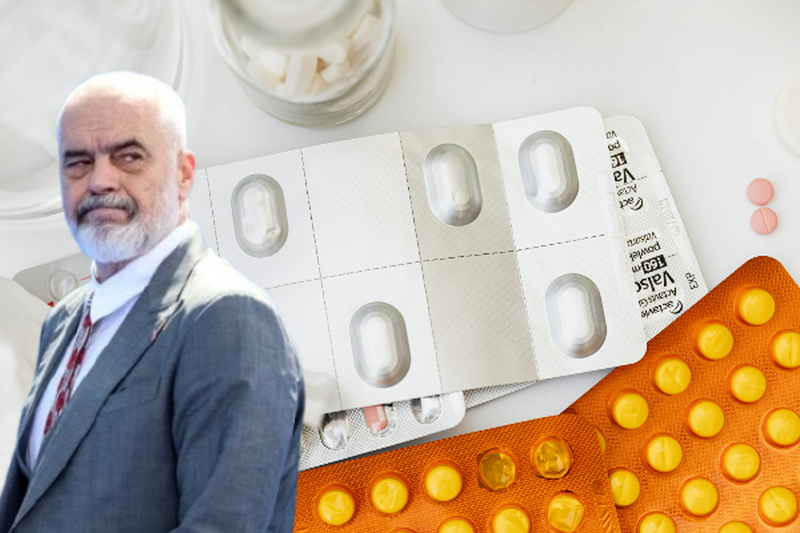
Eleven years later, the Albanian government "became convinced" that the 2015 drug law, presented and approved with fanfare as a "radical healthcare reform," needs profound change.
"We are working on a comprehensive review of the legislation on medicines in line with EU legislation, as an important step towards increasing standards and strengthening safety in the market," said Health Minister Evis Sala, at the conference held by the Order of Pharmacists.
The 2015 legal changes imposed domestically produced drugs and those from outside the EU, mainly Turkey, Serbia, and India, which have dominated the drug market for 11 years, especially for reimbursable and hospital drugs.
The quality of medicines remains low, while the main laboratory of the National Agency for Medicines and Medical Devices (AKBPM), in addition to being unaccredited, only performs analysis on the quality of medicines for a limited number of cases. "The medicine laboratory at AKBPM is unaccredited. Legal changes and cooperation between institutions are needed.
"The ALSAI recommends limiting the origin of medicines, medicines produced in the Balkan countries," suggests the ALSAI, in the summary report of the audit of the performance and safety and quality of medicines submitted today to the Subcommittee on Public Sector Audit in the Assembly.
Compared to 2013, there is an increase in the number of reimbursable medicines and an expansion in patient categories. "Compared to the LBR (list of reimbursable medicines) 2013, and the LBR in force, there are more in total: about 20.4% commercial alternatives with reimbursement (there are 1,366 out of 1,135), about 56.9% active principles (there are 375 out of 239), about 47.2% first-line alternatives (there are 627 out of 426)", states the official position of the FSDKSH for Faktoje.al, which we have covered in an extended article.
According to health experts, this means that for a certain disease, a medicine is recommended along with the appropriate dosage; in its absence, alternative medicines are reimbursed that have the ingredients of the primary drug, but not in the required quality and dosage, and its effectiveness is significantly reduced.
Independent experts raised concerns that three highly controversial laws, 2009, 2014 and especially 2015, distorted the country's medicine market, dictating prices and quality.
Immediately after the adoption of this law, large international companies, mainly from EU countries, the USA and Canada, which had their representative offices in Albania, were forced to leave, as the price setting, the "opening of the market" towards Balkan countries (specifically Serbia) and then Turkey and India, gradually brought about a decrease in quality, but also a deformation of the market.
This law paved the way for large companies manufacturing, importing and trading medicines in the country, from open pharmacies to hospital medicines and those reimbursed for various beneficiary categories. One domestic drug manufacturing company and eight large importing entities dominate the medicines market in our country throughout its entire chain.
This is also confirmed by an in-depth investigation by the Competition Authority, in the report published in October 2022.
"At the conclusion of the investigative procedures, the Competition Authority found that: "the fixing of the selling prices of medicines at each level of trade, as defined in the Council of Ministers No. 143, dated 18.2.2015 'On the determination of the margins of trade and manufacturing of medicines', points 1, 2 and 3, leads to a restriction of competition in the wholesale and retail trade of medicines."
This same institution also finds that, "the existence of vertical integration of pharmaceutical importing companies and retail network pharmacies may lead to the creation of a dominant position in the market."
Changes to the law on medicines are expected at the initiative of the Ministry of Health. They are currently in the consultation phase, while it is not yet known how deep this reform will be and whether it will affect the increase in the quality of medicines in the country and pave the way for the return of large prestigious companies in the pharmaceutical field, mainly from EU countries and the USA that left in 2015. /Faktoje.al
Happening now...
















ideas

Silence as a policy and fear as a system
Nga Sokol Neçaj

Is Spiropali a "Magyar", facing the autocrat Rama?!
Nga Neli Demi

American Libra!
Nga Arian Galdini
top



Alfa recipes








services
- POLICE129
- STREET POLICE126
- AMBULANCE112
- FIREFIGHTER128