


FLASH NEWS
Is Spiropali a "Magyar", facing the autocrat Rama?!

2026-04-17 15:17:59 / IDE
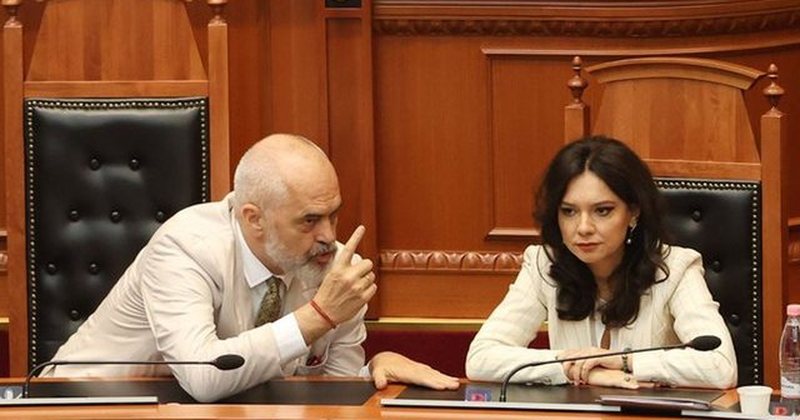
This is a type of insinuation that is being injected carefully and persistently, like all the "false flag" operations for which the establishment here is known.
I think there's a kind of courage that's not really courage. It's about that moment when someone starts using the language of revolt, without actually doing the act of revolt. When they accurately describe a problematic reality, but stop right where the real responsibility to change it begins.
Elisa Spiropali's post is well-articulated. In fact, in many parts, it is true. It speaks of the gradual capture of institutions, of the transformation of the administration into a network of loyalty, of a climate of pressure that distorts decision-making and destroys public trust. But the problem is not in what is said. The problem is in what is missing.
Because if this model exists, it is not an abstract phenomenon. It is not a “slip” without an author. It is not a fog without a source. It is the result of concrete decisions, of consciously constructed mechanisms and of people who have names and functions. And this is precisely where the inhibition in these reactions of Ms. Spiropali occurs.
Criticism becomes strong in description, but cautious in its address. Bold in tone, but limited in its consequence. It is a criticism that seeks to appear as a rupture, without taking the cost of rupture, and this is no coincidence in my opinion. It is a very familiar form in centralized systems: the production of a “controlled dissidence”, which allows the discharge of tension without endangering the structure.
The superficial and implicit comparisons with Péter Magyar make this difference even more apparent. For where Magyar named, slammed, and immediately paid the price, here we have an attempt to use the same language, without entering the same dangerous territory. And this creates a dissonance that the audience feels, even if it cannot immediately articulate it: strong words, without strong consequences.
But perhaps the deepest problem is not even that. The problem is that this kind of attitude does not stand outside the system it criticizes. It is part of the mechanism that keeps it afloat.
Because such systems do not survive only by those who build and run them. They also survive by those who understand them, articulate them, but stop before the line that would turn words into action. In this sense, silence is not the only form of cooperation.
It is both the unfinished word, the edge of criticism without address, and the controlled courage. And perhaps that is why this model persists: because it is not really challenged, but only elegantly described.
The problem is not that it is being talked about.
The problem is that people speak without fully understanding what the word itself requires.
Because at the end of the day, dear friends, change does not begin when the system is described correctly but when someone agrees to pay the price for the truth they have just spoken.
Happening now...










Denouncing Berishism is a prerequisite for denouncing the government
Nga Blendi Kajsiu
ideas



top



Alfa recipes








services
- POLICE129
- STREET POLICE126
- AMBULANCE112
- FIREFIGHTER128