


FLASH NEWS
The Lek is not scared of Iran either, it strengthens against all currencies and reaches a new record against the Euro

2026-03-25 10:16:11 / EKONOMI&SOCIALE
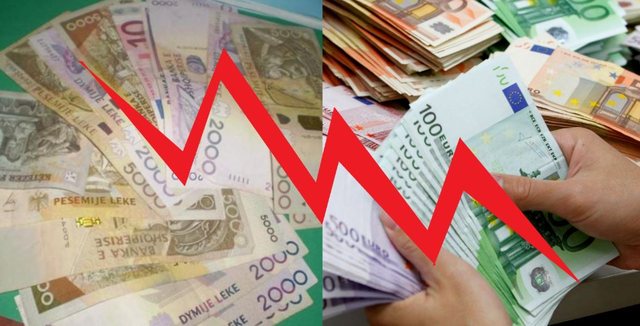
The energy price crisis and inflationary risks are not affecting the Lek exchange rate at all; on the contrary, the local currency is strong today against all major currencies and has set a new historical record in the exchange rate with the Euro.
According to the official exchange rate of the Bank of Albania, the Euro was exchanged today for 95.92 Lekë, the lowest level ever recorded.
Since the beginning of this year, the Euro-Lek exchange rate has fallen by 0.9%, while compared to a year ago, the decline has reached 3%.
The geopolitical crisis in the Middle East and the effects on oil prices have roiled world markets and increased fears of a new wave of inflation.
In the last inflationary crisis of 2022, the Euro exchange rate went through a panic phase of several days, accompanied by a rapid strengthening of the Euro, which was quickly depreciated, even with the intervention of the Bank of Albania. This time, not even the fear of an inflationary shock has brought even temporary pressure on the Lek exchange rate, which continues to set new historical records.
Foreign exchange agents say that the supply of Euro in the domestic market continues to be high, even at unusual levels for the first quarter of the year. On the other hand, the tightening fiscal policy, with large surpluses, also continues to have a secondary role in strengthening the Lek in the exchange rate.
The Bank of Albania, meanwhile, continues to intervene continuously in the foreign exchange market, through the purchase of Euros, but this is only slowing the decline of the European currency, which, in the absence of the role of the Central Bank, would have fallen to even lower levels.
At the moment, the crisis caused by the latest conflict in the Middle East is being reflected in the sharp increase in oil prices in the Albanian market as well. Oil prices have increased by approximately 25% compared to pre-crisis levels, while the Albanian government has committed to intervene by reducing the excise tax level and reinstating the Board that controls retail prices.
The increase in oil prices has not yet been transmitted to the trade chain of goods and services, but if prices do not fall, this will be inevitable.
However, the Albanian financial market does not seem to be concerned about rising inflation expectations at the moment. The lek continues to strengthen, while interest rates and government bond yields remain at very low levels.
If the inflationary risk to the world economy materializes, it is inevitable that price increases will also be transmitted to the Albanian market. Given the deep negative position in trade in goods, the country's current account balance will be put under strong pressure. In theory, such a scenario would create premises for the depreciation of the Lek and the re-appreciation of foreign currencies, especially the Euro.
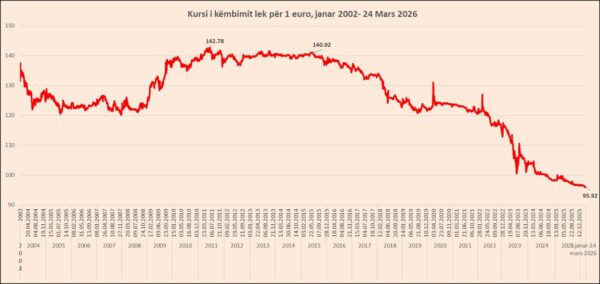
But, such a scenario did not occur in the 2022 crisis, when, thanks to large foreign exchange inflows from other sources, the Lek resisted the deepening trade deficit and continued to strengthen, also contributing to lower inflation levels, compared to the Eurozone and neighboring economies./ Monitor
Happening now...













ideas
Saliu's horse, Ed's taggia
Nga Adrian Thano

Italy/ Investigations, laws and poisons, the eternal clash between politics and justice
Nga Giovanni Bianconi

This PD doesn't know how to value life or death anymore!
Nga Fitim Zekthi
top


Alfa recipes



TRENDING 




services
- POLICE129
- STREET POLICE126
- AMBULANCE112
- FIREFIGHTER128