


FLASH NEWS
BIRN: Supreme Court dismisses 'criminal group' charges against former prosecutor Aurel Zarka

2026-04-20 21:37:31 / AKTUALITET
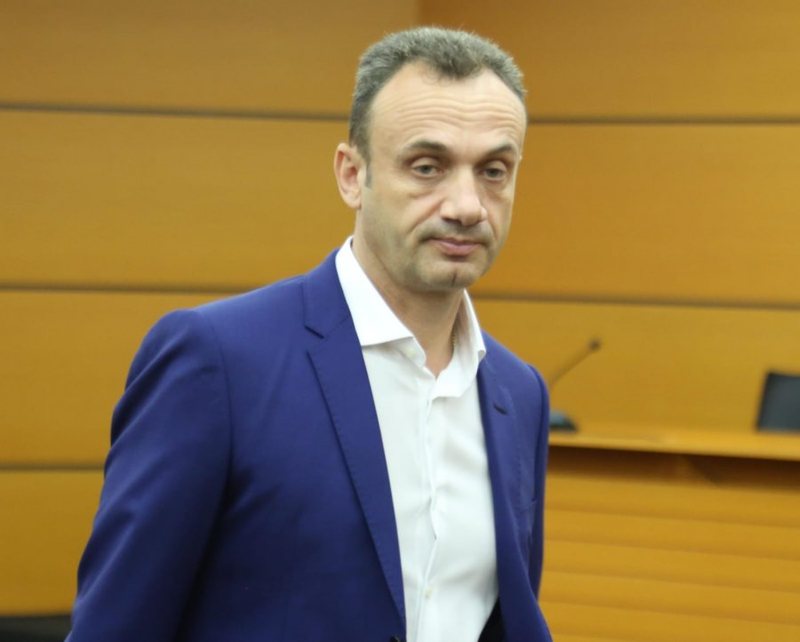
The Criminal Panel of the High Court decided to overturn the decision of the Special Court of Appeal for the former head of the Vlora Prosecutor's Office, Aurel Zarka, on the grounds that the summary trial procedure did not allow the addition of a new charge such as that of committing a criminal offense within the framework of a criminal group.
The decision was made on January 15 by a judicial panel headed by Ilir Panda and including judges Sokol Binaj and Sandër Simoni, but was published with reasons on Monday.
The former head of the Vlora Prosecutor's Office was sentenced to 2 years and 8 months in prison for corruption and exercising unlawful influence in the first instance, but the Special Court of Appeal considered the decision absolutely invalid and returned it for trial in the first instance.
According to the Appeal, the prosecutors in the case and the judges of the preliminary hearing erred when they determined Zarka's cooperation with the other defendants as an aggravating circumstance and not as cooperation within a structured criminal group.
Zarka and SPAK appealed the decision of the Special Appeal, raising similar claims based on the Code of Criminal Procedure and the practice of the Supreme Court, arguing that the defendant's position could not be aggravated when he was the only complainant.
The Criminal Chamber of the Supreme Court considers the conclusions of the Special Appeal to be based on an erroneous interpretation of the law, resulting in the reversal of the decision and the return of the case for retrial to the Appeals Chamber, with another panel of judges.
The High Court reasons that the assessment of the Special Court of Appeals, to communicate new charges to Zarka, in this more serious case, is impossible to implement as a result of the development of the summary trial, where the preliminary investigation acts were accepted in their current state. According to the Criminal College of the High Court, this circumstance excludes the possibility of the prosecutor to communicate new charges.
'…In this context of the development of the trial with the procedural rite of the summary trial – the activation of the prosecutor/stimulated by the court of appeal/in function of the operation for the communication of new charges for another criminal offense or for a new criminal fact/not mentioned in the request for trial – as defined in Articles 373 and 374 of the Criminal Code as well as in the context/'field'/space of the 'judicial examination' of the case under the conditions of the ordinary trial – is impossible', the decision is justified and it is assessed that the prosecutor can present new charges only in the case of a trial with the ordinary procedure.
However, the Supreme Court considers that under the conditions that a summary trial was conducted, when the prosecutor determines that there is another criminal offense attributed to the defendant, a new criminal proceeding may be registered.
Former prosecutor Zarka, former Judicial Police officer Eriona Daupaj, lawyer Radovan Çela and businessman Astrit Vladi, brother of one of the defendants in the 'Toyota Auris' case, are accused of having exerted unlawful influence in eight criminal cases that were being investigated in four different prosecutors' offices - files mainly related to organized crime activities such as money laundering or narcotics cultivation.
The defendants' main interest appears to have been related to the criminal case known publicly as the 'Toyota Auris', which was registered following the seizure at the port of Durres, in June 2018, of 3.4 million euros in 'cash' hidden in two used cars imported from Belgium./BIRN
Happening now...









ideas

Silence as a policy and fear as a system
Nga Sokol Neçaj

Is Spiropali a "Magyar", facing the autocrat Rama?!
Nga Neli Demi

American Libra!
Nga Arian Galdini
top



Alfa recipes








services
- POLICE129
- STREET POLICE126
- AMBULANCE112
- FIREFIGHTER128