


FLASH NEWS
Renowned Swiss magazine: Fight for control in Albania, between the old leaders of the political gang!

2026-03-11 18:59:02 / POLITIKË
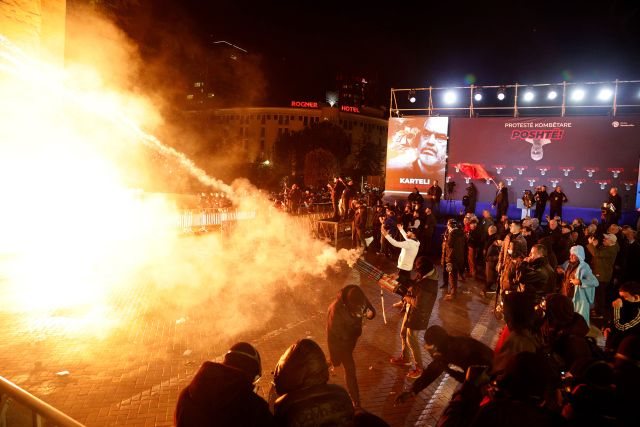
A crowd has gathered outside the headquarters of the Democratic Party (DP), Albania's largest opposition party. It's a Saturday evening in late February; the sounds of football horns mingle with the call to prayer from a nearby mosque. Arben, a former miner from the northern highlands of Albania, waits for the crowd to start moving.
The 55-year-old says that more and more young people are leaving his small town, that factories are closing, and many families depend on money sent from their children abroad.
Arben, who prefers not to give his last name, speaks with increasing anger. He points to a modern multi-story building opposite the party headquarters. Like many others in the country, he is convinced that drug money is being laundered in the construction sector and that this is why prices are rising so much:
“Nobody can afford an apartment in Tirana. I only know people who live in rented accommodation.”
Socialists vs. Democrats
Then Arben joins the crowd and starts chanting the usual slogans:
"Rama, go!",
"Rama, prison!",
"O Sali, o hero, all of Albania loves you."
Sali Berisha and Edi Rama: for almost two decades these two men have dominated Albania's domestic politics. Berisha, 81, is a senior political figure and leader of the opposition Democrats. Edi Rama of the Socialist Party (SP) has been in power since 2013.
In the last election campaign, the 61-year-old promised to lead Albania into the European Union by 2030. But recent corruption scandals have shaken the negotiations.
"Edi Rama has closed the doors of Europe," shouts a speaker at the demonstration, "and for whom? For Belinda Balluku!"
The Case of Belinda Balluku
Belinda Balluku was until a few months ago one of the most powerful women in Albania. As Minister of Infrastructure and Energy, she had been leading one of the largest and most important ministries in the government since 2019. She was also Deputy Prime Minister and one of Rama's closest associates.
In October 2025, it was announced that SPAK (Special Prosecution Office against Corruption and Organized Crime) was investigating Balluk. An indictment has now been filed; Balluk has been suspended from duty and a travel ban has been imposed.
SPAK was once created at the initiative of the US and the EU to strengthen justice in Albania. Edi Rama accepted this as a compromise in the framework of rapprochement with the EU. Now, however, this structure is becoming dangerous for his inner circle.
In recent years, several of Rama's allies have lost their positions, including former Deputy Prime Minister Arben Ahmetaj, Tirana Mayor Erion Veliaj, former Health Minister Ilir Beqaj, and former Interior Minister Saimir Tahiri. Opposition leader Sali Berisha has also been investigated by SPAK.
Belinda Balluku is the highest-ranking official from the Socialists to be indicted so far. She is suspected of manipulating tenders for infrastructure projects and deciding in advance which companies would win, along with a senior official from the Road Authority.
The investigations also touch on one of the Rama government's most important projects: the Llogara tunnel, which connects the city of Vlora in southern Albania with the Albanian Riviera. According to the accusations, Minister Balluku interfered in the tender procedure.
For Jorida Tabaku, a DP MP, this is just the "tip of the iceberg." She is also participating in the demonstration.
“There are other cases,” she says. “This government has created a system that no longer allows for free competition. People cannot participate in fair tenders.”
However, Tabaku is in a dilemma. She says she is “a European at heart” and does not want Albania’s EU membership negotiations to be halted.
“The citizens of this country do not deserve this.”
She hopes that the European integration process will bring real changes to the country.
Not comparable to Serbia
The corruption scandals in the construction sector in Albania are reminiscent of the situation in Serbia. There, during the renovation of a train station shelter in Novi Sad, the work was poorly carried out and the structure collapsed. Sixteen people died as a result. This led to the largest anti-government protests since the late nineties.
The protests that take place in Albania – on average once a week – are different. Although thousands of people take to the streets, it is not a broad civic movement, but mainly rallies organized by Sali Berisha's Democratic Party. People participate because "their party" calls them to.
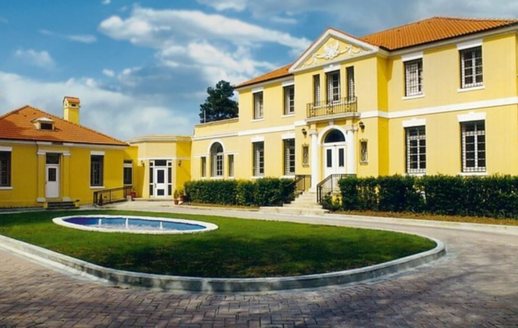
This sometimes ends in violence. On the evening of February 28, protesters attacked the former villa of dictator Enver Hoxha with fireworks and Molotov cocktails. The house has recently been transformed into a cultural center where artists from all over the world stay.
The images of the escalating violence once again help Edi Rama get out of a difficult situation. With the attack, he can divert attention from his main dilemma:
Can he bring his closest collaborator to justice without endangering himself?/ Translated by Alfapress.al, taken from woz.ch Magazine
Happening now...








ideas



top






TRENDING 




services
- POLICE129
- STREET POLICE126
- AMBULANCE112
- FIREFIGHTER128