


FLASH NEWS
Today marks 27 years since NATO's intervention in Serbia, Kurti: Genocide was stopped and the way was opened for Kosovo's freedom

2026-03-27 20:59:47 / KOSOVA
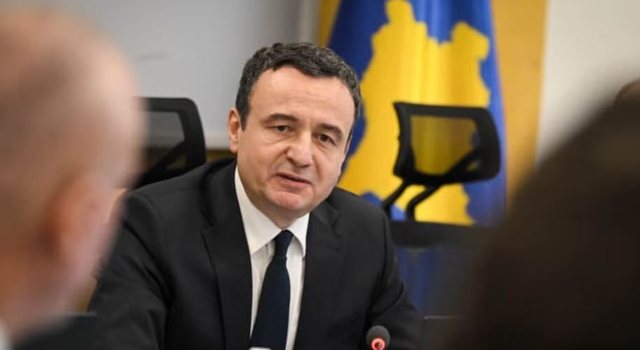
Kosovo Prime Minister Albin Kurti has commemorated the 27th anniversary of the start of NATO bombing of Serbia, describing the intervention as crucial for stopping genocide and ethnic cleansing against Albanians in Kosovo.
Kurti recalled that on March 24, 1999, NATO air forces, led by the US, launched Operation "Allied Force", striking military and police targets of the Serbian regime led by Slobodan Milosevic.
He stressed that the intervention came after diplomatic efforts to stop violence against Albanian civilians failed, while citing the statement of then-US President Bill Clinton, who had warned that if there was no peace, NATO would intervene militarily.
According to Kurti, despite the bombings, the Belgrade regime continued the war for almost three months, while NATO forces bombed for 78 days, until the signing of the Kumanovo Agreement on June 10, 1999, which ended the war.
REACTION
Today marks 27 years since the first day of the NATO bombing campaign over Yugoslavia, which stopped the genocide and ethnic cleansing that the occupying state of Serbia was carrying out against the local Albanians in Kosovo. On 24 March 1999, the North Atlantic Treaty Organization (NATO) air forces, led by the United States of America, launched Operation Allied Force, bombing Yugoslav military and police forces and their infrastructure from the air. This campaign came more than a year after the start of the war in Kosovo and a day after it became finally clear that Serbia, led by the Butcher of the Balkans, Slobodan Milosevic, would not accept any ultimatum to stop military and police operations in Kosovo against the civilian population and to withdraw its forces from Kosovo, and that it would not accept any of the diplomatic offers for a political solution to the Kosovo issue.
As President Bill Clinton stated on the evening of March 24: “Over the past few months, we have done everything we can to resolve this issue peacefully. Secretary Albright has worked tirelessly to negotiate an agreement. Mr. Milosevic has refused. On Sunday, I sent Ambassador Holbrooke to Serbia to make it clear to him, on behalf of the United States and our NATO allies, that he must honor his commitments and stop the repression or face military action. But he has refused again. Today, we and our 18 NATO allies have agreed to do what we have said we will do, what we must do to restore peace. Our mission is clear: to demonstrate the seriousness of NATO’s purpose so that Serbian leaders understand the necessity of changing their course of action, to prevent an even bloodier offensive against civilians. innocent people in Kosovo and, if necessary, seriously impair Serbia's military ability to harm the people of Kosovo. In short, if President Milosevic does not make peace, we will limit his ability to make war.”
Beyond expectations and predictions, Milošević's Serbia's Yugoslavia did not surrender for almost three months. Thus, 19 NATO member states bombed Yugoslavia for 78 days and nights, until June 10, when the Military Technical Agreement signed in Kumanovo ended the war in Kosovo.
Unfortunately, it was precisely during those days that Serbia intensified its actions on the ground to implement the "Horseback" plan for the ethnic cleansing of Kosovo from Albanians, expelling over 860,000 Albanians from Kosovo and displacing about half a million others within it. During April 1999 alone, the Serbian state, through its armed police and military forces, killed over 4,000 Albanian civilians. Many of them were victims of massacres carried out throughout Kosovo, and quite a few of them are still missing.
The tragedy of the people of Kosovo, spanning decades but culminating in the war of 1998 and 1999, sensitized the Western democratic world and set in motion the largest military alliance in history, NATO, to intervene militarily in order to stop the genocide, ethnic cleansing and other state crimes of Serbia against the Albanians in Kosovo. Following the armed struggle of the Kosovo Liberation Army, NATO's bombing campaign over Yugoslavia and the subsequent entry of its troops into Kosovo in June 1999, brought freedom to Kosovo. This paved the way for the construction of democracy and state-building in the Republic of Kosovo.
Therefore, we remember with gratitude the extraordinary assistance of all NATO countries and honor in particular the role of the United States of America in the path of the people of Kosovo to freedom with democracy and state-building with integration.
Happening now...






ideas
Saliu's horse, Ed's taggia
Nga Adrian Thano
Italy/ Investigations, laws and poisons, the eternal clash between politics and justice
Nga Giovanni Bianconi
top



Alfa recipes



TRENDING 



services
- POLICE129
- STREET POLICE126
- AMBULANCE112
- FIREFIGHTER128