


FLASH NEWS
The students of December '90 and the protesters of June 2026, commonalities and differences

2026-06-23 17:46:23 / IDE

By Ardi Stefa
I do not deny that as a participant in the '90 Student Movement, I find it difficult to make a comparison between December '90 and June 2026, as in order to highlight the essential similarities and differences, I must avoid romanticizing the past and idealizing the present.
Anyway...
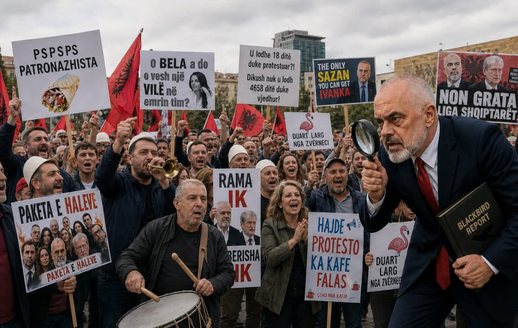
History rarely repeats itself, but it often rhymes. For this reason, the comparison between the students of December 1990 and the protesters of June 2026 is both tempting and dangerous. Tempting, because in both cases we have citizens taking to the streets against a reality they consider unjust. Dangerous, because the conditions, goals, and historical context are fundamentally different.
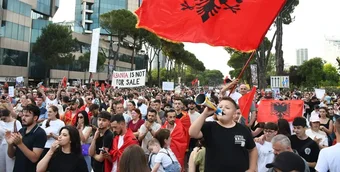
What unites them is a rejection of the status quo. We, the December Students, rose up against a system that had lost moral and political legitimacy. The June Protesters have risen up against a system that many consider to be captured by the interests of a political elite that has been recycling itself for decades. In both cases, the street has become the place where citizens demand to be heard when institutions fail to represent them.
In December '90, the same person who came as an emissary to quell student protests and then appropriated them, today in 2026 will appropriate the possible fruits.
Another similarity is the role of youth. Although the 2026 protest is not exclusively youth-led, the energy, revolt, and demand for change come largely from generations who feel excluded from decision-making and betrayed by political promises.
But here the differences begin.
We, the December Students, fought for political pluralism. We demanded the right to choose. The June protesters live in a formal pluralist system. They are not demanding the right to vote, but the right for the vote to produce real change. In December '90 we fought for democracy; the 2026 protesters are challenging its quality.
December had a clear opponent: the communist regime.
June has a more ambiguous and difficult-to-identify opponent. The establishment. It includes the government, the traditional opposition, the political oligarchy, and the culture of impunity that has been built during the transition. Precisely for this reason, today's protest is more complex, because it does not aim to overthrow a government, but to change the mechanism that reproduces the same actors.
Another difference is the relationship with leaders. The December students “produced” new leaders. The June protesters, at least so far, display a deep distrust of any leader. This shows strength, because it protects the protest from political capture, but also weakness, because any movement aiming for long-term change needs organization, direction, and representation.
We were ideologically clear then, they are a mess today. We were "ignorant" not from a lack of desire to know..., today they are mediocre and "dull" from "too much knowledge"...
However, perhaps the biggest difference lies in historical disappointment. The students of 1990 had a future that seemed open before them. The protesters of 2026 protest precisely because that future was not fully realized. They are the political children of transition. They are the generation that is holding the elite that emerged from December to account.
The comparison between December 1990 and June 2026 should not be made to declare winners or heirs. The students of December tore down a system. The protesters of June are trying to break a cycle.
The former sought freedom. The latter seek for freedom to have meaning. This is the strongest connection between December and June, the conviction that Albania can and should be better than it is today.
Happening now...










ideas



top



Alfa recipes



TRENDING 




services
- POLICE129
- STREET POLICE126
- AMBULANCE112
- FIREFIGHTER128