


FLASH NEWS
"They suspect Israel could kill him", New York Times: Iran's President is personally treating Mojtaba Khamenei

2026-04-23 17:01:23 / BOTA
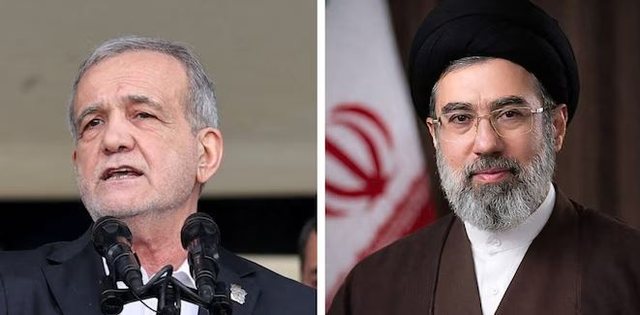
The New York Times reported on Thursday new details about the condition of Iran's new supreme leader, Mojtaba Khamenei, saying the regime is severely restricting access to him out of fear that Israel could track him down and kill him.
According to the report, Khamenei — the son of former Supreme Leader Ayatollah Ali Khamenei — was wounded in an attack on the morning of the war's start on February 28, in which his father, as well as Mojtaba's wife and son, were killed. He is now surrounded by a team of doctors and medical staff who are treating the wounds sustained in that attack.
The report said Iranian President Masoud Pezeshkian, a trained cardiac surgeon, is personally involved in Khamenei's treatment, along with the country's health minister. Despite being seriously injured, Khamenei remains mentally sharp and communicates effectively with those around him, the report said.
Citing four Iranian officials familiar with his condition, The New York Times reported that one of his legs has undergone three surgeries and is now awaiting a prosthesis. He also underwent surgery on one hand, which is gradually regaining function. His face and lips suffered severe burns that make it difficult to speak, and he is expected to need plastic surgery.
Sources who spoke to the newspaper said that Khamenei has not recorded any video or audio messages because he does not want to appear vulnerable or weak in his first public speech. Instead, he has issued several written statements that have been published online and read on state television.
Messages to Khamenei are handwritten, sealed in envelopes, and delivered through a human chain of couriers who pass them from one to the next. They travel in cars and motorbikes along highways until they reach his hiding place. Messages from him are delivered in the same way. Senior commanders in the Islamic Revolutionary Guard Corps, an elite military force, and senior government officials do not visit him for fear that Israel might find him.
The report also described the current balance of power in Tehran. According to the sources, a group of senior Revolutionary Guard commanders and their allies are effectively running the country on security, war and diplomacy issues. Mojtaba Khamenei functions as a sort of “chairman of the board,” but relies heavily on the guidance of this group, described as being led by generals.
Among those singled out were IRGC commander Ahmad Vahidi; General Mohammad Bagher Zolghadr, recently appointed head of the Supreme National Security Council, a key decision-making body; and hardline General Yahya Rahim Safavi, who served as a senior military advisor to both Ali Khamenei and his son.
Officials said the generals see the current war with the United States and Israel as a threat to the regime's survival, but after five weeks of intense fighting they believe they have managed to contain it. At every major decision point, they have led in setting strategy and allocating resources, the report said.
According to sources, Foreign Minister Abbas Araghchi has been sidelined in negotiations with Washington — talks he led before the war — and replaced by Parliament Speaker Mohammad Bagher Ghalibaf. The Iranian parliament, known as the Majlis, is the country’s legislative body. Mojtaba Khamenei has sided with the generals and rarely, if ever, has opposed their decisions, the sources said.
Happening now...











ideas



top


Alfa recipes








services
- POLICE129
- STREET POLICE126
- AMBULANCE112
- FIREFIGHTER128