


FLASH NEWS
Minister Sala "gifts" kidney transplant to former boss Allajbeu and the American Hospital

2025-12-05 21:22:52 / AKTUALITET
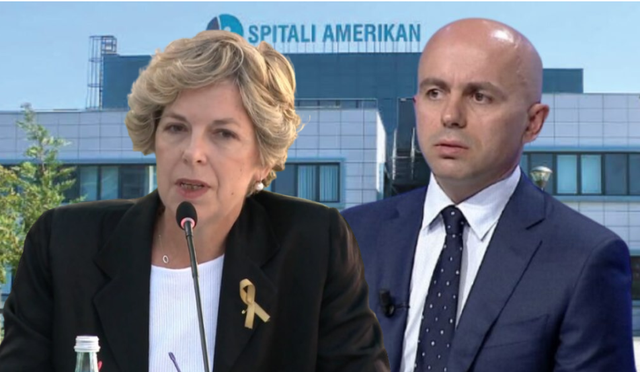
Even though we are in 2025 and the promise of performing kidney transplants at the QSUT was made in 2023, the country's university hospital center continues to fail to offer this vital procedure. The result is clear: the state pays millions of lek to private hospitals for services that it should have provided itself within the public referral system.
Contrary to government statements and health strategies, the QSUT does not yet have rooms equipped with specific equipment for kidney transplantation and the acute kidney injury (AKI) therapy package is also missing. These gaps have turned kidney transplantation into a de facto privatized service, where citizens depend on private hospitals for interventions that should be an integral part of the QSUT.
In 2024 alone, a total of 14 kidney transplants were performed, none of them at the QSUT: 7 at the private hospital "American Hospital" and 7 at the private hospital "Hygeia". Although the procedures are divided between the two hospitals, the real beneficiary is the same, as both institutions are owned by Klodian Allajbeu, guaranteeing the latter practical control of renal transplantation in the country.
Meanwhile, the QSUT — which should be the country's main referral center for this type of intervention — offers neither transplants nor acute kidney failure therapy, a life-saving procedure for critically ill patients. This forces state institutions to purchase the service privately, passing on a high bill to the state budget.
This situation is further exacerbated by the imminent expiration of the dialysis concession, which ends in 2026. Although QSUT today has a considerable number of devices inherited from the concessionaire and can take over the service itself, there is a real possibility that the contract will be extended for another five years.
Such a decision would be absurd, as dialysis machines are usually replaced every seven years, and extending the contract would force the state to buy new equipment from scratch, even though the existing ones are functional. Furthermore, the dialysis concession is currently under investigation by SPAK, which makes any attempt to continue even more unjustifiable.
Instead of creating a modern health strategy, where kidney transplantation would be an organic part of the University Hospital Center and centralized as a national public service, the government has chosen the most costly and unsustainable solution: payments to private individuals. In the field of nephrology and transplantation, the situation has become an example of the degradation of the country's referral hospital system. The University Hospital Center does not have specific transplant rooms, does not have the necessary equipment, has not opened hospital packages for procedures and does not perform any of the critical services that should be part of a university hospital center.
Meanwhile, private hospitals perform every procedure, collect hundreds of millions of lek from the state, control the market and benefit from the gaps that politics has created within the public hospital system. For the Albanian patient, this means total dependence on the private sector for services that every normal state provides itself, but which in Albania continue to remain a private privilege, paid for by citizens' taxes./ VNA
-

France investigates reports of drones on nuclear submarine base
December 5, 21:06 -

Erion Boba's family accused of negligence, Durrës Hospital reacts
December 5, 20:58
Happening now...













Karmën nuk e ndalon dot Sali Berisha!
Nga Bato Kosova
ideas

First Secretary of the Democratic Party
Nga Indrit Vokshi

"Topple" Edi Rama by lying to yourself...
Nga Patrik Sadikaj

top


Alfa recipes




TRENDING 




services
- POLICE129
- STREET POLICE126
- AMBULANCE112
- FIREFIGHTER128