


FLASH NEWS
United Colleges are called upon to review the practice of "prison arrest"

2026-03-10 12:20:15 / AKTUALITET

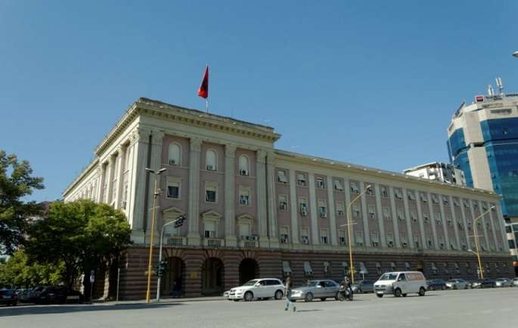
The President of the Supreme Court has called a meeting of the United Colleges on Monday to consider the possible change to the unified practice of 2011, which has served for more than a decade in determining the security measure of "prison arrest".
Through an interim decision by President Sokol Sadushi, the meeting of the United Colleges is requested to review whether the unified decision of 2011 stands before the changes in the Criminal Procedure Code and to implement the decisions of the European Court of Human Rights (ECHR).
The interim decision seeks a new interpretation of Articles 228 and 230 of the Code of Criminal Procedure in accordance with the European Convention on Human Rights (ECHR), specifically analyzing three questions related to the determination of dangerousness, when alternative measures should be considered, and how the risk of evidence tampering should be assessed.
"This initiative aims to guarantee a uniform, controllable judicial practice in accordance with the constitutional, legal and conventional standards that regulate the restriction of personal freedom. In this way, it is intended that judicial practice remains in full compliance with the current legal framework and with the constitutional and conventional standards that regulate the restriction of personal freedom," the interim decision states.
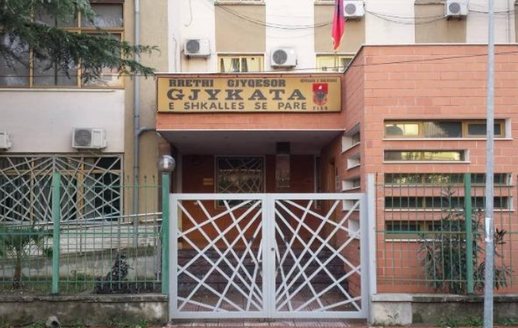
The decision refers to cases against three individuals for which there are ECHR decisions, where the duration of detention is being discussed, even when the prosecution does not present new evidence as to why the measure should be extended and why there are no other appropriate measures.
“In summary, the ECtHR jurisprudence in the Hysa, Gëllçi and Muçaj cases imposes the following fundamental theses: (i) reasonable suspicion is not sufficient, alone, for the continuation of pre-trial detention; (ii) the risk must be concrete, individualized and provable; (iii) the abstract importance of the offense does not, in itself, justify imprisonment; (iv) alternative measures must be considered realistically and not formally; (v) the burden of justification remains with the authorities for any period of restriction of liberty; and (vi) the justification for pre-trial detention must remain current, proportionate and controllable over time,” states the interim decision to be discussed by the Joint Panels on April 9.
This legal move comes at a time when pre-trial detention has become part of the political debate. The court's initiative coincides with a new campaign by the government and Prime Minister Edi Rama against the high number of pre-trial detentions, a campaign that, according to legal experts, stems not from concern for human rights, but from fear of attacks by the Special Prosecution Office (SPAK) on government ranks.
Opposition leaders were quick to criticize the initiative. Gazmend Bardhi, chairman of the Democratic Party's parliamentary group, accused on Tuesday that "Rama is using the Supreme Court to undo a 15-year-old practice."
The Prime Minister himself has been contradictory in his stances. On the one hand, he has attacked SPAK and the Special Court for security measures against political figures and has taken blocking actions, as in the case of SPAK's request against former Deputy Prime Minister Belinda Balluku, and on the other hand, he has attacked the courts for prosecuting opposition protesters, suspected of acts of violence in the protests of recent weeks, while they are still at large.
But experts point out that detention is a problem of the justice system , linked to a number of factors and mainly to the repressive criminal policies imposed by the ruling majority.
Statistics from the General Directorate of Prisons paint a grim picture. As of December 2025, there were 4,503 people behind bars in Albania, of whom 2,569 (or 57%) were in pre-trial detention. This translates to around 94 detainees per 100,000 inhabitants, a figure that keeps Albania at the top of European rankings and has prompted the Council of Europe to urgently call for a review of detention policies. Only 1% of detainees belong to high-ranking officials accused of corruption or abuse of office./BIRN
Happening now...












Germany, the "curse" of Rama and Berisha
Nga Bato Kosova
ideas

We are witnesses to the atrocity that is taking place in Vlora!
Nga Gjergj Nika

When crisis becomes a system: Dilemmas of the Republic of Kosovo
Nga Sokol Neçaj
top






TRENDING 




services
- POLICE129
- STREET POLICE126
- AMBULANCE112
- FIREFIGHTER128