


FLASH NEWS
"Albanian organized crime is the biggest challenge we have"/ Two senior Belgian officials sound the alarm

2026-02-28 15:25:16 / AKTUALITET
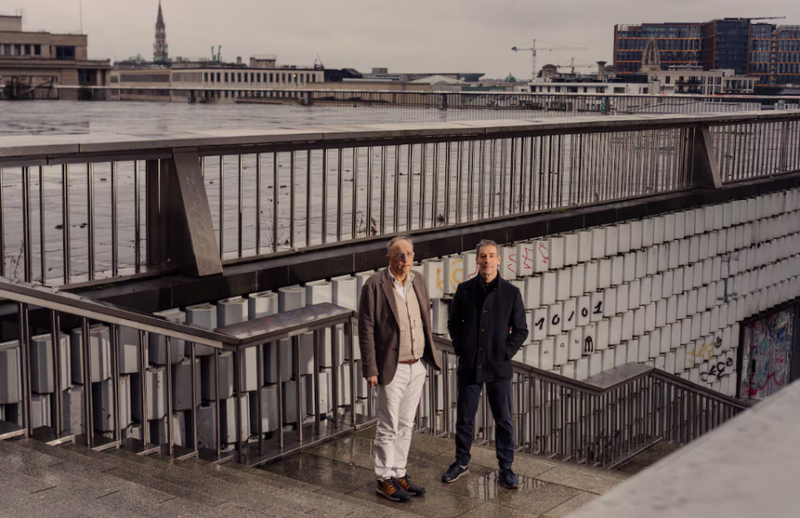
"Today we are seeing that the Albanian-speaking mafia is our biggest challenge."
This was stated by the director of the Federal Judicial Police in Antwerp in an interview with the Belgian newspaper De Morgen. Exactly five years after the historic police intervention in the encrypted communication network SKY ECC, he and his colleague in Brussels take stock of the situation.
According to the two directors, the operation opened "big holes" in organized crime, but according to them they have now been filled, especially by Albanian networks and criminals from Serbia and Montenegro.
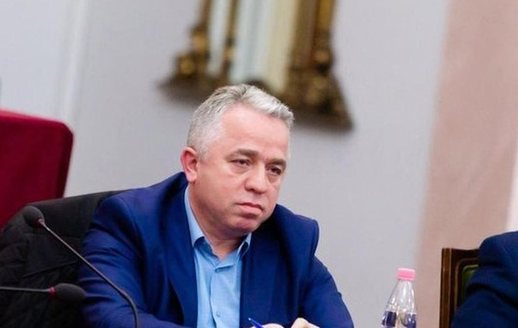
Yve Driesen, director of the Judicial Police in Antwerp, said: "The Albanian mafia has gained enormous ground. They control the entire logistics chain, from South America to the port and the street sales networks."
Eric Jacobs, director of the Judicial Police in Brussels, also emphasizes: "Albanians work very professionally. They are harder to hit."
In March 2021, the Belgian federal police carried out more than 200 simultaneous checks after the breach of the encrypted platform SKY ECC. Through encrypted messages, the police were able to track the communications of thousands of criminals, including leaders of international drug networks.
According to police leaders, this led to thousands of arrests, the seizure of hundreds of tons of drugs and millions of euros in criminal assets. Many of the leading figures at the time in the port of Antwerp have now been convicted or are in prison.
But the power vacuum was quickly filled.
"Those who dominated then are now largely out of the game," says Driesen. "But I have no illusions: the holes that were opened up are quickly filled."
What is most striking, according to the police, is the level of control that Albanian networks have over logistics.
“They control the entire chain,” says Driesen. That means: contacts in South America, transportation through Europe, infiltration at ports, and distribution at street level.
"They don't need political corruption, as was once the case with the Italian mafia. It's all about manipulating the logistics chain: warning during customs checks, removing containers. Thanks to SKY ECC we were able to fully understand this."
The UN and the European Union had reported years ago that criminals from Albania and Serbia were directly purchasing cocaine in Peru from suppliers inside the country.
In this way, they secured cheaper quantities in an area that was previously considered too dangerous and difficult to reach by European networks.
In Brussels, police are seeing another phenomenon: in recent years, groups linked to the criminal world have emerged around Marseille.
"They're very violent guys who shoot just to scare," Jacobs says. "It's about territory. We know for sure that they've largely won this battle."
He makes a clear distinction in the patterns of violence: "When Albanian criminals shoot, it is often a 'surgical' action, immediately lethal. Whereas the perpetrators in Brussels shoot in an uncontrolled manner, with great risks to the population."
According to Belgian police leaders, criminal networks have learned their lesson from the Sky ECC case. The period when they communicated openly in a single system, believed to be 'unbreakable', is over.
“Now they work more carefully and fragment communication,” says Driesen.
Jacobs confirms that criminals distribute their messages on several platforms. He does not provide details. "They are probably reading us."
The directors are calling for more investment in specialized decryption and analysis capabilities. They say Belgium is lagging behind countries like the Netherlands, where several services collaborate in a joint decryption center.
Driesen points out that the police were faced with about a billion text messages, voice messages and visual material.
"You can't read them one by one. We've hired data scientists, financial experts, and IT specialists to handle it."
Happening now...








Germany, the "curse" of Rama and Berisha
Nga Bato Kosova
ideas


Why don't good people stay in Albanian politics?
Nga Irena Beqiraj

Corruption - our way of life
Nga Erl Kodra
top


Alfa recipes



TRENDING 




services
- POLICE129
- STREET POLICE126
- AMBULANCE112
- FIREFIGHTER128