


FLASH NEWS
"Parade" of six planets in the night sky this weekend, here are some tips on how you can better see this phenomenon

2026-02-27 13:15:49 / MISTERE&KURIOZITETE
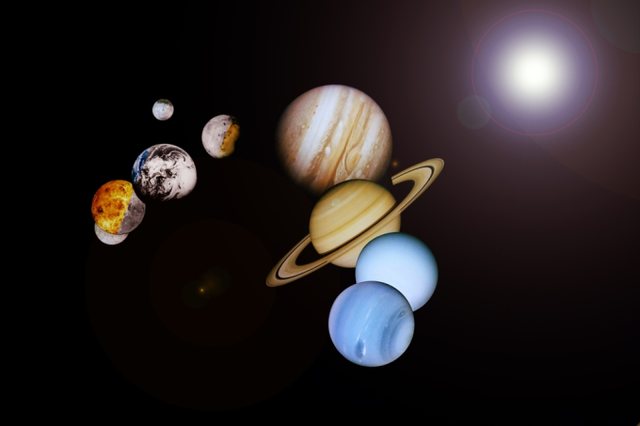
An impressive astronomical phenomenon will appear in various parts of the world this weekend for stargazers, as six planets will be visible in the evening sky at the same time, weather permitting.
Shortly after sunset, the planets will appear in roughly the same part of the sky, forming what is often called a “planetary parade.” Mercury, Venus, Saturn, and Jupiter will be visible to the naked eye, while Uranus and Neptune will likely require binoculars or a telescope.
Where and how to see them.
Shortly after sunset, Mercury, Venus, Saturn and Neptune will appear low on the western horizon. Mercury and Venus will require a particularly clear horizon, as they will be very low. Uranus will be higher up in the constellation Taurus and will remain visible until the evening hours, making it easier for those with the right equipment. Jupiter will be easier to find, as it will shine brightly in the constellation Gemini and will remain visible for most of the night, even from areas with light pollution. According to the Star Walk app, the most spectacular coincidence will occur on February 28, although the exact date will vary depending on your location. In New York, Mexico City and Tokyo, February 28 is considered ideal.
What is a "planetary parade"?
The term describes the moment when several planets appear to line up in the sky from Earth's perspective. Dr. Becky Smethurst, a researcher at the Royal Astronomical Society at the University of Oxford, explains to the BBC that the planets "are in a straight line, but it's a straight line in a curved sky, because they all orbit in the same plane."
As he notes, the solar system formed from a rotating cloud of gas that “flattened out,” causing the planets to move in roughly the same plane. “They’re not perfectly aligned in their orbits, they’re just on roughly the same side of the solar system at the moment,” he explains.
Seeing six planets at once is not an everyday occurrence, but it is not extremely rare either. Much more unusual is the alignment of seven planets, something that was observed in February 2025 and is not expected to happen again anytime soon. Astronomer Jess Lee of the Royal Observatory in Greenwich notes that such an alignment is particularly exciting, as it offers the opportunity to observe many “worlds” in a single night.
Useful tips for observation
Experts recommend giving your eyes time to adjust to the dark. Dr. Smethurst suggests spending a few minutes inside a dark room before going outside to help improve your night vision.
Comfort is also important, a blanket on the floor or a comfortable chair can help prevent neck strain. And avoid bright white lights.
Even if you miss the peak day of the eclipse, some planets will still be visible in the days following. On March 7 and 8, for example, Venus and Saturn will be very close together, making them easy to spot.
Weather conditions are expected to vary by region, with clear skies and clouds alternating throughout the weekend, which will also determine your chances of a successful observation.
Happening now...















ideas



top


Alfa recipes








services
- POLICE129
- STREET POLICE126
- AMBULANCE112
- FIREFIGHTER128