


FLASH NEWS
Fyodor Dostoevsky and Friedrich Nietzsche, the confrontation of thoughts and worldviews

2025-01-23 07:50:11 / JETË
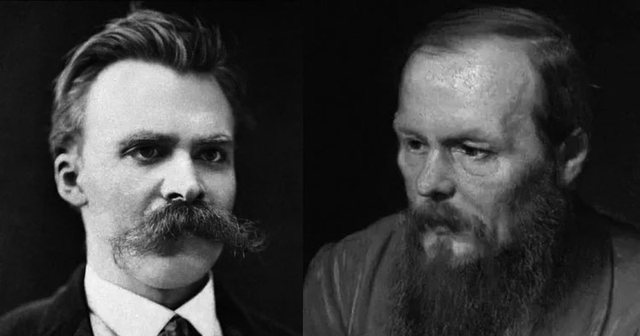
Fyodor Dostoevsky and Friedrich Nietzsche are two giants of thought and literature who, although they did not directly confront each other, represent two profound and often opposing approaches to existence, morality, and man.
The match between these creative spirits and the power of influence of words and the depth of thought was and remains epic and as such, it did not approach our need as an imposition, but as an awakening of our potential to understand and challenge.
Dostoevsky is a profound explorer of the human soul. In his works such as “Crime and Punishment” and “The Brothers Karamazov,” he focuses on the individual’s encounter with evil, suffering, and sin.
For Dostoevsky, existence is meaningless without God; he sees God as the basis of morality and salvation. His conflicts often revolve around the moral dilemmas of heroes struggling between sin and redemption.
Dostoevsky examines the idea of freedom and its limits. For him, freedom without moral responsibility is an illusion that leads to nihilism. This is clearly seen in the figure of Ivan Karamazov, who challenges God but ultimately faces the consequences of his doubt.
Nietzsche, on the other hand, proclaims the death of God as a way to free man from moral and religious slavery.
In his works such as "Thus Spoke Zarathustra" and "Beyond Good and Evil", Nietzsche argues that Christian morality is an expression of weakness and that man must overcome his limitations to create the "superman" (Übermensch), a being who creates his own values.
Nietzsche sees life as a battleground for power, for self-affirmation, and for overcoming all established authorities. For him, tragedy and suffering are not to be avoided, but to be embraced as a necessary part of life's growth and affirmation.
Dostoevsky and Nietzsche often approach the same themes – suffering, sin, freedom, and morality – but with diametrically opposed approaches.
Dostoevsky relies on transcendence, God, and spiritual sensitivity to find the meaning of life. Nietzsche, on the other hand, demands that man take responsibility for his life without relying on any divine authority.
Some thinkers have argued that Nietzsche and Dostoevsky are actually closer than they seem: both understand the danger of nihilism and fight against spiritual mediocrity.
Nietzsche admired Dostoevsky and called him one of the most profound psychologists he had ever encountered. While Nietzsche speaks of a life embraced despite its absurdity, Dostoevsky sees absurdity as a path to finding God.
Një pikë që i lidh është aftësia e të dyve për të eksploruar thellësitë e natyrës njerëzore. Ata pyesin për kufijtë e lirisë, për rolin e moralit dhe për mundësinë e shpëtimit. Përballja e këtyre dy mendimtarëve nuk është një ndarje e thjeshtë e asaj që është e drejtë dhe asaj që është e gabuar, por një thirrje për të reflektuar mbi jetën, vlerat dhe zgjedhjet tona si individë.
Në fund, përballja mes Dostojevskit dhe Nietzsche-s është një dialog i përhershëm për atë çka është njerëzore, çka është hyjnore dhe çka është e mundur për njeriun që përpiqet të gjejë kuptim.
Dostojevskit dhe Nietzsche përballë
Dostojevski: "Njeriu është një qenie e gjallë që ecën me dy këmbë, por është mosmirënjohës".
Nietzsche: "Njeriu nuk është gjë tjetër veçse një qenie që duhet tejkaluar".
Dostojevski: “Çdo njeri në këtë botë duhet ta dojë jetën, jo të përpiqet ta kuptojë atë”.
Nietzsche: "Jeta nuk është gjë tjetër veçse një buzëqeshje në buzët e një të vdekuri".
Dostojevski: "Unë jam duke kërkuar për lumturinë, por: ku është?"
Nietzsche: "Ne e kemi shpikur lumturinë si një shpikje".
Dostojevski: "Në fillim ata qanë, pastaj u përshtatën dhe u mësuan me të. Njeriu mund të përshtatet me çdo gjë... sa e neveritshme."
Nietzsche: "Në të vërtetë, i urrej ata që shohin gjithçka si të mirë dhe këtë botë si më të mirën e botëve. Këta janë thjesht të kënaqurit që pranojnë gjithçka dhe e shijojnë atë pa shije të vërtetë."
Dostojevski: “Arsyeja më drejton, dhe kjo është pikërisht ajo që më ka shkatërruar”.
Nietzsche: "Besimet më të rrënjosura në mendje janë ato gjëra që duken të pabesueshme."
Dostojevski: “Ai ra viktimë e besimit të tij të madh në fisnikërinë e zemrës njerëzore”.
Nietzsche: "Unë dua vetëm atë që një njeri ka shkruar me gjakun e tij... dëshpërimi shkon më thellë se thyerja e zemrës".
Dostojevski: "Kanë ikur ditët kur prindërit tanë shqetësoheshin për ne jashtë vendit. Tani, në largimin tonë, ne kemi frikë për ta në shtëpi."
Nietzsche: "Çdo atdhe ka hipokrizinë e tij, të cilën e quan virtytet e tij. Sa për cilësitë e tij më të mira, ai është i paditur për to dhe refuzon t'i njohë".
Dostojevski: "Shpirti shërohet duke qenë me fëmijë".
Nietzsche: "Asnjë komb nuk mund të lulëzojë nëse rrënjët e fëmijëve të tij janë të korruptuara".
Dostojevski: "Ai e donte shumë, por e urrente atë teprim absurd në shfaqjen e emocioneve. Ai përçmoi ato ndjenja që ngjanin me emocionet e bagëtisë".
Nietzsche: "There is not enough love and kindness in this world for us to abandon to imaginary beings."
Dostoevsky: "Intelligence is a problem, and being too perceptive is a real curse."
Nietzsche: "When we think a lot and with a lot of intelligence, it is not only the face that changes, but the whole body acquires intelligence."
Dostoevsky: "I cannot evaluate the history of the world; it is simply the study of human stupidity."
Nietzsche: "Some historians and biographers sell us legal lies and fabricated stories that we are happy to believe."
On Freedom of Opinion:
Dostoevsky: "Suppose I am wrong; nevertheless, I still possess freedom of belief, and this is a sacred universal right."
Nietzsche: "It is difficult to remember my thoughts without remembering the reasons that made me express them."
Dostoevsky: "Either I am a hero, or nothing. I have no middle ground in my eyes, and that is precisely what destroyed me."
Nietzsche: "Walk the path of life only with the whip of your determination and will, to strike down every obstacle in your path."
Dostoevsky: "Pain! It is the only reason for feeling and the only cause of consciousness."
Nietzsche: "At every stage of my life, the intensity of the pain was unbearable."
Happening now...








America may withdraw from Europe, but not from SPAK
Nga Gentian Gaba
ideas

Who is the Surrel Rabbit?
Nga Sidi Hasanaj

The two wrong paths of the opposition with the Ombudsman
Nga Patrik Sadikaj
top



Alfa recipes




TRENDING 




services
- POLICE129
- STREET POLICE126
- AMBULANCE112
- FIREFIGHTER128