


FLASH NEWS
Albanians turn into "tourists" of oil, food and medicine in neighboring countries!

2026-03-29 08:28:03 / EKONOMI&SOCIALE
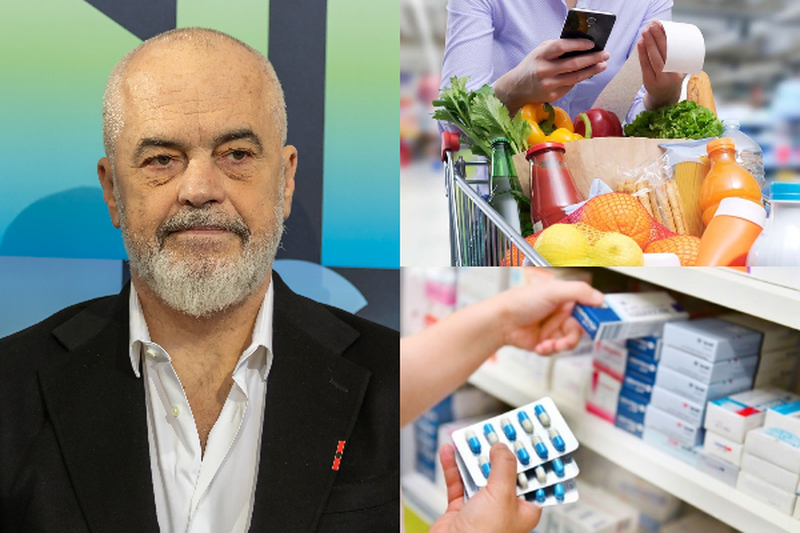
Albania is today a success story, at least on paper. Record numbers of tourists, an increase in overnight stays, an airport bursting with traffic, and an industry that, according to the figures, is driving the economy forward. In every public appearance, tourism is mentioned as the engine of growth and as proof that the country is finally “working.”
There is just one small detail that is not included in these statistics: Albanians.
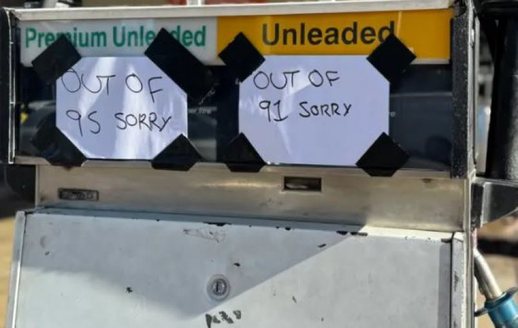
Because while tourists are coming, Albanians are leaving, not for vacation, but to fill their cars with gas and their bags with food. According to data, from fuel alone, about 1 million euros a day are leaving Albania for neighboring countries, or over 350 million euros a year. A new, daily “tourism”, without luggage and without reservations, but with a very clear goal: to find a more reasonable price.
And it's not just oil. Food has become another reason to cross the border. Albania now has food prices at average EU levels, while incomes are far from those standards, ranking among the lowest in Europe. This has created a new phenomenon: shopping abroad.
Buses from Tirana to Pristina to fill their bags in shopping centers, families taking advantage of Arbri Road to do their shopping in North Macedonia, cars heading to Thessaloniki to buy detergents, olive oil, dairy products, or citizens of Pogradec who have turned Ohrid into their "supermarket" for years, and even into their health center.
Clothing is following the same logic, and even medicines. A part of the middle class that goes shopping in Italy or some other country, when there are discounts, uses this trip to buy medicines, which are cheaper and of better quality, or even specialized medicines for serious illnesses, which they buy from as far away as England and Germany.
This is not a choice, but a forced consumer regulatory mechanism in the face of an uncompetitive market. It is a reflection of a price structure that favors revenue collection in the short term, but which in the long term damages the very basis of the economy.
Because every liter of fuel purchased abroad, every bag of food purchased in a neighboring country, is lost consumption for the Albanian economy, it is lost VAT, it is turnover that does not enter domestic businesses.
The consequences are starting to be seen. In 2025, the final consumption of the population grew by only 2.7%, the lowest level since the pandemic. A clear signal that something is not working. Meanwhile, economic growth was mainly supported by public administration and net taxes, which increased by 14.3% and 8.1% respectively.
This is a growth that does not stem from market dynamics or real growth in welfare, but from the expansion of the state's role in the economy.
In the long run, this kind of growth is fragile. An economy that relies more on taxes and public spending than on private consumption and activity risks losing its sustainability.
And the paradox becomes even more apparent when you see that, despite the tourism boom, the “trade, transport, accommodation and food service” sector grew by only 2.3% in 2025. So, the tourists are there, but the effect on the economy is weaker than expected.
Meanwhile, Albanians continue their daily "tourism", a tourism without photos and without advertising, but with a real impact on the economy. A tourism that shows that the problem is not a lack of demand, but the lack of a market that absorbs it.
In the end, a simple question remains: why are there always mechanisms that push Albanians to leave, whether through emigration or this new version of "24-hour tourism" for consumption?
And to close with the same enthusiasm we have for statistics: imagine what would happen if the “Open Balkans” had become a full reality. In theory, the “Open Balkans” would mean more integration, more movement, more trade.
In practice, for an economy like Albania, with higher prices and weaker competition, it would accelerate precisely this phenomenon that has already begun: the shift of consumption abroad.
Without barriers and with even easier movement, “tourism” of oil, food, and other goods would return to the norm. Price differentials would translate directly into greater outflows of money from the domestic economy, hitting production, trade, and fiscal revenues.
Instead of attracting consumption from the region, Albania risks becoming a transit economy, where citizens cross the border to spend, not to produce or invest. /Monitor.al
Happening now...








ideas

Saliu's horse, Ed's taggia
Nga Adrian Thano

Italy/ Investigations, laws and poisons, the eternal clash between politics and justice
Nga Giovanni Bianconi
top
Alfa recipes
TRENDING 



services
- POLICE129
- STREET POLICE126
- AMBULANCE112
- FIREFIGHTER128