


FLASH NEWS
The US launches revenge against Britain for the Persian Gulf, Trump reviews the Falkland Islands, will they be returned to Argentina?

2026-04-24 16:59:45 / BOTA
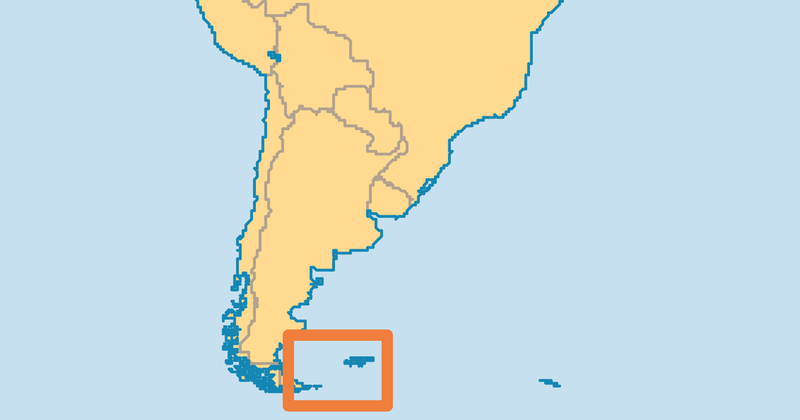
The United States may seek to punish Britain for its lack of support in the war with Iran by reviewing its stance on London's claim to the Falkland Islands, according to an internal Pentagon email, described to Reuters by a US official.
The proposal on this remote British-administered archipelago in the South Atlantic is among a series of options being considered by President Donald Trump's administration to put pressure on NATO allies that, according to it, did not support American military operations in the war with Iran.
The Falklands are a group of islands in the South Atlantic Ocean, about 500 km east of Argentina and about 13,000 km from Britain. They consist of two main islands, East Falkland and West Falkland, as well as 778 smaller islands.
The first recorded landing in the Falklands was in 1690 by English Captain John Strong. Britain took formal possession of West Falkland in 1765 and, although France and Spain had settlements on the islands at various times, Britain reestablished control in 1833 and has administered them ever since.
The Falklands, with a population of about 3,660, have an elected legislative assembly that manages internal affairs. The majority of the inhabitants are of British descent, but there are also people from Saint Helena, Chile and the Philippines.
The economy is based mainly on fishing licenses, agriculture, and tourism.
Argentina has claimed sovereignty over the islands, which it calls the Malvinas, arguing that it inherited them from Spain after independence in 1816 and that Britain took control in 1833 through an illegal colonial act.
Britain argues that the islanders have the right to decide their own future. A spokesman for Prime Minister Keir Starmer said that sovereignty over the Falklands belongs to Britain.
In April 1982, Argentina's military government, led by Leopoldo Galtieri, ordered the invasion of the islands, believing that Britain would not respond with force.
However, then-British Prime Minister Margaret Thatcher sent in a naval fleet and regained control after 74 days of fighting. Argentina surrendered in June 1982, and the defeat hastened the fall of the military junta.
In total, 649 Argentine soldiers were killed, along with 255 British servicemen and three islanders.
The conflict was a defining moment for Thatcher and increased confidence in the British military.
It also caused deep resentment in Argentina, which continues to this day.
The United States initially tried to mediate, but then supported Britain with intelligence, logistics, and access to military bases.
France, which had supplied Argentina with missiles before the war, then imposed an arms embargo and helped Britain with information and logistics.
Britain continues to claim sovereignty over the Falklands and maintains a military presence there, including the air base at Mount Pleasant.
Argentina, with the support of China, continues to press its claim through diplomatic channels and in international organizations such as the UN. Diplomatic relations were restored after the war, but talks on sovereignty remain deadlocked.
In a 2013 referendum, 99.8% of voters supported remaining under British rule, with a turnout of around 92%. Britain uses this as evidence of the will of the people and says it will not discuss sovereignty without their consent.
Argentina rejected the referendum, saying the population was determined after Britain took control in 1833.
The UN lists the Falklands as a non-self-governing territory and has repeatedly called for Britain and Argentina to resume talks on a peaceful solution.
The organization has not ruled on sovereignty and does not recognize any claim as final.
Argentina presents the issue as a decolonization problem, while Britain says this principle does not apply since the inhabitants are a settled population.
China, which has expanded ties with Argentina, has expressed support for its claim and called for negotiations.
The United States has generally avoided taking sides on sovereignty since 1982. The State Department says the islands are administered by Britain, also citing Argentina's claim.
The Pentagon email suggested reviewing European "imperial possessions," including the Falkland Islands.
Argentine President Javier Miel, who has a pro-American stance and good relations with Trump, has said that Argentina will continue the claim, but without using force, pursuing the issue through diplomacy.
Happening now...











ideas



top



Alfa recipes








services
- POLICE129
- STREET POLICE126
- AMBULANCE112
- FIREFIGHTER128