


FLASH NEWS
US-Iran, diplomacy under the shadow of war

2026-02-26 23:56:15 / BOTA

Two US aircraft carriers on the move. Ballistic missiles deployed underground. Military exercises in the Strait of Hormuz. Threats of regime change. In just a few weeks, the relationship between the United States and Iran has shifted from cold diplomacy to the brink of open conflict. But is this the path to war… or maximum pressure for a new nuclear deal?
In Tehran, amid crowds chanting "Death to America," Iran's supreme leader, Ali Khamenei, issues a direct message to Washington.
“If the Americans start a war, this time it will be a regional war,” Ali Khamenei said. A clear warning: any attack on Iran will not remain isolated. It could involve the Gulf, Israel, American bases in the Middle East and beyond.
From Florida, US President Donald Trump chooses a defiant but calculated tone.
"We have the biggest and most powerful ships in the world right there... We hope to make a deal. If not, we'll see if he was right," Trump said.
The message is twofold: the door to negotiations remains open, but military power is there, very close to the Iranian shores.
In early February, tensions move from words to the ground. An Iranian drone approaches the US aircraft carrier USS Abraham Lincoln in the Arabian Sea. According to the US military, it was shot down after being deemed a threat. Footage from the deck shows planes taking off and landing at a warlike pace.
A day later, on February 5, Tehran responded with a show of force. State media announced the deployment of the Khorramshahr 4 ballistic missile, with a range of 2,000 kilometers — a missile that could reach Israel and US bases in the region. A signal that the military card is on the table.
Diplomacy is taking place in the background. In Muscat, Iranian Foreign Minister Abbas Araqchi meets with the Omani Foreign Minister. In a parallel meeting, US envoy Steve Witkoff and Jared Kushner hold separate talks. Iran says it is ready for negotiations, but not under threat.
"If they choose diplomacy, we will do the same. If they speak with force, we will respond with force," Abbas Araqchi said.
On February 11, Iranian President Masoud Pezeshkian declares that Iran is willing to allow international inspection of its nuclear program.
"We are not looking for nuclear weapons. We are ready for any kind of inspection," said Masoud Pezeshkian.
But Tehran categorically refuses to include its ballistic missile program in the negotiations — a red line that makes an agreement more difficult.
On February 13, the rhetoric escalates. In a speech to US troops, Trump suggests that “regime change” in Iran may be the best solution.
"It seems like this would be the best thing that could happen," Trump said.
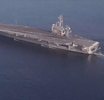
The US also sends the world's largest aircraft carrier, the USS Gerald R. Ford, to the Middle East. Satellites confirm the presence of the "Abraham Lincoln" near Oman. The air base in the Azores is reactivated. US forces increase their presence in the region to the highest level in years.
Tehran is meanwhile conducting exercises in the Strait of Hormuz and then joint maneuvers with Russia in the Sea of Oman.
From Israel, Prime Minister Benjamin Netanyahu declares:
"If the ayatollahs make the mistake of attacking us, they will experience a response they cannot imagine," Netanyahu said.
The region prepares for any scenario. On February 19, Trump issues an ultimatum, giving the Islamic Republic 10 to 15 days to reach an agreement.
"Either we make a deal, or it's going to be bad luck for them," Trump said.
Iran threatens to strike US bases if attacked. Meanwhile, two realities are heard on the streets of Tehran: anti-regime chants… and “Long live the king” chants. Domestically, social tensions increase pressure on the regime, while abroad, the military threat looms.
Happening now...



ideas

"Quality" justice for those in power, but not for citizens
Nga Ervis Iljazaj

Media Fortune Tellers
Nga Roland Lami

Out with the Corrupt!
Nga Arbër Hitaj
top

Alfa recipes


TRENDING 




services
- POLICE129
- STREET POLICE126
- AMBULANCE112
- FIREFIGHTER128