


FLASH NEWS
Who is running in Kosovo's snap parliamentary elections?

2026-05-08 16:35:07 / KOSOVA
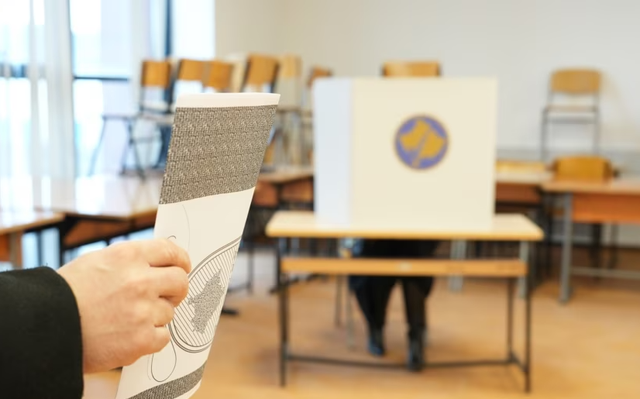
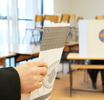
Over 20 political entities and three coalitions will officially compete in the June 7 snap elections, with several new changes from previous elections that, according to analysts, may have little impact on the overall result.
The Central Election Commission (CEC) announced on Friday that 22 political entities and three coalitions have registered by the deadline at midnight on Thursday to participate in next month's elections, which come as a result of the dissolution of the Assembly following the failure to elect the country's new president.
The ruling party of the acting Prime Minister of Kosovo, Albin Kurti's Vetevendosje Movement, will compete again in a coalition with the parties Guxo, Alternativa and the Albanian Democratic Christian Party.
And, while former president Vjosa Osmani will also be part of the race , who is expected to run on a list with her former party, the Democratic League of Kosovo (LDK), the Social Democratic Party (PSD) composed mainly of former members of Vetëvendosje, will be missing Fatmir Limaj's Social Democratic Initiative.
Belgzim Kamberi from the non-governmental Institute for Social Policy "Musine Kokalari" in Pristina, tells Radio Free Europe that Osman's return to the race is the main move of these elections.
"The most substantial or realistic coalition in these elections is the one between Vjosa Osmani and LDK. This is perhaps the novelty of these elections, due to Osmani's history and political power," said Kamberi.
LDK Chairman Lumir Abdixhiku indicated days ago that he has agreed with Osmani to run together in these elections, but their agreement must be formally approved by the party leadership on Saturday.
Osmani – who failed to be elected president for a second term due to a lack of support in the Assembly after her mandate ended in April – decided to return to the electoral race and has already begun presenting to voters candidates who are expected to be part of her list in cooperation with the LDK.
With over 300,000 votes from the 2021 elections, Osmani was for a time the most voted person in Kosovo until the 2025 elections when Kurti broke his record by receiving around 400,000 votes.
Kamberi emphasizes that "the essence of these elections" is Osmani's joint competition with the LDK.
"Everything will depend on the electoral effect of Vjosa Osmani, which should really strengthen the LDK list," he underlines.
Meanwhile, Nisma, which failed to cross the threshold in the previous elections in December, decided not to run alone. In the previous elections, Nisma had entered the Assembly after running in a coalition with the Alliance for the Future of Kosovo (AAK).
In the December elections, Nisma received 15,189 votes, or 1.59 percent, far short of the 5 percent threshold to enter the Assembly.
Limaj was said to have made efforts to cooperate with the largest opposition party, the Democratic Party of Kosovo (PDK), to run on a joint list on June 7th.
While his party will not run, Limaj could run personally if he reaches an agreement with his former party, PDK, to be part of its list.
Political entities and coalitions have until May 12 to submit online the list of names of candidates for deputies for certification of participation in these elections.
Kamberi emphasizes that there is "pressure within PDK" about whether or not to include Limaj, who left the party in 2013 to found his own party.
"It seems that there are differences within the party. While some are in favor of including Fatmir Limaj, others are not," said Kamberi.
Kamberi believes that PDK may feel pressure to include Limaj on its list, due to the cooperation between Osmani and the LDK on the other side.
"Because voters, for example, may say that while Abdixhiku was able to bring back Vjosa Osmani with all its history - why can't PDK?" he emphasizes.
Where can the Initiative's votes go?
Kamberi predicts that Kurti's ruling party will gain additional votes from Nisma's absence from the race.
"Of course, the government benefits from Nisma's non-participation, because if we consider that Nisma had joined PDK, the votes would have gone to this entity, now some of the votes that belong to Nisma are being merged," he underlines.
According to him, this direction harms "the opposition in general, but also the PDK in a purely electoral sense."
Kurti's party won both 2025 elections, taking 42 percent in the February elections and then winning even more convincingly in the December elections, with over 51 percent of the vote.
Early parliamentary elections in Kosovo will be held on June 7th after the country failed to elect a new president to avoid them.
These will be the third parliamentary elections within 18 months, following those in February and December 2025. /REL
Happening now...













Sali Llapa
Nga Bato Kosova
ideas
Republic of Thieves!
Nga Gjergji Nika

Albania, this ship stuck in the business of theft!
Nga Edison Ypi
top

Alfa recipes








services
- POLICE129
- STREET POLICE126
- AMBULANCE112
- FIREFIGHTER128