


FLASH NEWS
Monitor Analysis: Economics is not done with references or boards

2026-04-11 13:29:36 / EKONOMI&SOCIALE
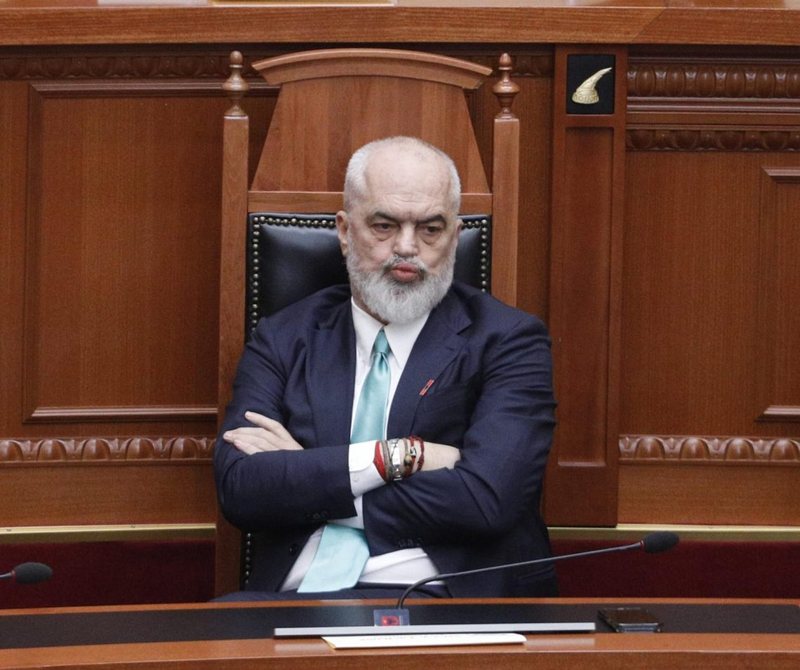
The Albanian administration has an old habit: whenever it fails to solve a problem, it tries to cover it up with a table, a reference, a board, a commanded price. When oil prices rose, the solution was not to touch the fiscal burden, even though it remains significantly higher than in the countries of the region.
The Transparency Board was reactivated, with a methodology that has been changed as needed and with a modest result for citizens. Even in cases where intervention is made, the savings are minimal compared to the burden borne by the consumer on each liter, while the entire fight is being waged for 4-5 lek per liter.
For example, when the 20% excise tax reduction came into effect, the price of diesel increased from 218 lek to 224 lek per liter! Meanwhile, Albania continues to have one of the highest fuel prices in the world, entering the top ten most expensive.
So, the state does not give up its part, but creates the illusion that it is protecting the citizen. It does this by administering the consequence, not the cause. It does not reduce taxes, it does not crack down on the distortions that produce high prices, it does not channel a portion of the additional income it collects from price increases to the vulnerable, but it builds a mechanism that gives itself the role of moral arbiter of the market.
In the end, the citizen saves very little, while the economy is left with one of the most expensive fuels for the purchasing power it has.
The same logic is now being followed with wages. There is no doubt that in Albania there is still high tax evasion overall, with total revenues being 28% of GDP, compared to the 35-40% average in Europe. This evasion is in wages in the private sector, while social security revenues are still 6% of Gross Domestic Product, while in the region and in Europe, this indicator is over 10%.
Instead of strengthening tax administration, improving intelligent risk control, and truly cracking down on evasion, the government is spreading from one sector to another with reference salaries.
After services, hospitality-tourism and construction, Taxes have also published reference salaries for 40 categories of professions in the private healthcare system and aesthetic services, including around 10 thousand businesses.
In practice, businesses are no longer judged on the salary they actually pay, but on a salary set by the administration. Any declaration below that level automatically puts the entity at "risk."
This is a clear distortion of the labor market. Because salary is not an administrative price, but the result of productivity, experience, skills, demand and supply.
Private sector professionals and accountants themselves have warned that this approach does not reflect reality, undermines meritocracy, does not take into account differences between cities, levels of experience, and professional profiles, and may even produce more informality and the closure of small businesses.
Above all, these references hinder the employment of young people, as no one will attempt to hire a recent graduate who will be forced to pay them at the level of someone with more experience.
If the reference becomes a standard, the market does not become cleaner, but more distorted. A fixed salary set from above does not reflect the reality of the private sector. It can become a ceiling for some and a justification for other “hand-in” payments for others. This is not a fight against evasion.
It is an admission of the inability to investigate it case by case and, what is worse, it can produce the illusion that the economy is doing well because budget revenues are increasing.
The irony is that the government itself is giving completely opposite signals. On the one hand, it is tightening the market with reference wages and telling businesses that you will pay according to my table. On the other hand, it is promising fiscal peace and debt forgiveness for those who have not paid in years.
In January, the transitional phase of the laws on the Fiscal Peace Agreement and on the cancellation of obligations created confusion among businesses, while the administration continues to forcefully collect old obligations, even when some of them are expected to be forgiven according to the law, which is still expected to begin implementation.
This is the worst possible picture for the business climate: for the honest, increasingly strict rules; for the tax evaders, sometimes pressure, sometimes amnesty.
Ultimately, the problem is not just one of injustice. The problem is one of philosophy. In a market economy, the government is not there to fix prices, either of oil or of labor.
Its role is to build functioning institutions, guarantee free competition, apply the law equally to all, and crack down on evasion with skilled administration, not with general tables that penalize everyone. When the state sets reference prices for everything, it is not solving the problem.
It is simply shifting the cost of its own incompetence onto the business, the employee, and the consumer.
“Fixed prices” sounds like a quick fix. In fact, it is the shortest path to fixing the problem: a less free labor market, a less competitive economy, and a state that continues to confuse control with development./ Monitor
Happening now...















Denouncing Berishism is a prerequisite for denouncing the government
Nga Blendi Kajsiu
ideas


top



Alfa recipes



TRENDING 




services
- POLICE129
- STREET POLICE126
- AMBULANCE112
- FIREFIGHTER128