


FLASH NEWS
War and oil "choke" markets, concerns about a repeat of the crises of 2022 and 2008

2026-03-21 09:08:17 / EKONOMI&SOCIALE
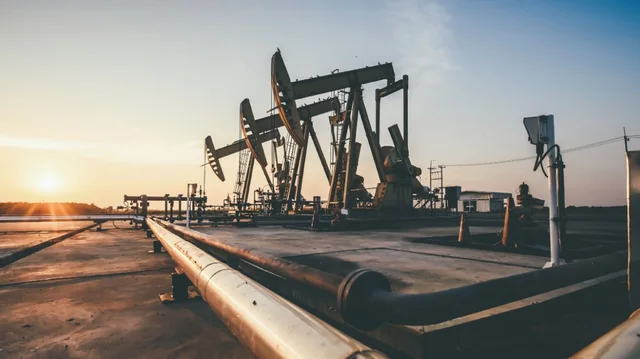
Energy has historically been the "spark" for major economic crises.
Uncertainty regarding the duration of military operations, combined with rising pressures on energy prices (oil and natural gas), is currently the main factor influencing stock market movements, limiting both investment visibility and risk appetite.
Some international analysts are concerned that the significant increase in international oil prices could create a scenario in the markets reminiscent of the period before the 2008 global financial crisis.
At the time, the price of oil doubled to $140 a barrel by August 2008 from $70 in July 2007, which coincided with the beginning of the tremors of the subprime mortgage crisis that eventually collapsed banks such as Bear Stearns.
The Iran war that broke out on February 28 has already sent oil prices up more than 60% this year, reaching as high as $120, while Wall Street returns resemble the price behavior observed from mid-2007 to mid-2008, Bank of America reports.
Markets have indeed entered conditions of increased volatility, while strengthening overall systemic risk, but they are far from the scene of 2008.
A major oil crisis could lower the S&P 500 index by 19%, according to Goldman Sachs.
However, the S&P 500, a global benchmark index, has fallen only 3.96% (Thursday's close) so far this year and about 5% from its all-time high, while it is still far from reaching an underweight market (-20% or higher).
Oil
Oil prices have risen sharply since the start of the war. However, they remain below the highest level seen since the Russian invasion of Ukraine in 2022. The Russian invasion pushed the price to $139.13, the highest level since 2008, when it had reached a high of $147.50.
But markets are still not predicting a 2022-style outcome, when Brent was above $100/barrel for about 5 months and well below the 2008 record.
Also, unlike the oil shocks of both 2022 and the 1970s, inflation is broadly around target.
At least for now, we are not yet at the historic levels that have accompanied significant risk-off moves in previous oil crises. We have not yet seen an aggressive turn from central banks. And given how early it is, we have not yet seen clear signs of worsening economic data.
Morgan Stanley, for its part, expresses the view that investors should prepare "buy lists" in anticipation of the market's resumption of growth later this year.
He estimates that within six months, things will likely have calmed down after this initial surge, much like they did after Russia's invasion of Ukraine. Importantly, he points out, the sharp rise in oil prices is the result of a logistical bottleneck in the Strait of Hormuz, not a lack of supply.
According to Morgan Stanley, stocks typically bottom out a few days after oil prices peak.
BlackRock is focusing on the risk of a stagflationary shock, but this is not a guaranteed fact, as the market price suggests.
Often “markets climb the wall of uncertainty,” a classic stock market expression that has been proven true several times in the past and may be true again this time.
Stock market history shows that markets tend to reduce uncertainty before the event and recover before conflicts end.
Happening now...












ideas



top






TRENDING 




services
- POLICE129
- STREET POLICE126
- AMBULANCE112
- FIREFIGHTER128