


FLASH NEWS
From compromise to ultimatums, repeated propaganda for technical government

2026-03-20 23:08:33 / POLITIKË
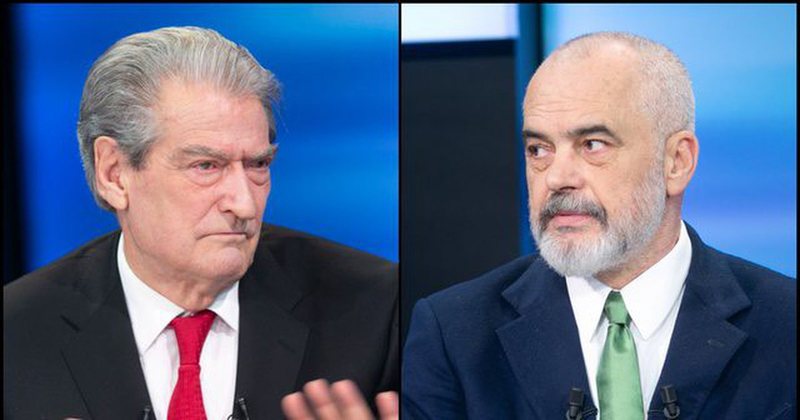
In a statement from Brussels, DP leader Sali Berisha accused Prime Minister Rama of concentrating power and manipulating the electoral process.
He raised concerns "about organized crime and corruption", emphasizing that "the opposition sees the creation of a caretaker government as the only solution to guarantee free elections".
On Sunday, the DP announced a national protest based on this request.
"Either a technical government or a confrontation. We will never accept this government again," Berisha declared in February of this year, as he warned of the next protest.
The statement comes in a tense political climate, where the Socialist Party has refused SPAK's authorization to lift the immunity of MP Belinda Balluku.
The demand for a technical government is not new in the DP discourse, having been articulated for more than a decade, especially during election periods, initially when the party was led by Lulzim Basha, after the resignation of Sali Berisha, and later by the latter after his return to leadership.
The beginnings of this request, after the Socialist Party came to power in 2013, date back to 2015 and 2016 by Lulzim Basha (then the leader of the Democratic Party), supported in parallel by Berisha at a time when justice reform was being debated.
Berisha declared that "a technical government is needed," linking it to the need for political calm and institutional consensus, for another process that was coming up next, the elections.
A year later, in the 2017 elections, politics was involved in a broad political compromise that led to the appointment of several technical ministers.
The Ministries of Interior, Finance, Education, Justice, Health, and Social Welfare and Youth, along with the post of Deputy Prime Minister, were temporarily led by the opposition.
This is the only time when the request for technical intervention in the administration of elections was partially materialized.
After the June 2017 elections, Berisha declared that the agreement had been “violated” and that the technical mechanism had not guaranteed full electoral standards.
Since that period, the demand evolved, no longer simply technical ministers within a political government, but a technical government without the current prime minister.
The political crisis of 2019, accompanied by the burning of parliamentary mandates by the opposition, shifted the terminology towards "transitional government".
Berisha publicly supported Basha's decision to surrender the mandates, later declaring that he had also been the author of the idea.
Berisha sought the creation of an interim government, which would lead the country to new elections.
At that time, the caretaker government was no longer presented by the DP only as a guarantee for elections, but also as a necessity to restore political legitimacy.
The discourse then continued to become more confrontational and linked to the complete delegitimization of the incumbent government.
In 2024, the demand for a caretaker government returned to the center of opposition rhetoric in a new political context.
The leader of the Democratic Party, Sali Berisha, was under house arrest as part of the SPAK investigation into the "Partizani" file.
However, his political communication with supporters and party structures continued.
In October 2024, Berisha announced the launch of "civil disobedience", stating that the initiative would continue "until the establishment of a caretaker government".
In December 2025, he repeated the call for national protests "until the establishment of a technical government."
The request has now moved from an institutional proposal to an ongoing objective.
Berisha turned it into his political "mantra", as a prerequisite in every electoral process.
This is what happened in the May 2025 elections.
But in the February 2026 speech, the phrase “Either a technical government or confrontation” represented the most hardened phase of this stance. Unlike 10 years ago when the demand was argued as a need for impartiality, today it is presented as the only alternative in the face of what Sali Berisha describes as the lack of legitimacy of the incumbent government.
The technical government is being articulated by him as the starting point of a political confrontation aimed at a change of power.
It has taken various forms in these 10 years, from the "impartial government" to the "technical ministers", the "transitional government" or the "caretaker government".
The call for a technical government by DP leader Sali Berisha has intensified significantly in the last 2 years.
From the 2013 elections until now, 3 parliamentary elections, 3 local elections and 4 by-elections have been held with the same objective by the DP: "Technical government"
Today, when the opposition has entered the phase of protests, but also when Rama has "washed his hands" of the changes in the government, it remains to be seen whether this request will continue to serve as a propaganda element or will produce concrete changes in the political arena.
Chances are not. Unlike the 2017 compromise, Prime Minister Edi Rama has stated that this time it was convincingly voted for by the people with 83 mandates. /Faktoje.al
Happening now...





ideas


top




TRENDING 




services
- POLICE129
- STREET POLICE126
- AMBULANCE112
- FIREFIGHTER128