


FLASH NEWS
Will the US attack Iran or not? The Trump administration is divided

2026-02-21 21:55:36 / BOTA
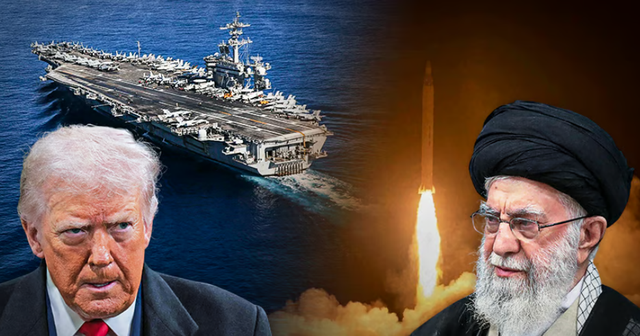
Iran's leadership on Saturday escalated warnings to the United States against launching a military strike, as President Donald Trump weighs possible actions amid internal debate in Washington and political pressure ahead of November's midterm elections.
" America knows that Iran does not seek war, but is capable of managing it ," said Ebrahim Azizi, head of the Iranian Parliament's National Security and Foreign Policy Committee.
In a post on X, Azizi warned: “Any reckless action against Iran will face a severe response. We will not succumb to threats.” He attached an image showing Iranian missiles launched towards Israel in October 2024.
Iranian President Masoud Pezeshkian said on Saturday that Tehran would resist international pressure.
"We are capable of overcoming the current phase. Victory will belong to our steadfast people," Pezeshkian said. "We will not bow our heads despite pressure from world powers."
Iran's state-run Fars News Agency published several reports highlighting the country's military capabilities, amid Revolutionary Guard exercises in the Strait of Hormuz.
Fars reported on what it described as Iran's first long-range sea-based air defense system. Press TV, in Hebrew-language posts on Telegram, published footage it said showed the country's first long-range sea-based air defense system.
The message comes as the world awaits Trump's decision on whether to order an attack on Iran.
Trump orders rally as advisers debate
Trump has ordered a significant buildup of US forces in the Middle East and preparations for a possible air campaign that Reuters reported could last “several weeks.” The president has repeatedly threatened to strike Iran if it does not agree to a new nuclear deal, Ynet reports.
According to Reuters, Trump has not publicly explained in detail why he might lead the United States into what would be its most aggressive action against Iran since 1979.
A senior White House official told Reuters that despite Trump's rhetoric, there is no "unified support" within the administration to proceed with an attack.
The official, speaking on condition of anonymity, said advisers are careful not to send a "distracting message" to undecided voters, who are more concerned about the economy than foreign policy.
Another White House official told Reuters that Trump's foreign policy "has translated directly into victory for the American people."
"All of the President's actions put America first, whether it's making the entire world safer or bringing economic results to our country," the official said.
Political risks ahead of midterm elections
The November midterm elections will determine whether Republicans retain control of both houses of Congress.
Reuters reported that some of Trump's advisers want him to focus more on economic issues, which polls show remain the top concerns for American voters. At a private meeting this week attended by cabinet secretaries, economic issues were described as a top campaign priority. Trump did not attend, according to Reuters.
Republican strategist Rob Godfrey told Reuters that a prolonged conflict with Iran would pose political risks.
"The president must keep in mind the political base that propelled him to the Republican nomination three times in a row and that continues to stand by him is skeptical of foreign engagement and involvement, because ending the era of 'eternal wars' was a clear campaign promise," Godfrey said.
Trump reiterated on Friday that Tehran "had better negotiate a fair deal" regarding its nuclear program.
During the so-called "12-day war" in June, the United States targeted nuclear sites in Iran. Tehran has warned it will respond forcefully if attacked again.
A second White House official told Reuters that Trump "has been clear that he always prefers diplomacy and that Iran needs to make a deal before it's too late," adding that Iran "cannot have a nuclear weapon or the capacity to build one, and that they cannot enrich uranium."
Polls show limited public appetite in the United States for another foreign war. Reuters noted that while foreign policy has historically not determined medium-term outcomes, Trump’s large-scale military deployments — including aircraft carriers and fighter jets sent to the Middle East — could narrow his room for maneuver unless Iran makes significant concessions. For now, Iran’s leadership continues to warn that any attack will be met with retaliation, while Washington debates the costs — military and political — of escalation.

Happening now...










ideas

You will ask for (Basha), Vlora General
Nga Ermal Peçi
Albania in Washington, between symbolism and state seriousness
Nga Sokol Neçaj

Messages for Rama&Berisha and a McAllister act in Tirana
Nga Roland Lami
top


Alfa recipes



TRENDING 




services
- POLICE129
- STREET POLICE126
- AMBULANCE112
- FIREFIGHTER128