


FLASH NEWS
Cameras are not allowed in court proceedings, Televisions request the immediate intervention of the Supreme Court: The right to information is being violated

2026-06-18 12:15:54 / AKTUALITET
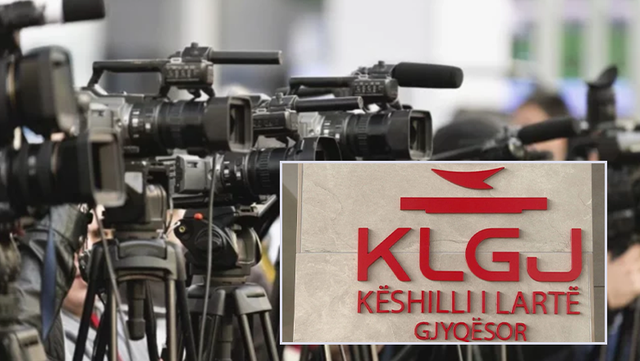
Television journalists are encountering daily obstacles in covering court proceedings. Although there is a special Instruction of the High Judicial Council, which determines access to the media, and especially the presence of television cameras in court sessions, this document is being used mostly as a deterrent mechanism, often and openly violated.
This phenomenon becomes even more worrying, while important judicial processes have been initiated at the GJKKO, involving influential figures in the country's political life, and as a result, public interest is extremely high.
Under these conditions, some of the main television stations have addressed the High Judicial Council (for information, courts of all levels, as well as the Council of Europe and the OSCE Representative on Freedom of the Media) to request immediate intervention to guarantee the right to information, a principle sanctioned in the country's Constitution.
Below is the full text of the letter sent to the Supreme Court signed by: NEWS 24, Top Channel, TV KLAN, Vizion Plus, Report TV, A2 CNN, Klan NEWS.
We are writing to express our concern about the recent situations regarding the presence of cameras during court proceedings.
Since 2023, the Supreme Court of Justice has approved the “Standard Guide to Court Relations with the Public and the Media”. Article 14, point 7 provides that the introductory part of the hearing “shall be recordable and broadcast without any restrictions”. The fact is that this provision has been openly ignored until now, and was only implemented after some defendants, important public figures, recently requested the presence of cameras.
Article 13, point 1, of the HLGJ Guidelines stipulates that “court hearings are open to the public and the media.” However, this provision remains limited in practice.
According to the instruction, the media is obliged to submit a request for its presence with a camera 24 hours before each session. This automatically means that the judge should also be obliged to evaluate it each time it is presented, and to express a reasoned decision to reject it (so far every request has been rejected). But in practice we are encountering cases where the rejection refers to decisions made several months ago.
Article 2, point 1, of your Instruction provides that “The relationship of the court with the public and the media is based on the principles of equal access to the courts, the public nature of the judicial process, the maximum openness of judicial activity to society through communication with the public, the right to information, the protection of human dignity, privacy and personal data, reputation, and the presumption of innocence.”
Në balancën e këtyre parimeve, qartazi, ai i të drejtës së informimit, i sanksionuar në Kushtetutë, duket se renditet i fundit, nga trupat gjyqësore, pa asnjë përpjekje për të gjetur një ekuilibër të duhur me parimet e tjera. Në praktikë po ndeshemi, me referimin e cenimit të parimeve të tjera, për të penguar atë të së drejtës së informimit.
Parashikimi juaj në nenin 14, pika 8/b, për refuzimin e kërkesës “kur një nga subjektet në gjykim nuk dëshiron të regjistrohet seanca”, po përdoret gjerësisht si shkas për moslejimin e pranisë së kamerave, ndonëse i njejti nen, në pikën 6/b, i njeh të drejtën gjyqtarit “të lejojë ose ndalojë regjistrimin e pjesshëm të seancës”, pra ta zbatojë këtë të drejtë, kur të jetë rradha e dëshmisë së të pandehurit që nuk dëshiron të rregjistrohet, dhe jo ndalimin e rregjistrimit të të gjithë seancës. A nuk përbën ky rast, një cënim të të drejtave të palëve të tjera në gjykim që e kërkojnë rregjistrimin?
Për më tepër neni 14, pika 8/b, përcakton shprehimisht se avokati dhe prokurori nuk mund të kundërshtojnë kërkesat për rregjistrimin e seancës. E megjithatë jemi dëshmitarë të rasteve, kur edhe ata janë shprehur në seancë.
Honorable members of the Supreme Court of Justice,
public court hearings cannot only mean the public in the courtroom. Otherwise, this notion would be automatically limited, if only due to the physical conditions of the environment where the process takes place. The media are the ones who serve in this case, so that this notion includes the general interested public.
This role of the media becomes all the more important, when none of the Albanian courts offers a central audiovisual broadcasting system. Even audio recording is offered, surprisingly, only to interested parties in the process, while journalists are not even allowed to do it themselves in the courtroom. A minimal requirement that would only reinforce the guarantees for a faithful reflection of the statements of the parties in a courtroom. The audio recording of court hearings through a tape recorder, which every journalist has always carried with him, has been a practice implemented for years by all Albanian journalists, but which, surprisingly, has now been banned, along with video recordings.
The right to information and public hearings, as foreseen in principle and in the Guidelines of the Supreme Court of Justice, represent a rule. Unfortunately, experience to date shows that they are being treated in an inverted ratio, as an “exception to the rule”.
Within the list of obstacles that burden journalists’ work every day in covering court hearings, we must also list the prohibition of the right to study court files, now also available in digital form. Unlike what happens in European countries, journalists do not even have the right to read the court files that are publicly discussed during hearings. The only “papers” that journalists have at their disposal today are those that are made available in a very selective manner by one of the parties to the trial.
In this situation, we request the intervention of the Supreme Court of Justice as soon as possible, so that a solution can be found that does not violate the right to information. The Supreme Court could provide a more detailed interpretation, which would allow the media to carry out their mission without hindrance, narrowing the discretionary space for refusing their requests to follow court hearings and enabling reporting to public opinion with maximum accuracy, as can only be guaranteed through audio and video recordings.
Happening now...



Attacks on Dumani and Berisha's silence on Ilir Shtufi
Nga Bato Kosova
ideas

The Alliance of Seals and Towers, facing the New Republic
Nga Azgan Haklaj

The beginning of the end of power in Albania...
Nga Veton Surroi
The ridiculous coherence of the opposition!
Nga Alfapress.al
top

Alfa recipes



TRENDING 




services
- POLICE129
- STREET POLICE126
- AMBULANCE112
- FIREFIGHTER128