


FLASH NEWS
Seven minutes of total darkness! When will the longest solar eclipse of the millennium occur?

2025-06-20 18:16:19 / MISTERE&KURIOZITETE
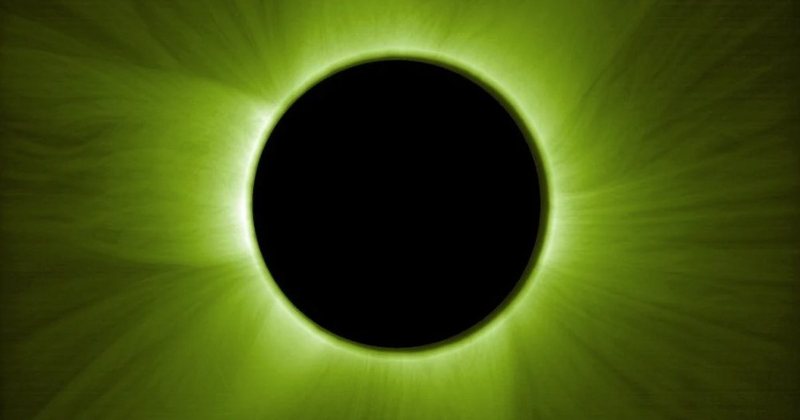
The longest solar eclipse of the millennium now has a date. This unique phenomenon has already piqued the interest of astronomers, space agencies and space enthusiasts around the world.
NASA described the eclipse as a “nearly perfect” alignment and noted that nothing like it will happen again for millennia. Various observatories and research centers are already planning future missions to document the phenomenon, both from Earth and from platforms in space.
Beyond its uniqueness, the eclipse will be an excellent opportunity to investigate in greater depth the solar atmosphere, the behavior of the Earth's ionosphere, and other aspects that can only be analyzed during this type of event.
In a context where astronomical conditions play a crucial role, the total eclipse is presented as essential for future generations of scientists, explorers and curious citizens.
The "disappearance" of the sun
For just over seven minutes, the sun's rays will disappear before the eyes of those in the right place, leaving an indelible mark on both the collective memory and the archives of science.
The total solar eclipse will occur on July 16, 2186, and is already considered the longest recorded in modern history. The total phase of the phenomenon will last 7 minutes and 29 seconds, a record that far surpasses the 2009 eclipse, which lasted 6 minutes and 39 seconds.
Its extraordinary duration is explained by a series of celestial conditions that rarely coincide: on that day, the Earth will be at aphelion, its farthest point from the Sun, which will make the star appear smaller. At the same time, the Moon will be at perigee, its minimum distance from our planet, allowing it to completely cover the Sun for a longer period of time.
Although it is more than 150 years away, expectations are very high. On that date, the eclipse path will pass near the Earth's equator, an area where the curvature of the planet favors a longer duration of the phenomenon. This alignment of factors will not be repeated for thousands of years, according to official estimates.
Which countries will experience total darkness?
The solar eclipse will cast its shadow mainly over the Atlantic Ocean, although it will also pass over certain land areas that will become privileged observation points. Among these, areas of northern Brazil, French Guiana, several Caribbean islands and parts of West Africa, such as Ghana and Togo, stand out.
The periods of total darkness on land will be brief compared to those that will occur over the sea, but they will allow us to examine the phenomenon in its full magnitude. In these minutes, the sky will be completely darkened, stars will be visible in broad daylight, and temperatures will drop significantly.
Happening now...














America may withdraw from Europe, but not from SPAK
Nga Gentian Gaba
ideas



top



Alfa recipes




TRENDING 




services
- POLICE129
- STREET POLICE126
- AMBULANCE112
- FIREFIGHTER128