


FLASH NEWS
The "City of Water" under the Trevi Fountain: The Secret Rome Hides 9 Meters Underground

2025-11-11 17:41:26 / MISTERE&KURIOZITETE
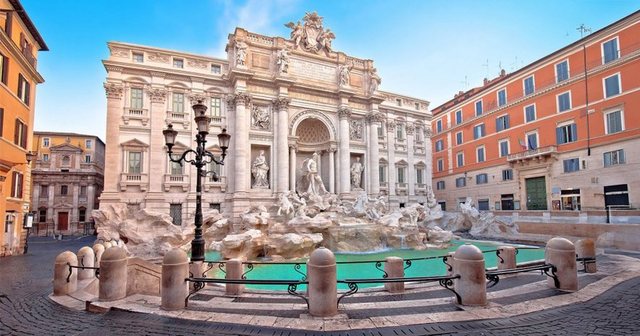
Rome is famous for its fountains, squares, and monuments, but one of the most fascinating stories lies beneath one of them, the Trevi Fountain.
Just steps away from the crowds tossing coins and taking photos lies another world: the archaeological site of Vicus Caprarius La Città dell'Acqua (City of Water), an ancient labyrinth submerged some 9 meters below street level.
This is one of those places that reminds you that Rome is not just one city, but layer upon layer of civilizations. And beneath the Trevi, history literally flows with the water.
What is “Vicus Caprarius – City of Water”?
Vicus Caprarius is an archaeological site in the heart of Rome, where visitors descend underground to see:
-Ruins of a luxurious Roman house (domus) from the imperial period
-A large water reservoir, part of an ancient supply system
-The walls, corridors and structures that once belonged to an entire Roman neighborhood
-The name “City of Water” is not accidental. Here, water has always been the protagonist: as a source of life, as an engineering element, and as a symbol of Roman well-being.
One of the most surprising facts is that the ancient water system of this area still functions in some way today.
Vicus Caprarius is closely connected to the ancient aqueduct Aqua Virgo, built in 19 BC, which continues to supply the Trevi Fountain with fresh water.
So, the water we see pouring from the white sculptures of the Trevi Fountain flows through a centuries-old network of canals that the Romans designed over 2,000 years ago. A visit to the “City of Water” allows you to see a part of this engineering marvel up close.
After descending the stairs of a modern building near Trevi Square, you enter a completely different atmosphere:
-Fresh air, dim light, stone walls: you feel like you've entered a parallel Rome
-You can distinguish the structures of the Roman domus – rooms, corridors, parts of the floors
-See water tanks and other hydraulic elements that showed how sophisticated the Romans were in their use of water
-Explanatory panels, maps and 3D reconstructions show the transformation of the area over the centuries
-The noise of the crowd above ground is replaced by a special silence. It's the kind of visit where, for a few minutes, Trevi is no longer just a photo spot, but a "portal" to ancient Rome.
The area that is now called Vicus Caprarius was once:
-Domus (private aristocratic house)
-Then, over the centuries, it was transformed, rebuilt and partially covered by new buildings
Archaeological excavations have revealed:
How can you visit the "Water City"?
Vicus Caprarius is located just a few meters from the Trevi Fountain, in a side street. The visit is usually done with an entrance ticket and in a relatively short time, so it is ideal as a stop:
Happening now...















ideas



top






TRENDING 




services
- POLICE129
- STREET POLICE126
- AMBULANCE112
- FIREFIGHTER128