


Lajme flash
Older than dinosaurs/ Greenland sharks, the unknown treasure. Their eyes could offer the cure for...

2026-01-18 20:42:19 / MISTERE&KURIOZITETE
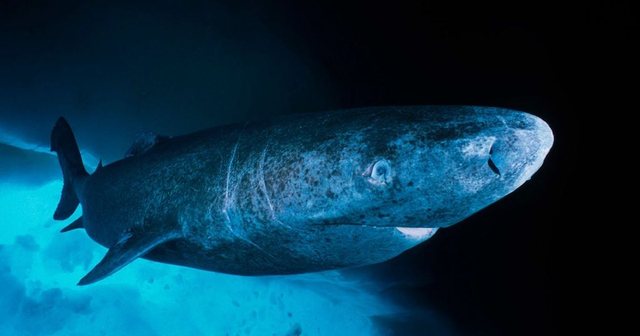
A recent study in Nature Communications and Smithsonian magazine confirms: the rulers of the Arctic seas are the longest-lived vertebrates in the world. And their eyes may offer the cure for macular degeneration.
By Luca Zanini - Corriere della Sera
The oldest still "remember" the golden age, when the seas around and below these icy spaces were traversed only by Inuit kayaks, after the disappearance of the first Viking settlements in the 15th century. Some of them may have witnessed the arrival of the first European settlers on the largest non-continental island, led by the missionary Hans Egede, who began evangelizing it in 1721. And they are still alive. Some specimens may now be witnessing from the depths the battle for the annexation of the legendary Extrema, the Land of Thule that Donald Trump is determined to annex to the United States. They are the Greenland sharks, Somniosus microcephalus, rulers of the Arctic seas, considered the longest-lived vertebrates in the world.
Older than dinosaurs
These giant descendants of prehistoric Arctic marine predators (apparently evolved from cartilaginous fish that preceded plants and dinosaurs), which the Inuit call Eqalussuaq, can reach incredible ages: they are estimated to be over 500 years old. They have an average lifespan of about 400 years; some studied specimens have been dated to 392 years. Therefore, it is not impossible that the large sharks present at the beginning of the 18th century witnessed the landing of American troops and the new drilling for the exploitation of gas, oil, diamonds and rare earth deposits.
Surprisingly good viewing
As Sara Hashemi points out in a report published a few days ago in Smithsonian Magazine, Greenland sharks owe their longevity to their extremely slow growth (only 1 centimeter per year; they reach sexual maturity at around 150 years of age) and advanced genetic DNA repair mechanisms. This regeneration system prevents vision deterioration, despite living mostly at depth (they can reach up to 3,000 meters from the ocean surface) where light barely penetrates. Some scientists suspected that these creatures were practically blind due to pesky parasites living in their eyes, but recent studies - published on January 5 in Nature Communications - have revealed that they appear to have surprisingly good vision thanks to segments of DNA that allow them to repair themselves almost throughout their lives.
These genes, ERCC1 and ERCC4, code for proteins responsible for repairing double-strand breaks and appear to be key to maintaining the health of the retina over the centuries. The research team found that only the longest-lived shark species possessed the ERCC1 gene, and Greenland sharks had higher amounts of ERCC4, likely processed into proteins, than other sharks. Now, scientists hypothesize that studying these genes could pave the way for methods to prevent serious vision problems (such as macular degeneration or glaucoma) in humans as well.
The eye in the ice saw black and white.
Evolutionary biologist Lily Fog of the University of Basel (Switzerland) was able to examine the eye of a Somniosus microcephalus thanks to a scientific legacy from the late Danish marine biologist John Fleng Steffensen of the University of Copenhagen: "We opened the package that had arrived from the Danish capital," recalls Emily Tom, co-author of the study with Fog, "and to our surprise, inside, protected by dry ice, was the eye of a 200-year-old shark." It showed no signs of degeneration. Furthermore, it was discovered that Greenland sharks have black-and-white vision. Indeed, while most vertebrates possess two types of light-sensitive eye cells (cones, which distinguish colors and work well in bright light, and rods, which do not perceive colors but work well in dim light), Greenland sharks have only rods.
From Eric the Red to anti-Nazi bases
After centuries of near-isolation, the establishment of the Danish trade monopoly – the Kongelige Grønlandske Handel, which lasted from 1776 to 1950 – had already upended life on land (most of the island is still covered by the Arctic ice cap) and in the seas of Greenland. Greenland, as Erik the Red had called it, discovered it in 982 (after being expelled from Iceland for his bloody cruelty) and began establishing permanent settlements there in 985. Then, during World War II, the island experienced another period of great tension when the Allies (essentially the United States) established military bases there while Denmark was occupied by the Nazis. Now the dispute over Trump’s claims could escalate a strategic dispute into a new war. The witnesses of the long memory will once again be the great Greenland sharks.
Po ndodh...


The power of vanity! The protest broke the "magic" of Rama and Berisha
Nga Indrit Gjyzeli
ide


top


receta Alfa


TRENDING 



shërbime
- POLICIA129
- POLICIA RRUGORE126
- URGJENCA112
- ZJARRFIKESJA128