


FLASH NEWS
Who was Gilles de Rais, the first serial killer in history?

2025-11-01 17:41:11 / MISTERE&KURIOZITETE
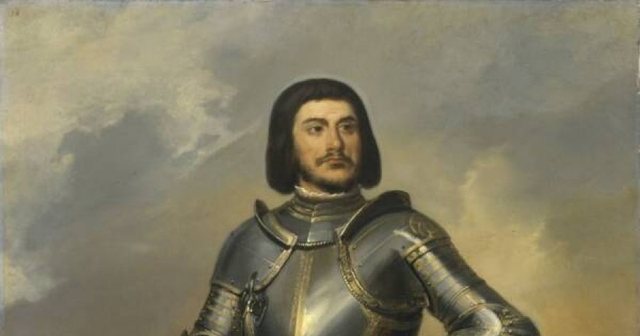
Gilles de Rais, a 15th-century French nobleman and close ally of Joan of Arc during the Hundred Years' War, is known today as one of the first documented serial killers in history. A war hero and later convicted of torturing, sodomizing, and murdering over 100 children, his story oscillates between fact and macabre legend.
Born in 1404 in Champtocé-sur-Loire, Gilles de Rais was wealthy and educated. Orphaned at an early age, he inherited the fortunes of his grandfather, Jean de Craon, and married Catherine de Thouars, gaining great influence and wealth.
When the war with England resumed in 1422, he distinguished himself for his bravery and became a glorious military figure. In 1429, he fought alongside Joan of Arc at the battles of Orléans, Jargeau, and Patay, and was awarded the title of "Marshal of France".
But after the execution of Joan of Arc in 1431, de Rais retired from the army and retreated to his castles. There, according to later accusations, his dark path began.
After 1433, de Rais spent his fortune on luxury and large-scale artistic projects, including a grand theatrical production. He also became involved in the practice of alchemy and the occult to regain his lost wealth. It was during this period, according to court documents, that the murders began: poor children were kidnapped, abused, and then brutally murdered at his castle in Machecoul. Witnesses testified that de Rais used their blood and body parts in rituals to summon demons.
In May 1440, an incident involving the kidnapping of a clergyman led to an official investigation by the bishop of Nantes. Many servants and peasants testified against him, describing the murder of hundreds of children. Under torture, on 21 October 1440, Gilles de Rais confessed his guilt and said: "I have told you enough to hang ten thousand men." He was sentenced to be hanged and burned at the stake on 26 October.
Although he has been considered for centuries the "first serial killer" and inspired the tale of "Bluebeard", some modern historians doubt his guilt. Scholar Margot K. Juby argues that he confessed out of fear of torture and to avoid excommunication. Also, the duchy of Brittany, which accused him, received all of his lands after his conviction, raising suspicions of political motives.
In 1992, a "symbolic trial" with French ministers, MPs and UNESCO experts declared de Raisin innocent, although the decision had no legal force.
The truth about Gilles de Rais remains unclear: was he a terrible criminal who killed for dark passions, or a victim of political intrigue and religious hysteria?
After more than five centuries, his figure remains on the border between hero and monster, a dark reminder of what happens when glory, power, and fear mix deadly together. / All Thats Interesting
-

128 years of Juventus, the touching message of the icon Del Piero
November 1, 17:36 -

Fatos Nano's epic rant about capitalism in 1987
November 1, 17:28 -

Rita Ora and Ylli Limani soon with a collaboration?
November 1, 17:16 -

-

Happening now...
















ideas



top






TRENDING 




services
- POLICE129
- STREET POLICE126
- AMBULANCE112
- FIREFIGHTER128