


FLASH NEWS
2025, the third warmest year ever recorded! What is expected to happen in 2026?

2026-01-14 09:11:04 / MISTERE&KURIOZITETE
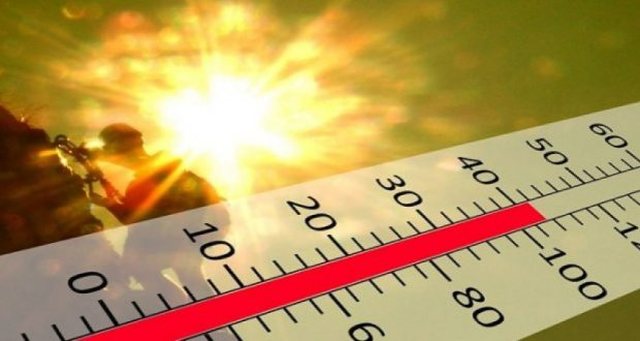
The year 2025 was ranked as the third warmest year ever recorded on the planet, very close to the record levels of 2024 and 2023. The European Copernicus Observatory and the American Berkeley Earth Institute announced this separately today, warning that global temperatures are expected to remain at historically high levels even during 2026.
According to Copernicus data, the global average temperature has remained above 1.5 degrees Celsius for three consecutive years compared to the pre-industrial period (1850–1900), a threshold that was considered the most ambitious target of the Paris Climate Agreement. Scientists emphasize that this continued increase represents levels never before experienced by humanity.
"The sharp increase in temperatures observed between 2023 and 2025 was extreme and indicates a clear acceleration of global warming," Berkeley Earth researchers said. According to them, the permanent exceedance of the 1.5°C limit could be formalized by the end of this decade, more than a decade earlier than initially predicted.
The acceleration comes at a worrying time for global efforts to combat climate change. In some rich countries, including France and Germany, emissions cuts have slowed in 2025, while in the United States, rising coal power generation has erased some of the progress of previous years. The situation has been further complicated by the US scaling back its commitment to international climate cooperation.
"The urgency for climate action has never been greater," said Mario Facchini, head of the Copernicus unit, adding that there is no sign that the warming trend will change in 2026.
Samantha Burgess, deputy director of the Copernicus Climate Change Service, predicted that 2026 will rank among the five warmest years ever recorded and is likely to be comparable to 2025. Berkeley Earth scientists also estimate that 2026 could be the fourth warmest year since 1850, or even a record, if the El Niño phenomenon returns.
In 2025, the global average temperature of air and oceans was 1.47°C above pre-industrial levels, while in 2024 it reached 1.60°C, the highest level ever recorded. However, these averages hide regional records, particularly in Central Asia, Antarctica and the Sahel region.
An estimated 770 million people experienced record heat in 2025, while no new cold records were set. The year was also marked by extreme weather events, including severe heat waves, cyclones, storms and wildfires in Europe, Asia, North America and the Mediterranean region.
Scientists emphasize that the burning of oil, coal and gas remains the main cause of rising global temperatures, while other factors, such as changes in air pollution and regulations on marine fuels, may have contributed to further accelerating the warming of the planet.

Happening now...
















ideas



top






TRENDING 




services
- POLICE129
- STREET POLICE126
- AMBULANCE112
- FIREFIGHTER128