


FLASH NEWS
From "Epic Fury" to Global Crisis: How the Iran War Spinned Out of Control

2026-03-19 17:49:57 / IDE
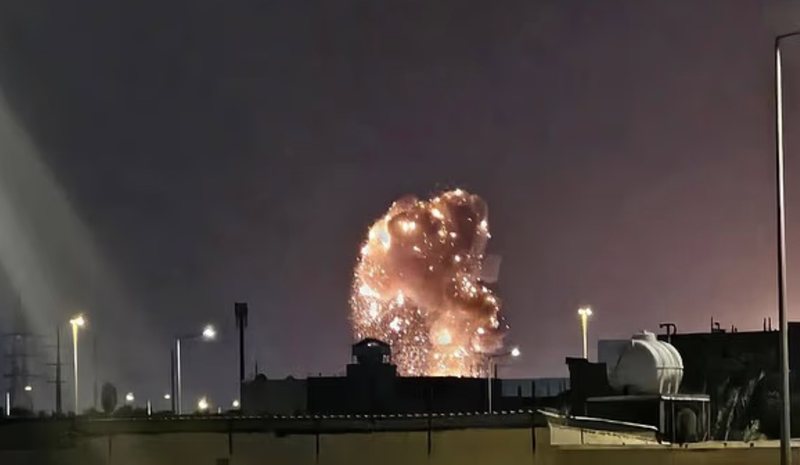
The operation in Iran that Trump had called “Epic Fury” is turning out to be what it really was: an “epic gamble.” It didn’t take prophetic skills to understand; it was enough to see that the conflict had already passed the point where military force controls the consequences.
The Israeli bombing of South Pars shows this.
It is no ordinary target: it is Iran’s energy heartland, part of the world’s largest gas reserves and a hub for Qatar. To strike it would be to cripple the country’s material lifeblood, electricity, heat, industry, and to show that it is no longer just the consequence (Hormuz) that is vulnerable, but also the source. When production and transportation are both exposed, global energy security becomes structurally unstable and the war spirals out of control.
This is also confirmed by the simultaneous escalation: vertical, with the attack on Iranian leaders; geographical, with the extension to the Persian Gulf, Lebanon and the sea routes; functional, with the direct involvement of energy, trade and American domestic politics. When these dimensions overlap, the crisis ceases to be regional and becomes systemic.
Within this framework, several crucial paradoxes emerge.
The first is the Trumpian paradox. After months of undermining alliances and multilateralism, Trump is forced to ask partners to guarantee the security of Hormuz, but without success. The US fails to mobilize allies, fails to engage China, and fails to control escalation. It is the beginning of a new American strategic loneliness.
The second is the Israeli paradox. Israel cannot invade Iran, and so it relies on a roundabout strategy: eliminating the leaders, weakening the state apparatus, and pushing for internal disintegration. But this model works only when the elites are divided, the population is willing, and the institutions are weak. Today, none of these conditions are clearly present. Eliminating the leadership does not destroy the state: it can radicalize it.
The assassination of Ali Larijani should also be seen in this context. He was not a moderate, but a pragmatic conservative: precisely for this reason, one of the few with whom one could realistically negotiate. His elimination has a clear meaning. If an agreement was intended, it would be a mistake; if the aim was to prolong the war until the regime was destabilized, it is a coherent choice. It does not narrow the space for negotiations, but eliminates it.
From here arises the most dangerous paradox: operational integration and strategic divergence between the US and Israel. They fight together, but they do not aim for the same outcome. Israel seeks the overthrow of the regime and a weaker and fragmented Iran, to guarantee security and regional hegemony. The United States must manage the systemic cost: energy, Hormuz, the Gulf, internal consensus, relations with allies, and the interventions of China and Russia.
What is coherent for Israel may close the last exit for Washington.
And that is the essential question: is there a way out? If the goal is negotiation, the space is narrowing. If the goal is regime collapse, it is not certain that it is achievable and the risk is very high: fragmentation, expanded war, sustained energy shocks, and regional instability.
Meanwhile, the Gulf returns to the frontline. The countries of the region are at once energy hubs, targets, and exposed actors. Europe distinguishes between common interest and common war: it wants to contribute to stability, not war.
The crisis is also directly linked to Ukraine. Rising prices bolster Moscow's revenues, while Washington accepts the continuity of some Russian energy flows to avoid major shocks.
Zelensky is trying to stay in the game by offering drones to the Gulf countries. The two wars feed each other.
In the background is China, which is taking advantage of a crisis where the US is diverting resources and attention. Although it suffers from disruptions in energy flows, it has a strategic advantage: the more Washington is stuck in the Persian Gulf, the more it weakens in the Pacific and diverts attention from Taiwan.
The dynamics are already clear: no one manages to end the conflict, but everyone manages to increase its cost. The war expands because no one can win it quickly and everyone can prevent its conclusion.
Iranian threats to facilities in the Persian Gulf show that the war has entered its most dangerous phase: the energy phase. At this stage, there is no real military solution, but only damage management: freezing the energy front to avoid systemic collapse and reopen the space for negotiations.
But this requires a difficult choice: Israel must accept a halt to pressure before it can topple the regime, while Iran must give up using energy as a tool for global pressure. And that is precisely what neither side is willing to do today.
South Pars could mark the point of no return. The war can no longer be separated from the global system. Every military attack is also an attack on prices, every escalation is an economic shock.
The war remains manageable on an operational level.
But it is becoming uncontrollable on a systemic level. / La Stampa – Bota.al
Happening now...








ideas

The loss that leaves a void
Nga Roland Lami

Fjala për ikjen e Namir Lapardhasë, duket e varfër!
Nga Lulzim Basha
top






TRENDING 




services
- POLICE129
- STREET POLICE126
- AMBULANCE112
- FIREFIGHTER128