


FLASH NEWS
Why China is building an 8-story high-security building in Tirana

2026-06-21 23:23:12 / EKONOMI&SOCIALE
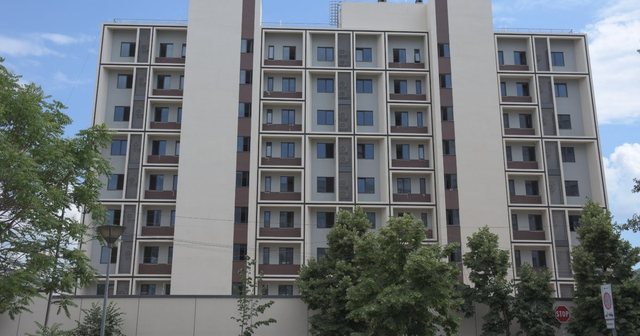
A new residential complex built by the People's Republic of China in the Albanian capital is nearing completion, signaling what international relations experts consider a symbolic and practical expansion of the Chinese presence in Albania.
The project, located on “Sali Butka” Street in Tirana, includes an eight-story building and ancillary facilities surrounded by strong security measures. According to the construction permit approved by the Municipality of Tirana in late 2023, the complex is expected to serve as accommodation for diplomats and staff of the Chinese embassy.
The Chinese embassy did not respond to BIRN's questions regarding the reasons and function of the project.
For residents of the area, the construction largely represents an urban transformation of a space that has been neglected for years. Some say the investment has brought more economic activity and improved infrastructure, while others express concerns about the impact the security measures could have on daily life.
"It used to be empty and unused here. Now the area looks more developed and there's more movement," said the administrator of a business near the complex.
However, experts argue that the project's significance goes beyond local impact.
Blerjana Bino, director of the Center for Science and Innovation for Development (SCiDEV), said that the construction of diplomatic residences is normal practice, but in the case of China it must be seen in the context of Beijing's broader strategy to expand its international presence.
She emphasizes that China does not only act through investments or official diplomatic relations, but also through public diplomacy, cultural and academic exchanges, media, and narratives that aim to project a positive image of China as a development partner, a sustainable global power, and an efficient governance model.
“In this sense, the residency should not be seen in isolation from recent developments in Chinese foreign policy,” Bino said.
"China is trying to position itself as a central actor in issues of development, security, technology, artificial intelligence, cyberspace and global governance," she added.
She values the physical diplomatic presence in small countries like Albania as part of a broader political, symbolic, and narrative presence.
According to Bino, this is about gradual influence: how diplomatic, cultural, media and academic presence can contribute to building positive perceptions of China and its model.
"Informed public debate, institutional transparency, and the ability to assess the influence of foreign actors are needed not only in the economy or diplomacy, but also in the country's informational and democratic space," suggests Bino.
China and Albania share a special history of relations, which reached its peak during the 1960s and 1970s, when Tirana became Beijing's closest ally in Europe after Albania's relations with the Soviet Union broke down. During that period, Albania actively supported China's diplomatic interests in the international arena, including efforts to represent it at the United Nations.
However, China's rapprochement with the United States following US President Richard Nixon's historic visit to Beijing in 1972 caused tensions with the communist regime of Enver Hoxha. Relations between the two countries gradually deteriorated until the cessation of Chinese economic and political aid in 1978.
After the fall of communism, Tirana and Beijing reestablished relations and expanded economic cooperation. Over the past three decades, China has become one of Albania's main trading partners, with investments and interests in various sectors of the economy.
International relations researcher Ledion Krisafi believes that the project reflects more China's interest in maintaining and expanding its sphere of influence than any immediate change in bilateral relations.
Krisafi notes that China's influence in Albania has waned in recent years, despite Beijing's continued interest in deepening bilateral cooperation.
According to him, Tirana has followed a cautious approach towards China, maintaining correct diplomatic and economic relations, but without developing close strategic ties due to its Euro-Atlantic orientation.
He stressed that the expansion of China's physical presence in the country, through investments in diplomatic infrastructure, is not expected to bring significant changes in bilateral relations as long as the Albanian government continues to maintain the same political line.
"It shows China's desire for more cooperation, especially economic," the researcher said.
"It also comes as a result of the increasing presence of actors from the Middle East, such as Israel, the United Arab Emirates and Qatar in Albania, which could cause China to lose even more ground," Krisafi concluded./BIRN
Happening now...
















Sali is gone, Rama is gone.
Nga Bato Kosova
ideas



top



Alfa recipes



TRENDING 




services
- POLICE129
- STREET POLICE126
- AMBULANCE112
- FIREFIGHTER128