


FLASH NEWS
How Albania has installed "by law" electoral farces!

2025-06-08 21:17:23 / EDITORIAL
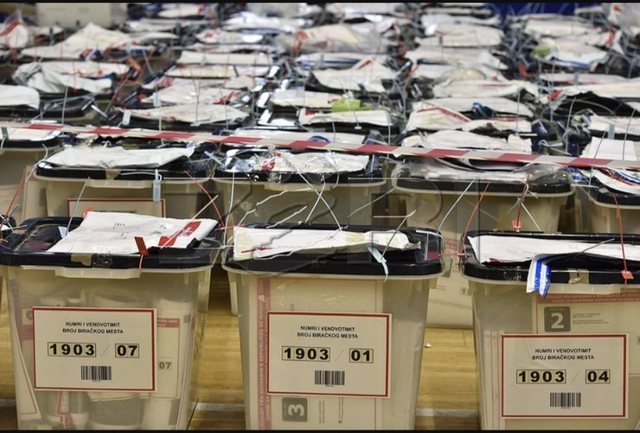
Albania does not hold parliamentary elections, but an electoral farce
Legal Analysis of the Incompatibility of the Electoral Code with the Constitution of the Republic of Albania
I. Object
The object of this analysis is to ascertain the direct and flagrant violation of the Constitution of the Republic of Albania by the provisions of the Electoral Code that regulate the system of distribution of parliamentary mandates.
II. Legal fact
The current electoral system of the Republic of Albania, although formally labeled as “proportional with multi-name lists”, in substance functions as a deeply non-proportional and discriminatory system, in which:
The first winning party (usually the Socialist Party) secures 1 deputy mandate with around 10,000 votes;
The second party (usually the Democratic Party) secures 1 mandate with around 10,200 votes;
While the other parties, called “small”, manage to secure only 1 mandate with over 60,000–70,000 votes.
This brutal asymmetry in the effective weight of the vote is not simply a “technical imperfection”, but constitutes a direct violation of the fundamental norms of the democratic constitutional order.
III. Violated provisions of the Constitution
1. Article 1, point 2
“Government is based on a system of free, equal, general and periodic elections.”
The violation is complete and direct.
The citizens’ vote is not equal in weight, because 10,000 votes for one party produce one deputy, while 70,000 votes for another party produce the same one deputy.
This is not an “evasion” from equality, but the subjection of a part of the citizens to the inferior weight of their vote, which directly contradicts the principle of electoral equality.
2. Article 45, point 2
“Voters enjoy equal, free and secret suffrage…”
The violation is fundamental and irrefutable.
When a party needs 7 times as many votes to win a seat as another party, voters do not enjoy the same power of representation.
The vote of a citizen who votes for a “big” party has 7 times more real value in parliamentary representation than that of a citizen who votes for a smaller entity.
This is constitutional inequality in its purest and most dangerous form.
Equality of vote is not symbolic — it is mathematical. Either it exists, or it has been violated. And in this case, it has been flagrantly violated.
3. Article 64, point 1
“Deputies are elected by a proportional system, with multi-name lists.”
The violation is structural.
The Electoral Code produces results that are numerically disproportionate. This is not a “methodological deviation,” but a substantial denial of electoral proportionality.
When a party with 70,000 votes receives the same number of mandates as a party with 10,000 votes, the system is no longer proportional — it is manipulative and violent towards fair representation.
The Electoral Code has transformed a declared proportional system into a dominant mechanism for the first party, making it in practice a deformed and unconstitutional majoritarian system.
IV. Consequences on the constitutional order and representative democracy
This violation is not merely technical, but has direct and serious consequences on:
The democratic legitimacy of the Assembly of Albania,
The real representation of the Albanian population in the legislative body,
The trust of citizens in the democratic system,
The constitutionality of the government itself that emerges from this deformed representation.
In other words:
This system strips representative democracy of its real content and reduces it to a formal procedure controlled by an unequal voting mechanism.
V. Legal conclusion
The Electoral Code of the Republic of Albania is in direct and flagrant violation of the Constitution, in particular of:
Article 1, point 2 — on equality of elections;
Article 45, point 2 — on equality of vote as an individual constitutional right;
Article 64, point 1 — on the obligation for proportional representation.
This system is unconstitutional. It does not produce fair representation, does not guarantee equality, and does not respect representative democracy.
VI. Institutional intervention
In accordance with this analysis, the following institutional interventions are urgently required:
Review of the constitutionality of the relevant provisions of the Electoral Code by the Constitutional Court;
Legislative intervention to restore real proportional representation and effective equality of vote;
Immediate cessation of tolerance of a system that fundamentally violates the constitutional right of Albanian citizens to equal representation.
Happening now...















America may withdraw from Europe, but not from SPAK
Nga Gentian Gaba
ideas


Who is the Surrel Rabbit?
Nga Sidi Hasanaj

The two wrong paths of the opposition with the Ombudsman
Nga Patrik Sadikaj
top



Alfa recipes




TRENDING 




services
- POLICE129
- STREET POLICE126
- AMBULANCE112
- FIREFIGHTER128