


FLASH NEWS
Protesters have been "igniting" the country for two weeks/ Who is Maryam Rajavi, seen as a "ready-made solution" for the future of Iran?

2026-01-11 12:17:41 / BOTA
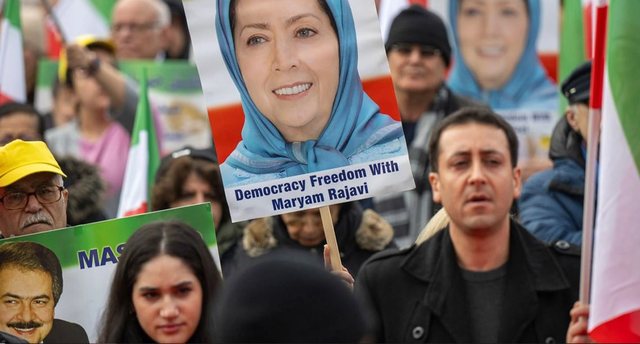
Maryam Rajavi belongs to the generation that initially believed that the Iranian Revolution of 1979 would lead to a pluralistic post-monarchic system. The gamble quickly backfired. The conflict between the new theocratic regime and leftist Islamist organizations was violent and merciless. She joined the Mujahedin-e Khalq (MEK) movement early on, which was targeted by the Khomeini regime. Mass executions, imprisonments, and persecution forced the MEK leadership to flee the country. Rajavi followed the path of exile – first to France, then to Iraq, and back to Europe after 2003, and currently in Albania.
The network that
Rajavi represents does not act alone. She represents the National Council of Resistance of Iran (NCRI), an umbrella political formation with a clear hierarchy, structure, and strategic planning. The MEK is its backbone.
It is a closed, disciplined, and highly organized network, with decades of experience in undergrounding, surviving under persecution, and international political pressure. It is precisely this characteristic – organizational cohesion – that distinguishes it from other oppositions in exile.
Who funds it?
Here the landscape becomes murky. Rajavi and the NCRI claim to be funded by the Iranian diaspora, through donations and advocacy campaigns. There is no evidence of direct state funding from Western governments. However, the presence of former senior Western officials at its events – particularly from the US and Europe – indicates political tolerance and indirect support. For the West, Rajavi functions as an institutionally “useful” opposition: organized, predictable, absolutely hostile to Tehran.
Why she seems more “ready” than the royal family
The descendants of the last Shah, most prominently Reza Pahlavi, have recognition but no mechanism. They express nostalgia, not political infrastructure. They have no party, no network, no disciplined base. Rajavi, on the other hand, appears with a transition plan, a ten-year political program, a clear institutional proposal, and a ready-made administrative structure. She does not promise a return to the past, but a break with it.
The danger of a “ready-made solution”
The problem remains social legitimacy within Iran. The MEK does not enjoy widespread popular acceptance and carries historical trauma, especially from the period of its collaboration with Iraq in the 1980s war. However, in a scenario of a sudden regime collapse, politics will not be judged solely by popularity, but by readiness.
Maryam Rajavi is not the most popular choice for Iran, but she is the most organized. In a system that could suddenly collapse, this element could be crucial. If there is a power vacuum, she will not seek it. She will already be there.
Happening now...















The end of the commercial leader, Rama!
Nga Irena Beqiraj
ideas



top



Alfa recipes




TRENDING 




services
- POLICE129
- STREET POLICE126
- AMBULANCE112
- FIREFIGHTER128