


FLASH NEWS
UN: Iran has violated nuclear obligations

2025-06-12 16:32:46 / BOTA
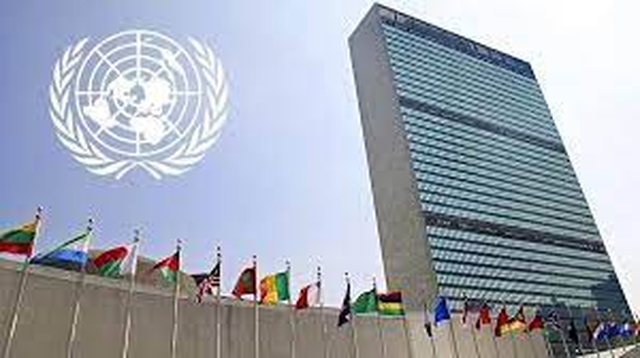
The Board of Governors of the International Atomic Energy Agency (IAEA) has adopted a resolution that officially declares Iran in non-compliance with its nuclear non-proliferation obligations.
This is the first time since 2005 that the UN agency has declared Iran a state that is not complying with its nuclear obligations. The decision has been condemned by Tehran.
The resolution, which was adopted on June 12 during an IAEA board meeting, could pave the way for the reinstatement of United Nations sanctions against Iran later this year.
In response, Iran's Foreign Ministry announced that a new uranium enrichment facility would be built in a secure area, adding that the first-generation (IR-1) centrifuges at the Fordow plant would be replaced with advanced sixth-generation (IR-6) machines.
"As we have stated earlier, the Islamic Republic of Iran has no choice but to respond to this political resolution," the ministry said in a statement.
Mohammad Eslami, head of the Atomic Energy Organization of Iran, then said that the new building has already been built and will become operational once it is equipped with centrifuges.
The 35-member IAEA board voted 19 in favor, 3 against, and 11 abstentions to approve the resolution, which was proposed by the United States and its three European allies - Britain, France, and Germany, also known as the E3.
"Iran's continued failure since 2019 to meet its obligations to the agency, including the lack of full and timely cooperation regarding undeclared nuclear material and activities at several undeclared locations in Iran... constitutes non-compliance with its obligations under the Safeguards Agreement," the resolution said, according to the AP agency.
The resolution also finds that “the inability of the IAEA… to provide assurances that Iran’s nuclear program is exclusively peaceful raises questions that are within the purview of the UN Security Council, as the body that bears primary responsibility for the maintenance of international peace and security.”
Tehran has not said whether the adoption of this resolution will lead to the cancellation of the sixth round of nuclear talks with the United States, which is expected to be held on June 15 in Oman.
Iran is working on a counterproposal after Tehran rejected a Washington offer for a deal. Iran's supreme leader, Ayatollah Ali Khamenei, described the US offer as "100 percent" against national interests.
On June 11, Iranian Foreign Minister Abbas Araqchi stated that, if the goal of any agreement is to guarantee that Iran will not develop nuclear weapons, then an agreement is achievable.
However, he stressed that Iran must retain the right to enrich uranium - an element that US President Donald Trump has clearly said should not be included in any deal - for its civilian nuclear program.
Tehran claims its nuclear program has entirely civilian, not military, purposes.
Meanwhile, Israel is reportedly preparing for an attack on Iran and is awaiting a green light from Trump if diplomatic efforts fail. Iran has warned that it will strike US bases in the region if attacked./ REL

Happening now...










America may withdraw from Europe, but not from SPAK
Nga Gentian Gaba
ideas


Who is the Surrel Rabbit?
Nga Sidi Hasanaj

The two wrong paths of the opposition with the Ombudsman
Nga Patrik Sadikaj
top


Alfa recipes




TRENDING 




services
- POLICE129
- STREET POLICE126
- AMBULANCE112
- FIREFIGHTER128