


FLASH NEWS
"Napoleon-Macron"/ Here's what's behind Putin's comparison to the French president

2025-03-07 19:33:45 / BOTA
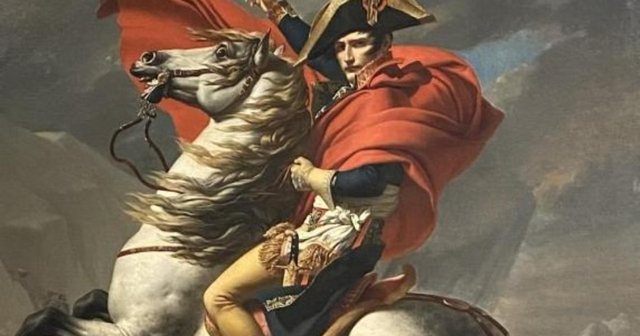
Anyone who has read Leo Tolstoy's great novel "War and Peace" knows well what Russian President Vladimir Putin was talking about when, in an open polemic with his French counterpart Emmanuel Macron, he declared that "there are still people who want to return to the time of Napoleon, but they have forgotten how it ended."
Putin seems to be linking it to the military campaign against Tsar Alexander I that the French emperor undertook in 1812, with a terrible outcome that marked the beginning of his downfall.
At that time, Bonaparte ruled over Western and Central Europe.
The only one opposing it was Great Britain, with its powerful fleet and its vast maritime empire, but it must be added that at the same time the French were encountering great difficulties in suppressing the guerrilla war that was keeping them engaged in Spain.
However, the only power that could oppose Napoleon on the continent was Russia.
Relations between Paris and St. Petersburg (then the Russian capital) had gone through various phases.
Between 1805 and 1807, the French Empire had been at war with the Tsar at Austerlitz, in addition to the Austrians, Napoleon had also defeated the Russians.
In another period, relations between Napoleon and Russia were changing. After several wars, an agreement had been reached between them.
At the same time, there was an idea of a marriage between Napoleon, who had divorced his first wife, Joséphine, and Tsar Alexander I's sister, Anna Pavlovna. This could have been a way to strengthen ties between France and Russia at that time.
The situation then worsened, especially when Russia, in 1810, decided to breach the continental blockade imposed by France on goods coming from the British Empire.
So, after having made an alliance with Prussia and Austria (who were not at all enthusiastic about this initiative), in June 1812, Napoleon invaded Russia with an army of over 600,000 soldiers: French, Germans, Poles, and even many Italians.
Against this powerful army, the hostile commander Mikhail Kutuzov, a veteran of many conflicts (he was born in 1745 and was twenty-four years older than Napoleon), used scorched earth tactics, convinced that Bonaparte's retreat deeper into Russian territory would increase his problems, especially with regard to supplies.
It was not easy to feed such a large crowd in such a vast and hostile territory.
Only when Napoleon's army was at the gates of Moscow did Kutuzov decide to accept a fair battle. The fierce battle of September 7, 1812, known as the Battle of Borodino or Moscow, resulted in a victory for the invaders, who nevertheless suffered very heavy losses.
The French emperor thus managed to enter Moscow, which was almost completely evacuated of the population, and settled in the Kremlin.
But shortly after that, the city was destroyed by a great fire, started by the Russians, which made the situation of the foreign invaders even more precarious.
Having reached the heart of enemy territory, Napoleon was trapped, with an exhausted army that was impossible to supply properly. At this point, attempts to initiate peace negotiations were unsuccessful.
At the end of October, he had no choice but to retreat west, pursued by Russian forces and especially by the fighting Cossack cavalry.
The month of November was a torturous one for Bonaparte's soldiers. By the end of the campaign, about 100,000 men managed to escape, crossing the Berezina River in extremely bad weather conditions: among the dead, missing and prisoners,
Napoleon had lost half of his army.
A terrible blow from which his empire would never recover. The following year, Prussia and Austria joined Russia and Great Britain, determined to undermine Napoleon's dominance over Europe.
And in October 1813, the forces of this coalition, the sixth of those formed against France in the years following the revolution, won the decisive Battle of Leipzig. In 1814, Bonaparte's enemies, including Tsar Alexander I, occupied Paris.
The Emperor was sent to the island of Elba and a Bourbon, Louis XVIII, was placed on the French throne.
In 1815, Bonaparte would return to power, but for only a hundred days: the subsequent defeat at Waterloo would mark the definitive end of his extraordinary epic.
Happening now...




America may withdraw from Europe, but not from SPAK
Nga Gentian Gaba
ideas


Who is the Surrel Rabbit?
Nga Sidi Hasanaj

The two wrong paths of the opposition with the Ombudsman
Nga Patrik Sadikaj
top



Alfa recipes



TRENDING 




services
- POLICE129
- STREET POLICE126
- AMBULANCE112
- FIREFIGHTER128